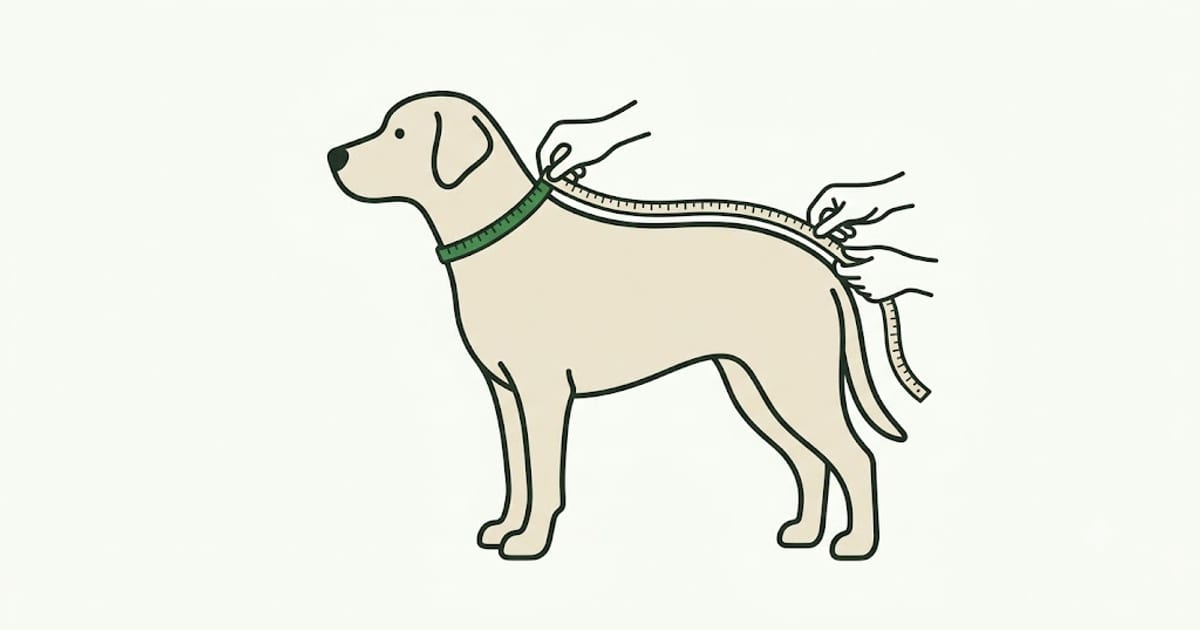
Two measurements, and one of them decides the size.
Back length — base of the neck, where a collar sits, to the base of the tail. Along the spine, dog standing normally.
Chest girth — around the deepest part of the chest, just behind the front legs.
Back length is the one that matters. A coat right on back length and slightly off on girth is wearable; the reverse is not.
Stop at the base of the tail
The single most common complaint about dog coats is that the dog will not tolerate one, and the single most common cause is a coat that extends past the tail base and interferes with toileting.
A dog that squats under a coat covering its rear will refuse the coat, and it will keep refusing it. Measure to the base of the tail, not to the tip, and check that the finished garment stops there.
The reverse error leaves the hindquarters uncovered, which defeats the purpose in cold weather.
The clearances that decide comfort
Leg openings. Should not rub in the armpit. This is the same failure point as a harness girth strap, and it produces the same raw patch — see fitting a harness.
Belly coverage. A coat covering the whole belly keeps a short-coated dog much warmer, and it must clear the genitals on a male dog or it will be soiled every walk. Many coats are cut asymmetrically for exactly this.
Neck opening. Loose enough not to restrict the throat, snug enough not to admit wind and rain.
Range of motion. Walk the dog for a few minutes and watch the front legs. A coat that restricts the shoulder shortens the stride, and the dog will move oddly rather than complain.
Measure under the coat
Long-coated and double-coated breeds — Samoyeds, Shetland Sheepdogs, Bichons, Pomeranians — carry enough coat to add an inch or more to every measurement.
Part the fur and measure against the skin. Then expect the fit to change after grooming, which is a real seasonal problem rather than a theoretical one.
Where weight charts fail
Manufacturers size by weight, and weight predicts neither back length nor girth reliably:
- Dachshunds and Corgis — long backs on short legs, so they need a longer coat with much shorter leg openings than their weight suggests.
- French Bulldogs and Pugs — barrel chests. The coat fits along the back and will not fasten.
- Greyhounds and Whippets — long backs, deep narrow chests, very little body fat. Sized by weight they get something far too small.
The measurements above resolve all three. This is the same failure the breed chart has everywhere, and it is set out in average weight by breed.
Which dogs benefit
Thin-coated breeds, very small dogs, elderly and arthritic dogs, and dogs recovering from illness or clipping.
Double-coated northern breeds generally do not. A Husky's own coat insulates better than anything you can buy, and covering it can interfere with how it works — the full argument is in dog coat sizing.
FAQ
How do I measure my dog for a coat?
Back length along the spine from the base of the neck to the base of the tail, plus chest girth behind the front legs. Back length decides the size.
Where should a dog coat end?
At the base of the tail. Any further and it interferes with toileting, which is the usual reason a dog refuses to wear one.
Should I measure over my dog's fur?
No. Part the coat and measure against the skin, and re-check after grooming.
Why doesn't the size chart work for my dog?
Charts index on weight, which does not predict back length or chest girth. Long-backed and barrel-chested breeds are where it fails most.
Does my dog need a coat?
Thin-coated, very small, elderly or recovering dogs benefit. Double-coated northern breeds generally do not.