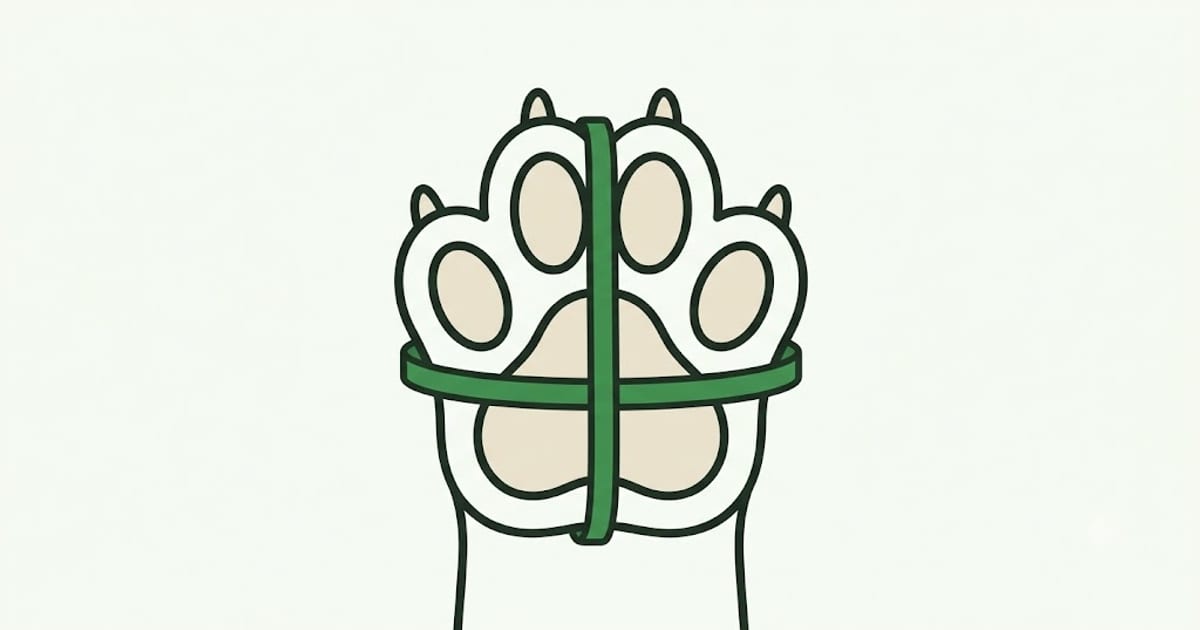
Boots are lost on walks more than any other piece of dog gear, and the reason is nearly always the measurement rather than the strap.
Measure the paw under load
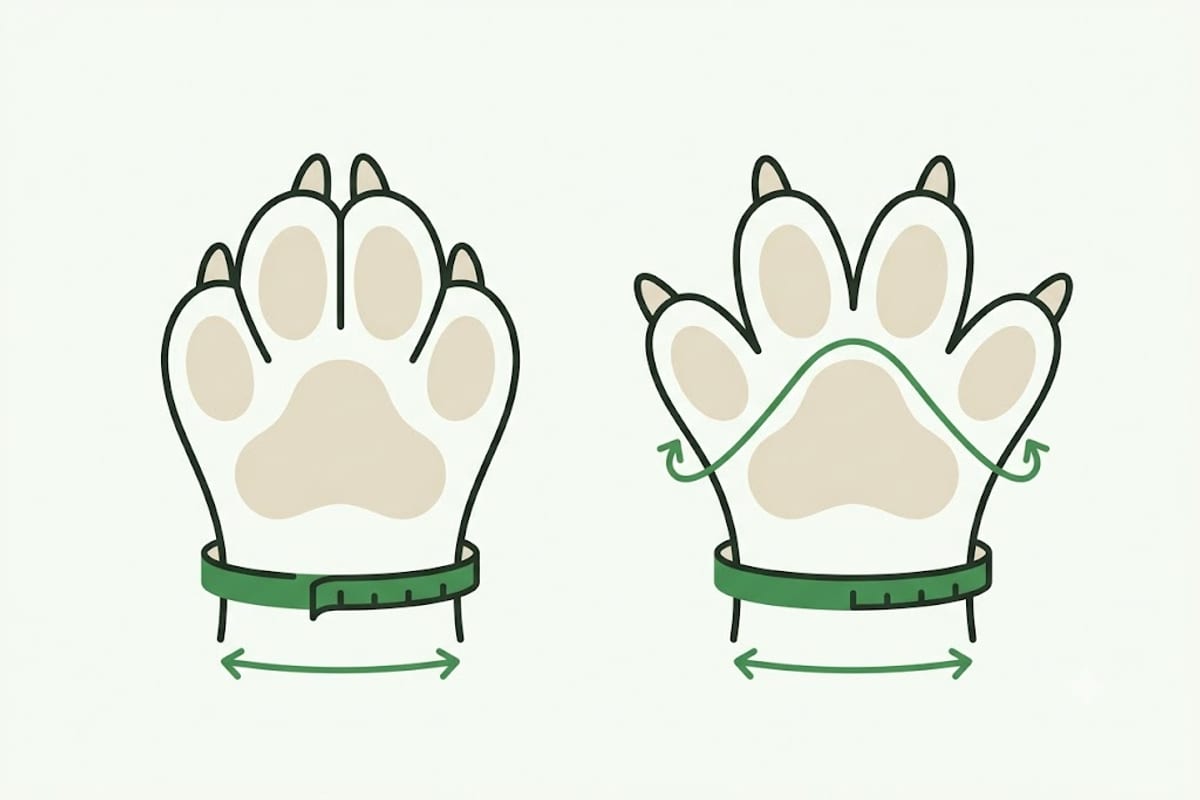
A dog's paw spreads when weight goes on it. The toes splay, the pad flattens, and the outline gets both longer and noticeably wider.
Almost everyone measures a lifted paw, because it is the easy way to do it. That gives a number a size or more too small. The boot then either will not go on, or goes on and comes off because the strap has to be closed over a paw that keeps changing size inside it.
Measure with the dog standing, weight on the paw.
The paper method
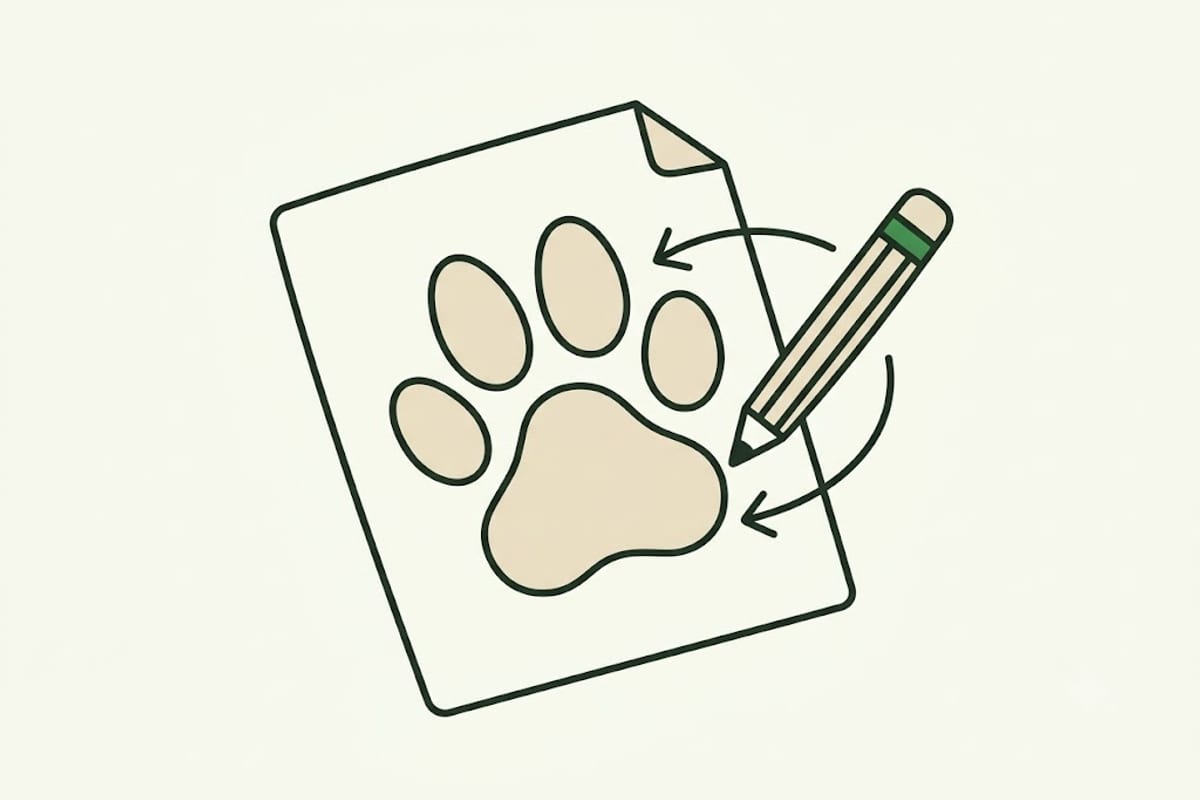
The reliable way:
- Put a sheet of paper on a hard floor.
- Get the dog to stand with one front paw on the paper, weight on it. A treat held at nose height usually gets a square stance.
- Trace around the paw, keeping the pencil upright.
- Measure the tracing at its longest point and at its widest point.
Do a front paw and a back paw. On most dogs the front paws are larger, and boot sets are usually sized to the front. If the difference is large, some makers sell mixed sets.
Width is a real number
Boot charts often give only length. Width matters as much, and it is where broad-pawed breeds get caught out.
A boot that is right on length but narrow will squeeze the toes together. The dog will shake it off, or walk oddly, or refuse to move. A boot that is right on width but long will slide fore and aft and rub at the back of the pastern.
If a maker publishes only length, look for a width figure in the product questions or measure a boot you already own. Broad-pawed breeds — many mastiff types, newfoundlands, and a good number of mixed-breed dogs — need a maker who publishes both.
Between sizes: go up, then close the strap
A tight boot is shed or causes rubbing within a mile. A slightly large boot can be closed down at the strap.
But check the width at the larger size too — some ranges scale length faster than width, so sizing up gains you length you did not need without gaining width you did.
Why boots come off even when sized right
The strap is above the wrong joint. Most boots are held on by a strap that must sit above the dewclaw or the pastern joint, not on the flat of the leg below it. On the flat, there is nothing for the strap to grip and it slides straight off. Look at where the ankle narrows and put the strap just above it.
The strap is not tight enough. Boot straps need to be tighter than instinct suggests — snug enough that the boot does not rotate when you twist it by hand. Not tight enough to indent the leg.
The dog is shaking them off deliberately. Very common on the first few outings. This is not a fit problem; it is a novelty problem, and it needs an introduction period.
Snow or mud packing inside. Wet packed material inside the boot lubricates it. Boots for snow need a closure that keeps material out.
Introducing boots
Almost every dog walks strangely in boots at first — high stepping, shaking a leg, refusing to move. That is normal proprioceptive confusion, not pain, and it passes.
A workable introduction:
- One boot, indoors, for a minute, with a treat. Take it off before the dog gets frustrated.
- Build up to all four indoors, still short.
- Indoors with movement — walk to the food bowl, play a short game.
- Outdoors on a normal walk.
Skipping to step four is why many boot sets are used once.
Checking after a walk
Take the boots off and look at the paws and pasterns.
- Redness or a line above the paw means the strap was too tight or in the wrong place
- Damp fur inside means the boot is not breathing, and on a long walk that softens the pad
- Grit inside means the opening is too wide or the closure is not sealing
And check the boots themselves. Sole wear tells you whether the boot is rotating: an even wear pattern is right, wear on one edge means it is turning on the paw.
When boots are worth it
Salt and grit on winter pavements, hot tarmac in summer, sharp ice, rough terrain on long hikes, and protecting a healing injury. For an ordinary walk on grass, most dogs do not need them, and a paw balm handles most winter dryness.