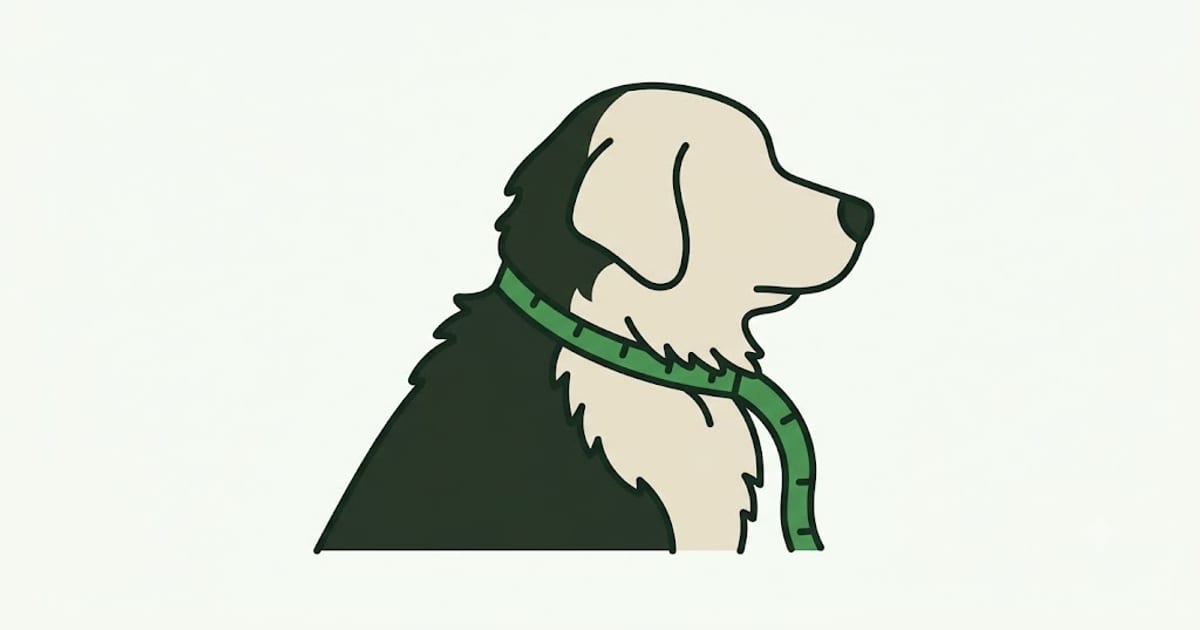
Double-coated breeds — huskies, german shepherds, samoyeds, collies, chows, most spitz types and a great many mixes — carry a dense undercoat that compresses under a tape and disappears twice a year. Both of those facts break sizing.
The compression problem
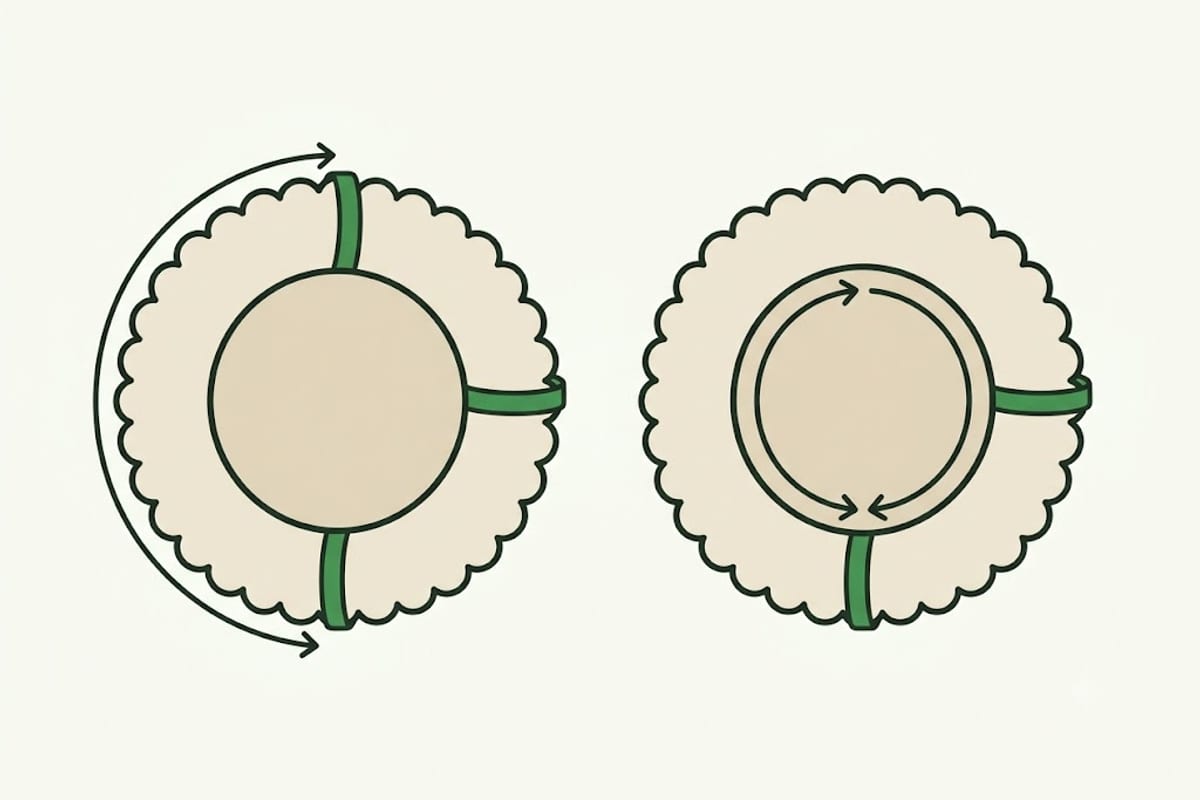
A soft tape laid on top of a thick coat sits on air. Pull it snug and the coat compresses, and where you stop pulling decides the number. Two people measuring the same dog can get readings two inches apart.
Two inches on a neck is a whole collar size. On a small thick-coated dog it can be two.
Part the coat and measure the neck itself. Push your fingers through to the skin, lay the tape against the body, and read it there. The number will be smaller than you expect, and it is the right one.
For chest girth on a harness, do the same behind the front legs. The undercoat is thinner over the ribs than over the neck and shoulders, so the error is smaller there, but it is still real.
The seasonal problem
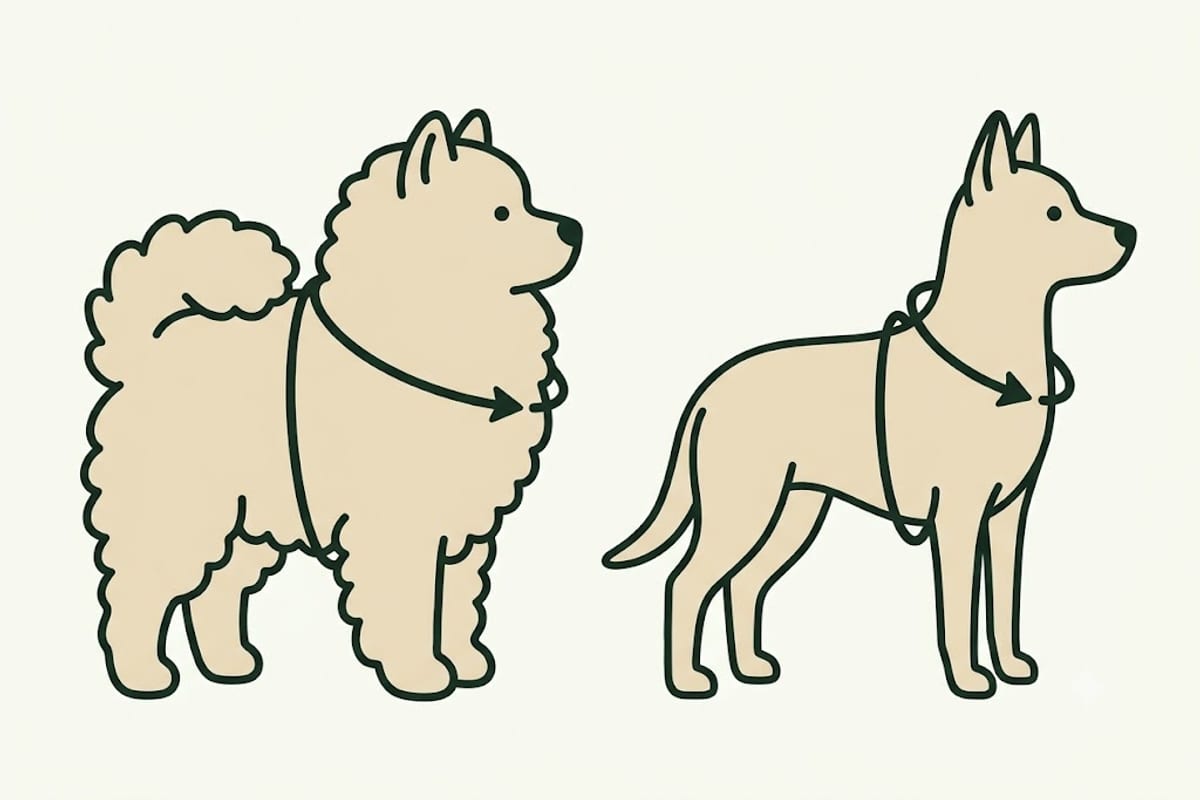
Double-coated dogs drop the undercoat, usually twice a year, and the change is dramatic. A dog that measured 20 inches at the neck in February can measure 18 in May.
That means:
- A collar fitted in winter can be slipped in spring
- A harness fitted in winter rotates in spring
- A coat fitted in summer will not close in winter
Re-check the fit of everything after a blowout. This is the single most common reason a thick-coated dog gets loose from a collar that has been fine for months.
Which measurement to size to
Size to the body, not to the coat, and adjust outward for winter.
A collar sized to the compressed neck will be adjustable up when the coat comes in. A collar sized to the full winter coat is a loose collar for half the year, and loose is the dangerous direction.
The exception is coats and jumpers, which go over the fur. For those, measure the girth over the coat as it is, and accept that a winter coat will be roomy in summer — which does not matter, because you will not be using it.
Where the coat hides problems
Thick fur also hides the things that fitting is supposed to prevent.
Rubs and hot spots. A harness strap can be taking hair off for a fortnight before you see anything, because the surrounding coat covers it. Part the coat and look at the skin under every strap after walks, especially behind the elbows.
Matting under straps. A mat under a girth strap is a hard lump grinding against skin. On a double-coated dog this is the most common cause of harness sores, and no amount of refitting will help until the mat is out.
Weight change. You cannot see condition change under a thick coat. Feel the ribs rather than looking. A dog that has gained or lost needs re-measuring.
Practical measuring notes
Use a soft tape, not a builder's tape. If you have neither, a piece of string laid against a ruler afterwards works.
Dog standing square, on a non-slip surface.
Take each measurement twice. If the two readings differ by more than about a centimetre, the tape is sitting on coat rather than skin.
Write the numbers down with the date and note whether the dog was in full coat or blown out. In six months that note is the difference between knowing and guessing.
Grooming affects fit
A full de-shed or a clip changes the numbers immediately. If your dog is booked for a groom, either measure after it, or measure before and expect to re-check the day the dog comes home.
Never shave a double coat to make gear fit. The undercoat is insulation in both directions and does not always grow back correctly.
Gear that works better on thick coats
Wider collars, which sit on the coat more evenly and are less likely to bury.
Harnesses with more adjustment points, so the seasonal swing can be absorbed.
Rolled or round-profile collars on long-coated dogs, which part the hair rather than crushing it and cause less breakage at the collar line.
A flat collar on a long-coated dog will leave a worn ring in the coat regardless of fit. That is cosmetic, but it is the reason many long-coat owners keep the collar off at home.