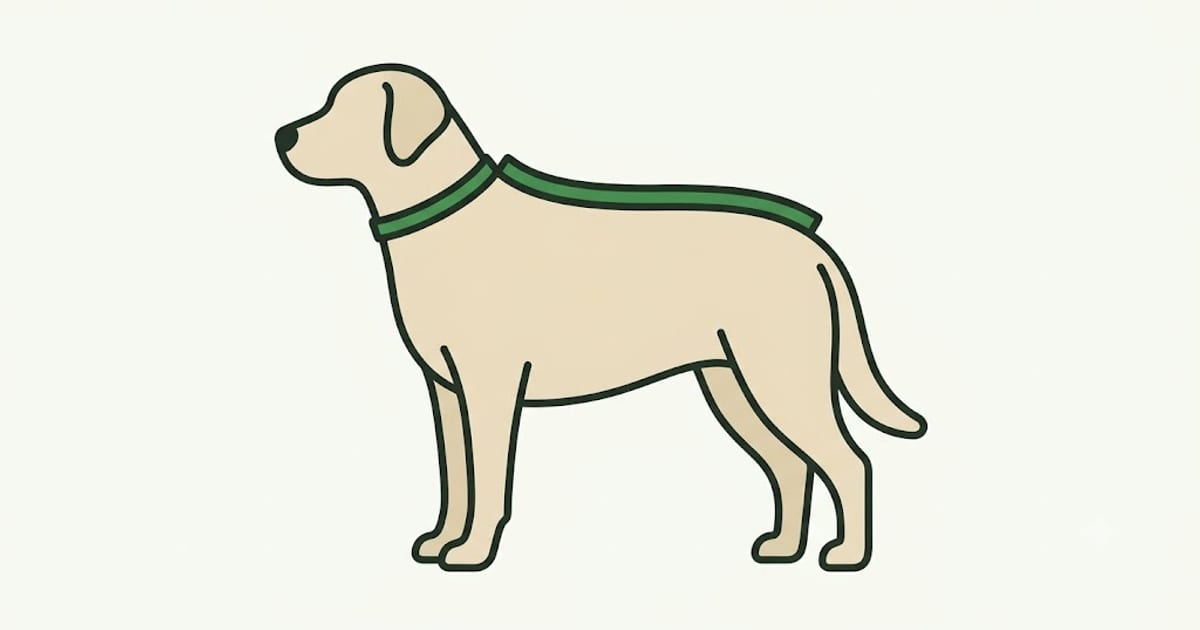
Every dog coat listing gives two numbers: back length and chest girth. Owners generally look at girth first, because that is the number they know from harnesses. For coats it is the wrong one to lead with.
Why length decides
Almost every coat adjusts at the girth — a belly strap, a hook and loop panel, an elastic section. Almost none adjusts along the back.
So girth is a problem you can solve after the coat arrives, and back length is not. Size on the length, then confirm the girth range covers your dog.
Where to measure
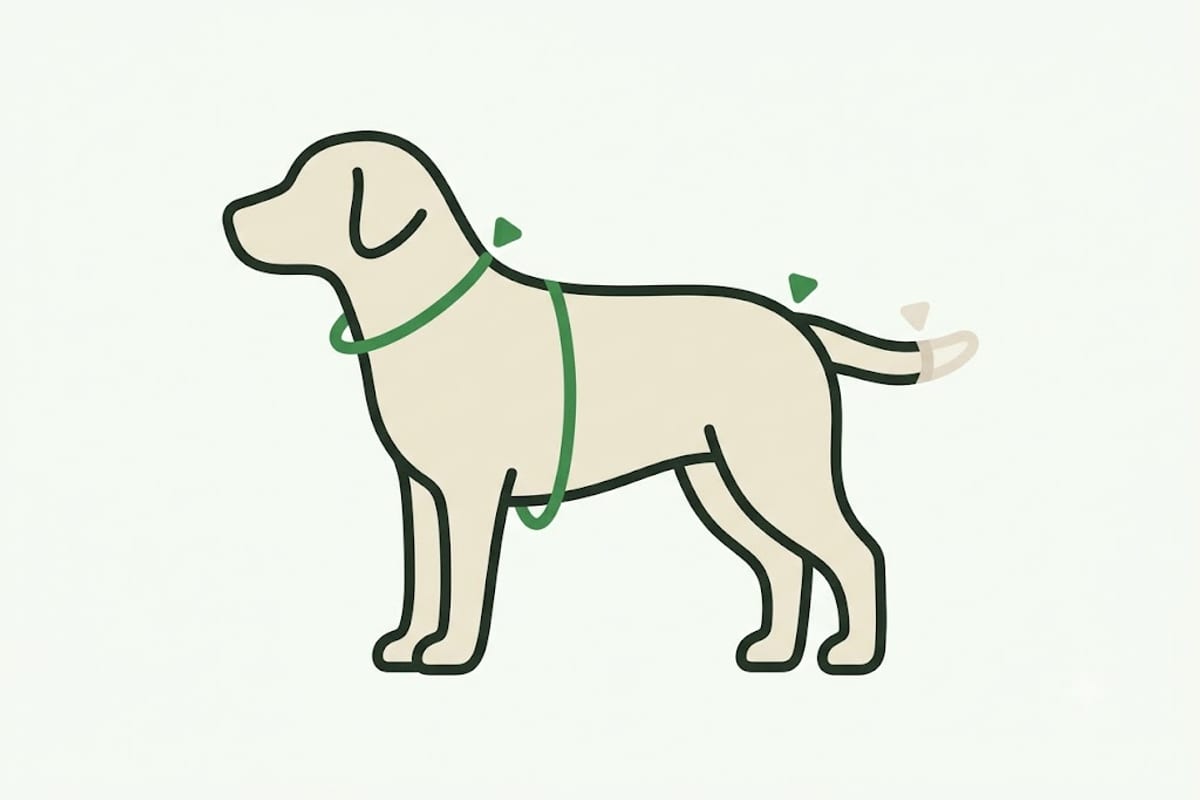
Back length runs from the base of the neck — where a collar sits, at the shoulder — to the base of the tail, where the tail joins the body.
Two common errors:
Measuring to the tail tip. That adds several inches and gives a coat that covers the tail, which no coat should.
Measuring from the head. Start at the shoulder, not behind the ears.
Measure with the dog standing square. A sitting dog's back is a different shape and reads short. If the dog will not stand still, measure twice on separate occasions and take the number that repeats — see our note on measuring a dog that will not stand still.
Girth, second
Measure around the deepest part of the chest, just behind the front legs. Check the listing's girth range includes your dog with room to adjust.
If your dog's girth is at the very top of the range for the correct back length, you have a deep-chested or barrel-chested dog and coats will be an ongoing problem. Look for makers who publish separate ranges, or who make a "deep chest" cut.
Why too long is worse than too short
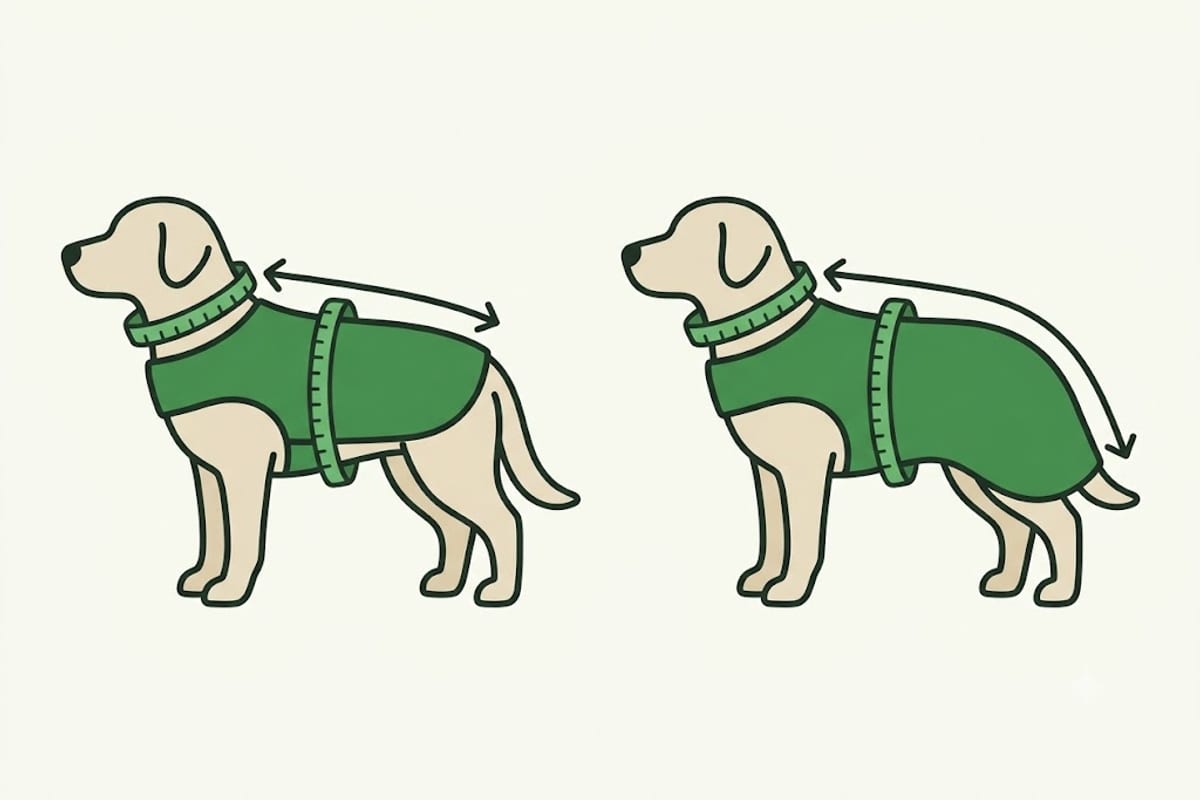
A coat that extends past the base of the tail:
- Interferes with toileting, and gets soiled
- Catches on undergrowth, gates and furniture
- Rotates, because the extra fabric behind the girth strap acts as a lever
- Pulls the chest piece too far back, which then presses on the shoulders
A coat that is slightly short leaves a little of the loin uncovered. For most dogs in most weather that is a minor loss.
So if the back length lands between sizes, go down, then check the girth still closes comfortably.
The exception is a short-coated dog in genuinely cold conditions, where loin coverage is the point of the coat. Then look for a different cut rather than a longer size.
Body shape matters more than breed
Coat charts by breed are a starting point at best. Within a breed, back length varies by line, by sex and by individual. A long-backed dog of a "medium" breed can need a size that the chart calls large.
The measurement takes a minute and it is right.
Fit checks when it arrives
Put it on and check:
The neck opening does not press on the throat and does not sag. A coat that sags at the neck lets weather in and rubs the shoulders.
The front legs move freely. Walk the dog toward you. If the stride shortens, the chest piece is too tight or too far back.
The belly strap passes the two-finger test and sits behind the elbow, not against it.
Nothing rotates. Walk a few minutes and look again. A coat that has turned is too long, too loose, or both.
The hem clears the tail and does not touch the ground when the dog squats.
Male and female cuts
Some makers cut the belly panel shorter on male dogs so it does not get soiled, and longer on females for coverage. If a maker offers both, take the right one — it is the difference between washing the coat weekly and washing it monthly.
Waterproof coats need more room
A waterproof shell over a thick coat needs more girth than a thin fleece does, because the coat underneath compresses less. If you are buying a shell to go over a jumper, measure the dog wearing the jumper.