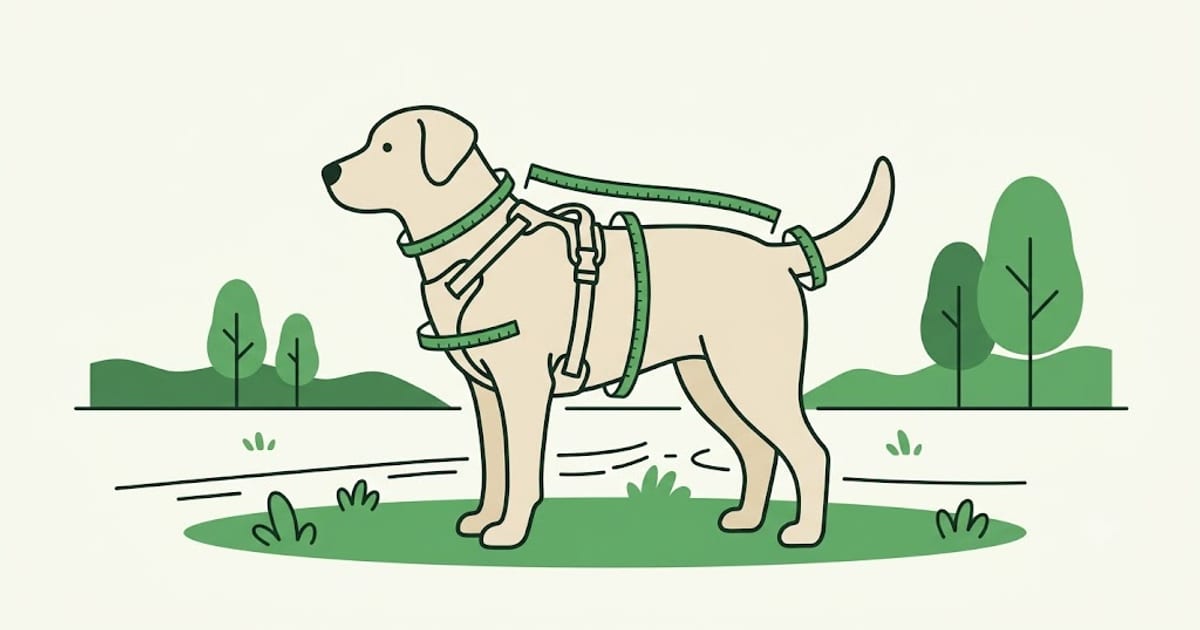
A harness has three or four adjustment points and they interact. Tighten the girth and the chest piece rides up; shorten the neck opening and the whole thing shifts forward.
Adjust all of them, in order, then walk the dog and check again.
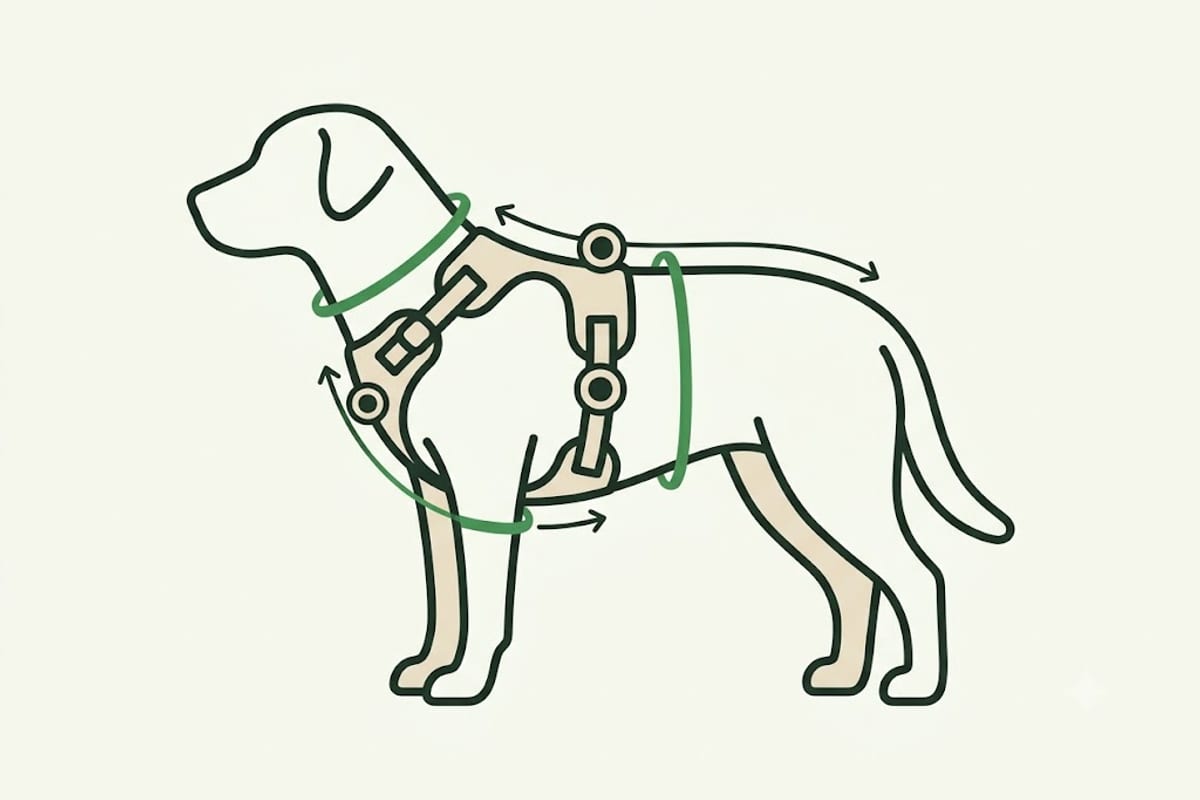
The order
1. Neck opening. Loose enough to slip over the head without force, snug enough that the dog cannot back out. Two fingers flat.
2. Chest piece. Should sit low on the sternum, not up at the throat. A chest piece riding high presses on the windpipe and defeats the reason for using a harness.
3. Girth strap, behind the front legs. Two fingers flat here as well. This is the strap that carries most of the load.
4. Top strap, if adjustable, to square everything up.
Then check every one again, because each adjustment moved the others.
The armpit strap causes most problems
The girth strap sits close behind the front legs, and that is where chafing happens — a raw patch in the soft skin of the armpit, discovered days later.
Three things prevent it:
Enough clearance. The strap should sit at least a finger's width behind the leg, not against it. A harness that fits the chest but sits too far forward will rub no matter how it is tightened.
Not too tight. A strap pulled hard into the armpit rubs with every stride. The two-finger check applies here as much as anywhere.
Check after a real walk. Ten minutes of movement tells you more than any static adjustment. Look at the skin, not just the harness.
Long-coated dogs hide early chafing. Part the coat and look.
The shoulder movement test
Many harnesses cross the shoulder with a strap running horizontally over it. That restricts the shoulder's forward reach, and over time it changes how a dog moves.
Y-front harnesses route around the shoulder instead, leaving it free. That is why they are generally preferred for dogs that walk long distances or run.
The test: with the harness on, gently extend a front leg forward. It should move freely. If a strap tightens or the leg stops short, the harness is restricting the shoulder.
Escape checks
Before the first real walk:
- Pull backward gently on the lead while the dog steps back. A dog that can reverse out of it will do so at the worst moment.
- Check both side straps are set to the same length. Uneven straps twist the harness sideways and open a gap.
- Buckles fully engaged, not partly clicked.
Re-check periodically
Harness fit is not set once. Coats change with the season, dogs gain and lose weight, and puppies grow — the same weekly check that applies to a growing puppy's collar applies here.
Sizing by breed, and the breeds where a harness is not optional, are in harness sizing by breed.
FAQ
How tight should a dog harness be?
Two fingers flat under each strap — neck opening and girth. Tighter restricts and rubs; looser lets the dog escape.
Where should the chest piece sit?
Low on the sternum, not up against the throat. A high chest piece presses on the windpipe.
Why is my dog's harness rubbing under the front legs?
The girth strap is too far forward or too tight. It should sit at least a finger's width behind the leg.
What is a Y-front harness?
One that routes around the shoulder rather than across it, leaving the shoulder free to reach forward. Better for dogs that walk far or run.
How do I stop my dog escaping the harness?
Check both side straps are the same length, all buckles are fully engaged, and test by pulling gently backward while the dog steps back.