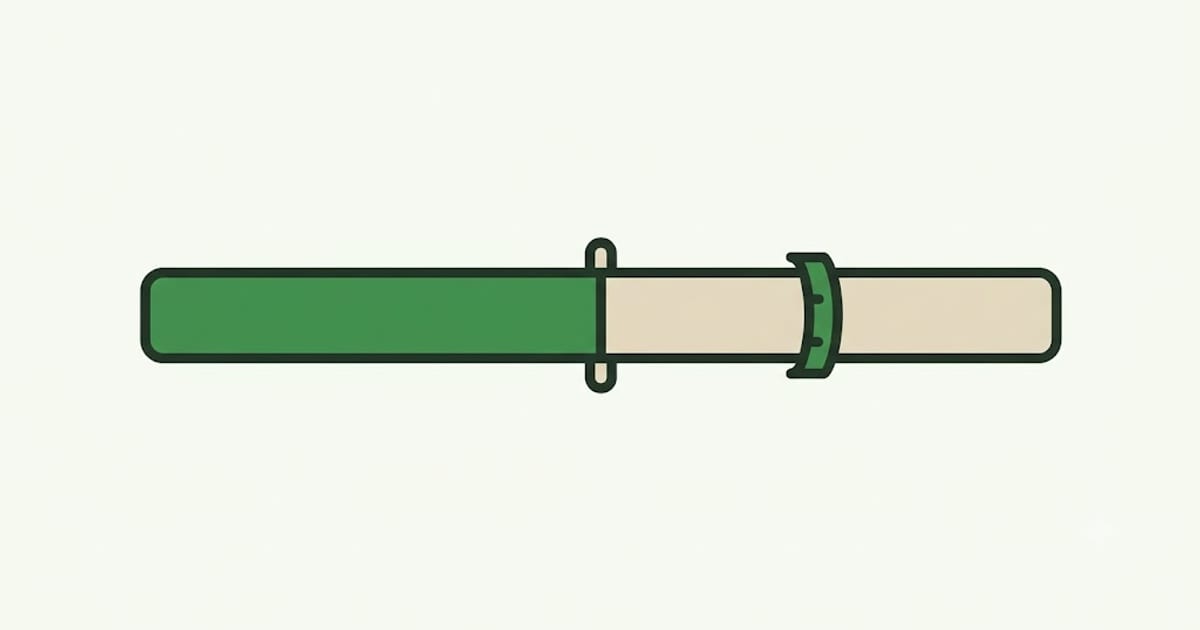
"When in doubt, size up" is repeated so often that people apply it to everything. It is right for some gear and wrong for others, because what goes wrong when a thing is too big is different in each case.
Here is the rule for each, and why.
Collars — size up
A collar that is slightly large is adjustable down. A collar that is slightly small is not adjustable up, and a collar fastened on its very last hole is at the end of its useful range and its weakest point.
Take the size whose range puts your dog nearer the middle. If both sizes would put the dog at an extreme, the larger one is the better error, because you can run it in from there.
Exception: if the larger size, at its tightest setting, is still loose enough to pass over the head, it is not a candidate at any setting. Check that before deciding.
Harnesses — fit the chest, adjust the neck
Chest girth is the load-bearing dimension and the one with the least adjustment. Neck straps usually adjust over a wide range.
So: pick the size whose girth range centres on your dog, and accept running the neck strap near one end.
If your dog's girth sits exactly on the boundary, size up — but check two specific things on arrival:
- Can the girth strap be brought in enough to pass the two-finger test?
- Does the front piece stay centred, or does it rotate because the harness is too large front to back?
A harness that rotates is worse than one that is slightly snug. Rotation causes chafing on both sides and moves the lead attachment off the spine.
Crates — size down, or use a divider
This is where "size up" goes wrong.
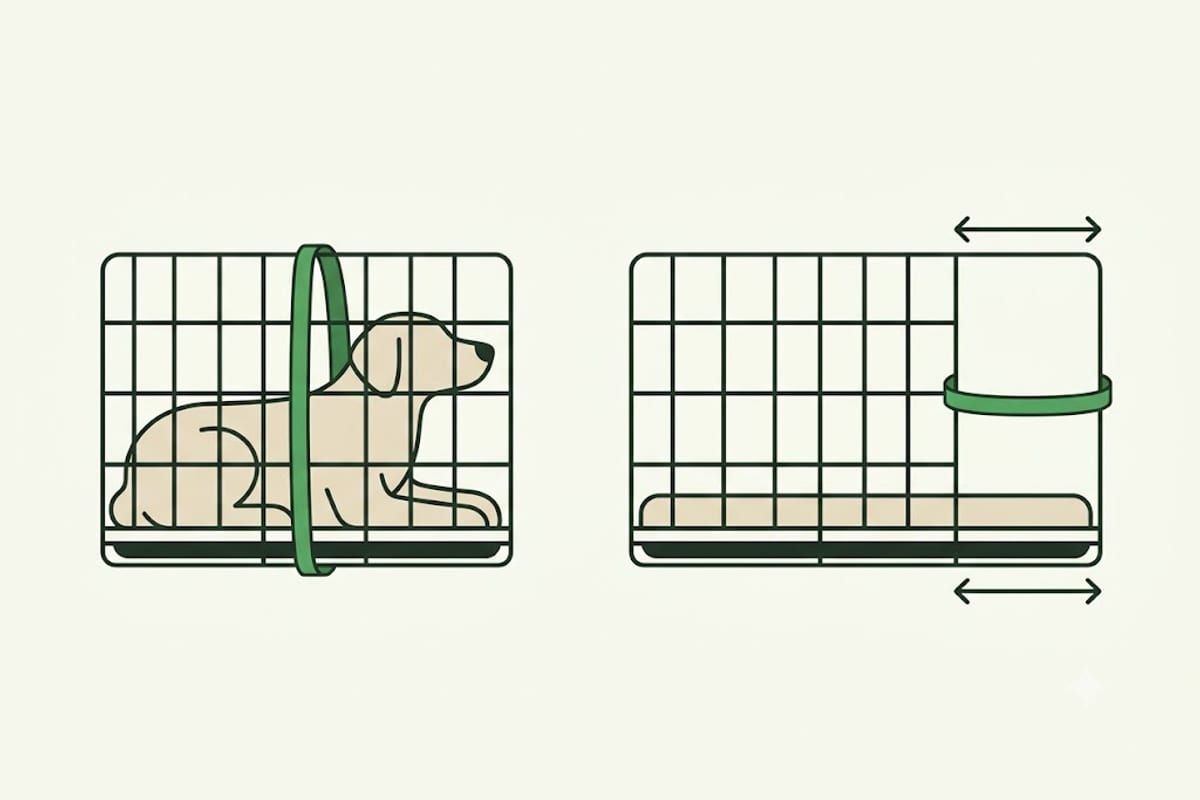
A crate should let the dog stand without ducking, turn around, and lie stretched out — and not much more. That is not meanness; it is how crate training works. A dog will not usually soil where it sleeps, but it will happily use a spare corner as a toilet if there is one.
An oversized crate with a puppy in it teaches the opposite of what you want, and the habit is hard to undo.
So when between crate sizes:
- For an adult dog, take the smaller if it still passes the stand-turn-stretch test.
- For a puppy, buy the crate for the adult size and fit a divider. Move the divider back as the dog grows.
The exception is a dog that will spend long periods in the crate, or a brachycephalic breed that needs more airflow. Then take the larger.
Coats — measure length first
Dog coats are sized by back length, from the base of the neck to the base of the tail. Girth is secondary because most coats have adjustment there and none along the back.
Between sizes:
- Too long is the more common failure. A coat that extends past the base of the tail interferes with toileting and catches on things. It also usually means the chest piece sits too far back.
- Too short leaves the loins uncovered, which for a short-coated dog in cold weather is the part that most needed covering.
So size to the back length, then check the girth. If the back length lands between sizes, go down and check the girth still closes — a slightly short coat that fits the body is better than a long one that rotates.
Boots — size up, but check the width
Paw measurements are taken with the dog's weight on the paw, which spreads it. Many people measure a lifted paw and get a number a size too small.
Between sizes, go up — a boot that is slightly large can be tightened at the strap, and a tight boot will be shed or will rub within a mile.
But check width as well as length. A long narrow boot on a broad paw is a worse fit than a shorter one, and boot charts often list only one dimension.
Reading the ranges properly
Before deciding, look at whether the two sizes overlap.
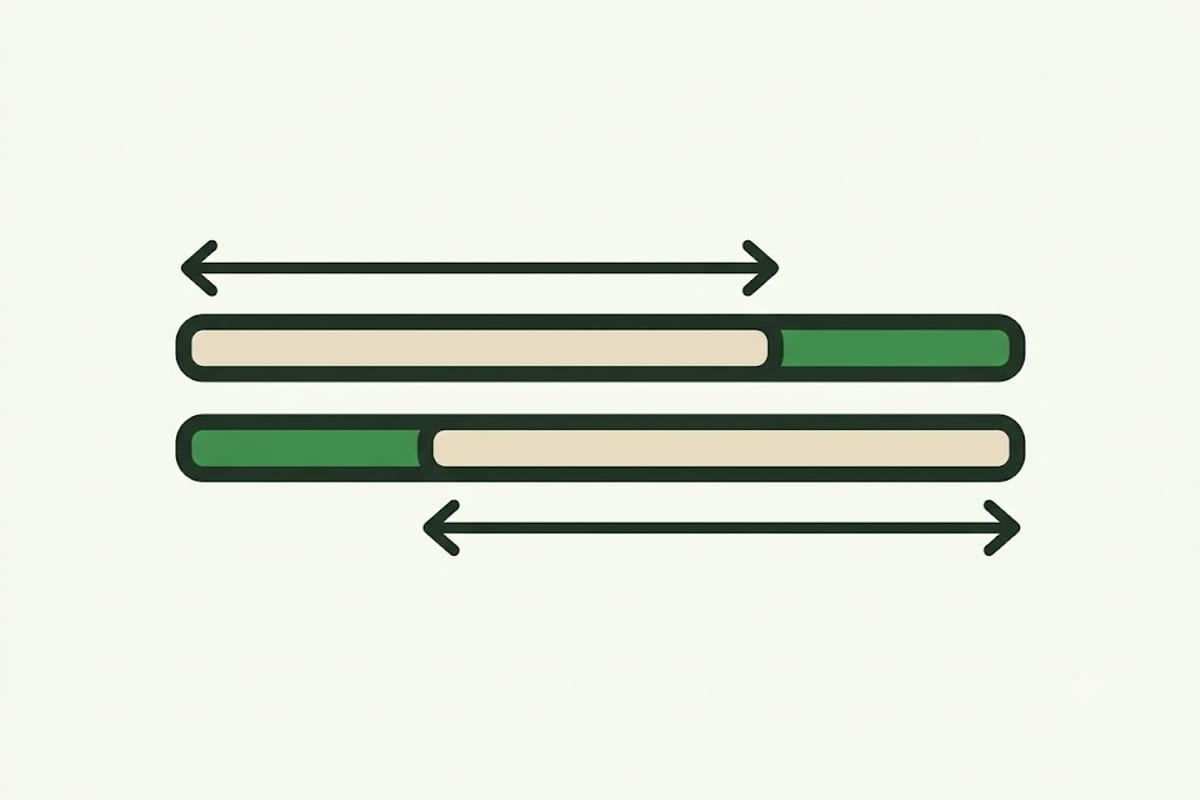
Many makers publish overlapping ranges — medium 16–22, large 20–28. If your dog measures 21, both sizes genuinely fit and the choice is about where in each range you land: near the top of medium, or near the bottom of large. Take the one that puts you nearer the middle.
If the ranges do not overlap — medium 16–20, large 22–28 — and your dog measures 21, neither size fits properly. That is a reason to look at a different maker rather than to force one.
The measurement itself
Before agonising over the size, check the measurement is right. Most between-sizes problems are measuring problems:
- Tape snug against the body, not floating on the coat
- Dog standing square, not sitting
- Measure twice, on different days if the dog was restless
A tape lying over a thick double coat can read two inches high, which is a whole size on a small dog.