
Most adult Lhasa Apsos weigh 12 to 18 pounds, the range on the AKC's Lhasa Apso page. The breed standard does not specify weight. It says size is variable, ideally 10 to 11 inches at the shoulder for males, and that females may be slightly smaller.
Lhasa size at a glance
| Male | Female | |
|---|---|---|
| Height at the shoulder (standard) | 10–11 in ideal | may be slightly smaller |
| Weight (AKC guide) | 12–18 lb | 12–18 lb, often toward the lower half |
| Adult height reached | about 10–12 months | about 10–12 months |
| Adult weight reached | 12–18 months | 12–18 months |
| Life expectancy (AKC) | 12–15 years | 12–15 years |
The breed standard was revised in 2019. Its wording on size is short: "Variable, ideally between 10 and 11 inches at the shoulder."
Why a Lhasa weighs more than it looks
A Lhasa Apso is only 10 or 11 inches tall, and people sometimes expect it to weigh the same as a Maltese or a small Poodle. It is a heavier dog than that because of how it is built.
It is long. The Lhasa's body is longer than it is tall. At the same height, a longer body carries more weight.
It is solid. Lhasas were bred as indoor sentinel dogs in Tibetan monasteries and villages, and they have firm muscle and moderate bone rather than the fine build of many toy breeds.
It has a lot of coat. A full coat can add noticeable weight on its own, especially when it is thick or damp.
So a 16-pound Lhasa is not necessarily heavy. A 10-inch female and an 11-inch male will usually sit at different ends of the 12 to 18 pound range.
The coat hides the dog
A Lhasa in full coat is a floor-length curtain of straight hair. You cannot see the waist, the ribs or the outline of the hips.
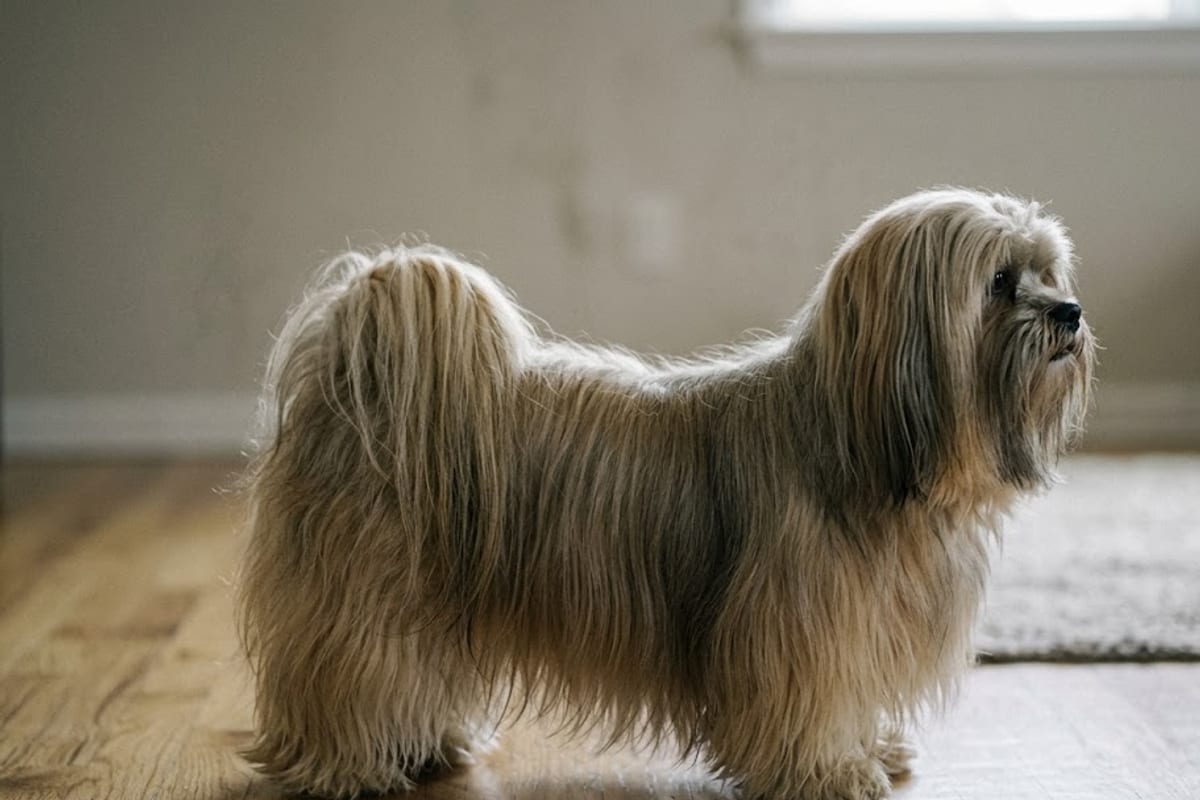
Check body condition with your hands:
Ribs. Part the coat and feel along the side of the chest. The ribs should be easy to find under a thin layer of fat. If you have to press, there is too much.
Waist. Put your hands on the dog behind the ribs. The body should narrow a little before the hips. Lhasas are sturdy, so the waist is modest, but it should be there.
Back. Run your hand along the spine. It should be firm and easy to trace. A soft, rounded back or a fat pad at the base of the tail means extra weight.
On the 9-point body condition score used in the WSAVA Global Nutrition Guidelines, 4 and 5 are ideal and each point above 5 adds roughly 10% to body weight. For a 14-pound Lhasa, one point is about 1½ pounds.
Lhasa or Shih Tzu?
The two breeds look alike, especially in a short trim, and they are often confused.

| Lhasa Apso | Shih Tzu | |
|---|---|---|
| Weight (AKC) | 12–18 lb | 9–16 lb |
| Height | 10–11 in | 9–10.5 in |
| Muzzle | medium length | short, flat face |
| Temperament | independent, watchful | outgoing, affectionate |
If you have a "Lhasa" at 10 pounds with a very short face, there may be Shih Tzu in the background.
Why weight matters for a long-backed dog
A long body on short legs puts more strain on the back and joints when the dog jumps down from furniture, climbs stairs or twists. Extra weight adds to that strain. Keeping a Lhasa lean is one of the simplest ways to protect its back as it ages.
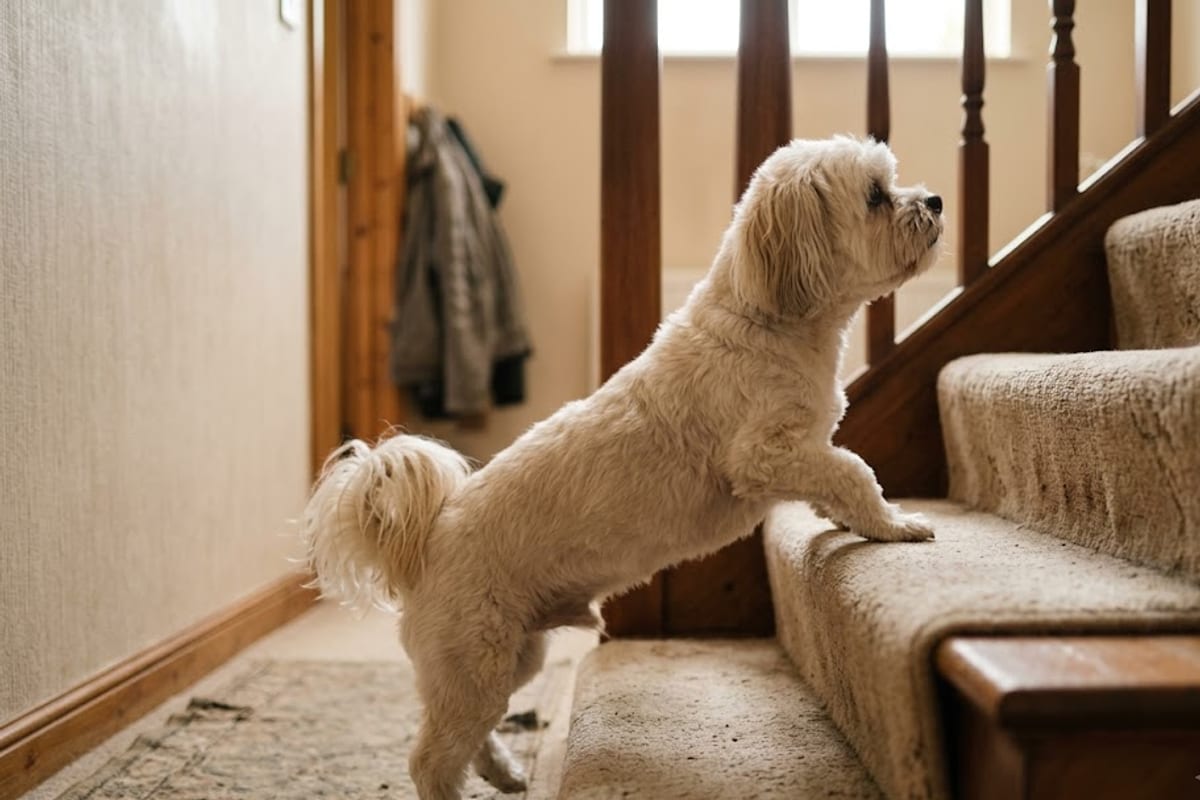
Lhasas often live into their mid-teens. Over that long life, weight tends to creep up slowly as activity drops. A dog that goes from 14 to 17 pounds between ages 7 and 11 on the same food is eating more than it uses.
Small, practical habits help. Use a ramp or step for the sofa or bed if your Lhasa likes to be up there. Weigh the dog monthly. Measure food rather than filling the bowl by eye.
Lhasa puppies
Lhasas are a small breed, but they mature more slowly than toy breeds. Most reach adult height by 10 to 12 months and fill out through the chest and body until 12 to 18 months. The adult coat also takes time to grow in, which can make a young Lhasa look scrawny before it looks like a Lhasa.
The Lhasa Apso puppy weight chart at 6 months shows expected weight by age.
Feeding a Lhasa
Using the standard veterinary energy formula (resting energy of 70 × body weight in kilograms to the power 0.75, multiplied by an activity factor), a 14-pound adult Lhasa needs roughly 350 to 450 kilocalories a day. That varies with activity and neutering. The number on the dog food bag is a starting point. Adjust by body condition: if the ribs are getting harder to feel, reduce the daily amount by about 10% and check again in a few weeks.
Lhasas are sometimes picky eaters. Owners respond by adding toppers or switching to richer food, which can lead to weight gain. If your Lhasa leaves food, set a fixed mealtime, take the bowl away after 15 to 20 minutes, and offer the next meal at the usual time.
Weight and gear
For a Lhasa, coat length changes how gear fits as much as weight does. Measure the neck and chest against the body, then add a small allowance if you keep the dog in full coat. Starting points are on the Lhasa Apso harness size, collar size and coat size pages.
Senior Lhasas
Lhasas are one of the longer-lived small breeds, with many reaching 15 or older. Their weight pattern over that long life usually has two phases. Between about 7 and 12, weight tends to creep up as activity drops. In the later teens, many lose weight and muscle as appetite and dental health decline.
A monthly weigh-in is the simplest way to see both. Your groomer, who handles the dog's body every few weeks, is also well placed to notice when the body under the coat changes. If an older Lhasa starts leaving food or eating slowly, check its mouth. Small breeds are prone to dental disease, and a sore mouth is a common and treatable cause of weight loss.
Exercise for a Lhasa
Lhasas are not demanding dogs, but they do need daily activity to stay lean and keep their muscle. Two walks of 20 to 30 minutes suit most adults, with some play indoors. Because of the long back, activity that involves a lot of jumping, especially down from height, is best kept to a minimum. Steady walking, sniffing games and short bursts of play in the yard keep a Lhasa fit without loading the spine.
If your Lhasa needs to lose weight, combine a modest cut in food with a little more walking rather than relying on either alone. A safe rate of loss is about 1 to 2% of body weight a week, which for a 17-pound Lhasa is only a quarter of a pound or so.
Frequently asked questions
How much should a full-grown Lhasa Apso weigh? Usually 12 to 18 pounds. Males and taller dogs tend toward the upper half.
Is 20 pounds too heavy for a Lhasa Apso? For most Lhasas, yes. Check the ribs and waist under the coat before deciding.
Do Lhasa Apsos get fat easily? They are not among the breeds most prone to obesity, but their long lives and modest exercise needs make slow weight gain common in older dogs.
When is a Lhasa Apso full grown? Height by about a year, weight and body by 12 to 18 months. See when do dogs stop growing for how this compares with other sizes.
Adult weights for other breeds are in the average weight by dog breed chart.