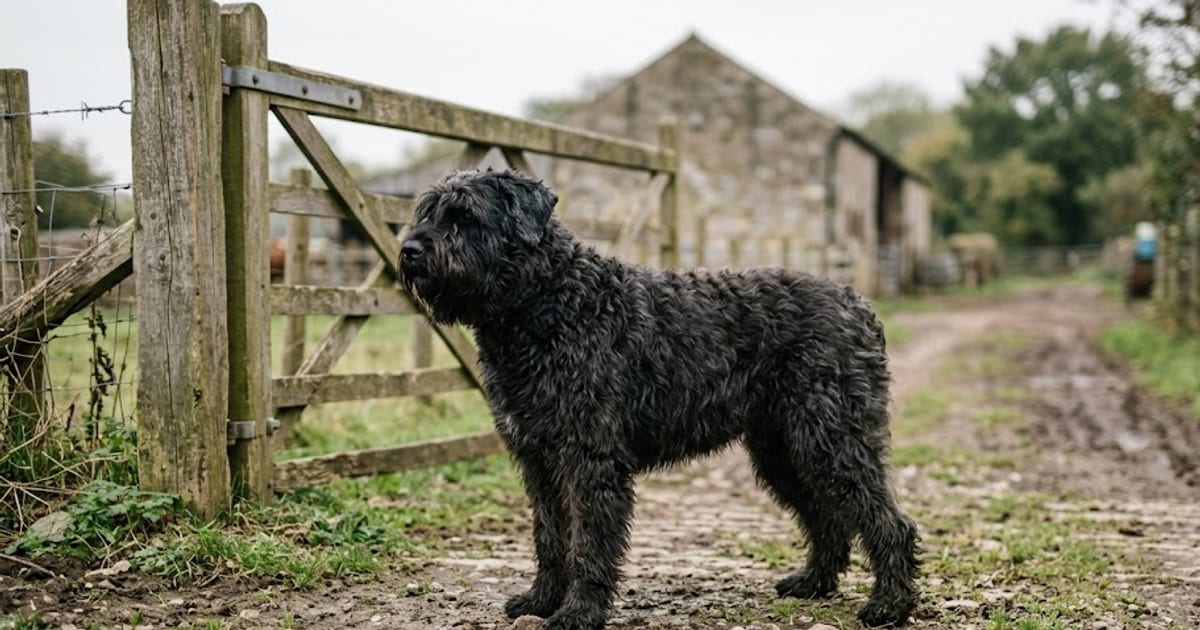
An adult Bouvier des Flandres usually weighs 70 to 110 pounds, according to the AKC's Bouvier page. The breed standard sets height rather than weight: 24½ to 27½ inches at the withers for males and 23½ to 26½ inches for females, with the ideal at the middle of each range, 26 inches for a male and 25 inches for a female.
Bouvier size at a glance
| Male | Female | |
|---|---|---|
| Height (standard) | 24.5–27.5 in, ideal 26 in | 23.5–26.5 in, ideal 25 in |
| Typical weight (within the AKC range of 70–110 lb) | about 80–110 lb | about 70–90 lb |
| Body proportion | square: length equals height | square |
| Adult height reached | about 12–15 months | about 12–15 months |
| Adult weight reached | about 2 years | about 2 years |
| Life expectancy (AKC) | 10–12 years | 10–12 years |
The AKC gives one weight range for both sexes. The split in the table is an estimate based on the height difference between males and females, not an official figure. Dogs well outside the height limits are severely penalized under the breed standard.
Why the range is 40 pounds wide
Height varies by three inches. A 24½-inch female and a 27½-inch male are both correct Bouviers, and three inches on a square, deep-bodied dog adds a lot of mass.
The standard asks for power without heaviness. It describes a dog that is "powerfully built, strong boned, well muscled, without any sign of heaviness or clumsiness." A well-muscled male at the top of the height range can weigh 100 pounds with no excess fat. A small female at 90 pounds is probably carrying extra.
Sex differences. Males are taller and broader through the head and chest.
As a rough guide, a Bouvier at the ideal height (26 inches for males, 25 for females) in good condition often weighs around 90 to 100 pounds for a male and 75 to 85 pounds for a female. Measure your dog's height before comparing its weight with anyone else's.
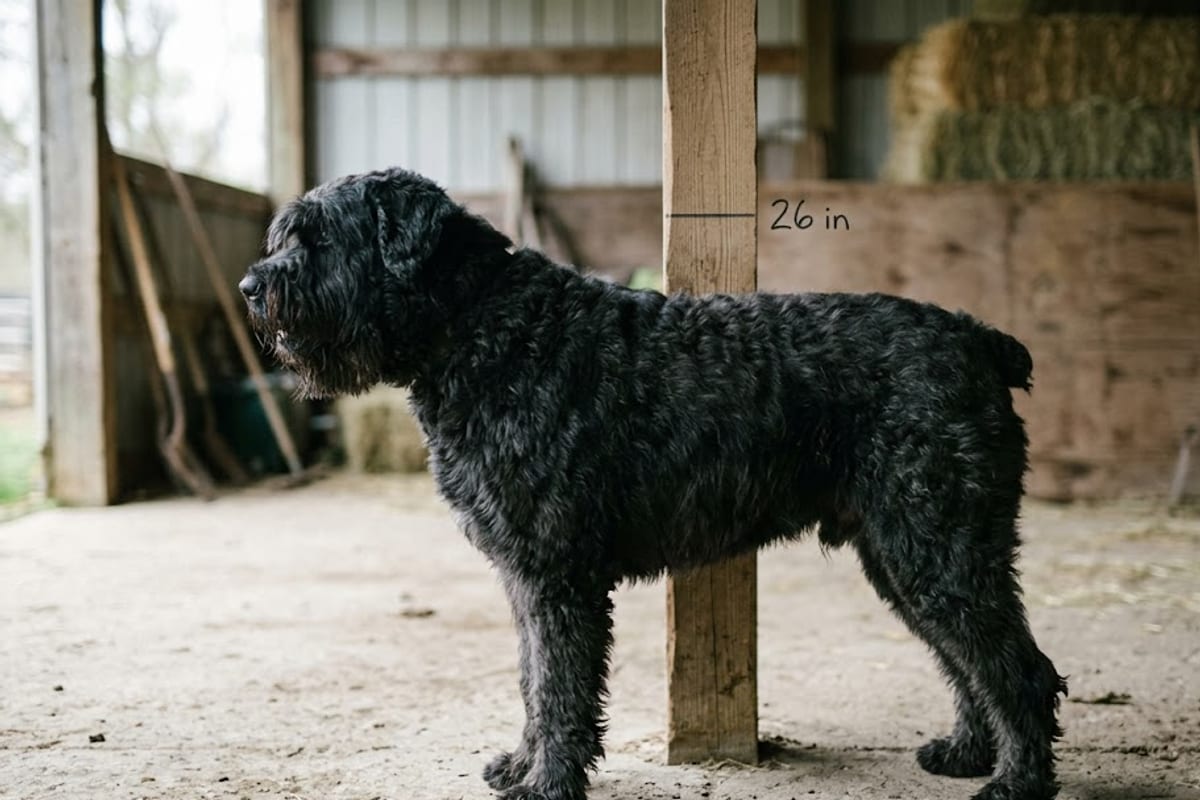
Height is measured at the withers, the top of the shoulder blades, with the dog standing square on a level surface.
The coat problem
The Bouvier's rough, tousled double coat and heavy beard make the dog look larger and rounder than it is. An untrimmed Bouvier can hide 10 or 15 pounds of fat. A freshly trimmed dog shows what is underneath.
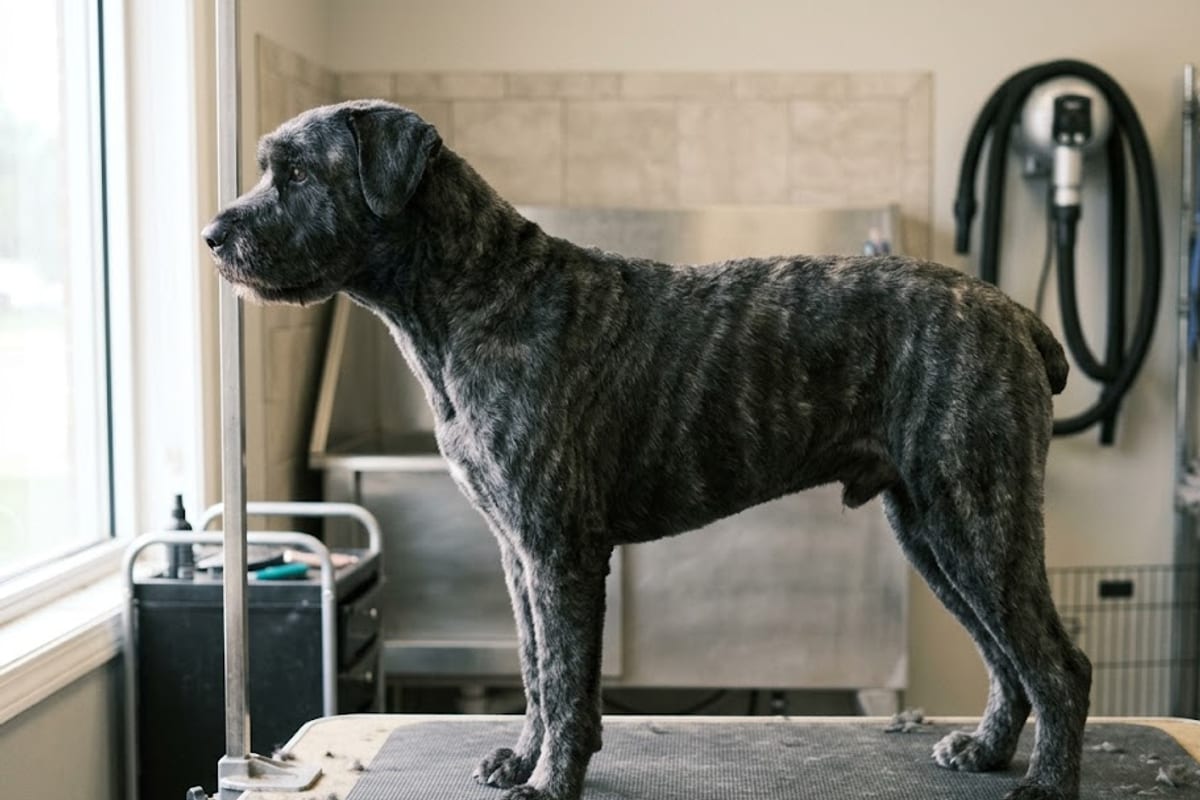
Between trims, check with your hands:
Ribs. Work your fingers down through the coat to the skin along the chest. The ribs should be easy to feel with light pressure under a thin layer of fat.
Waist. With your hands on both sides behind the ribs, you should feel the body narrow a little before the hindquarters.
Topline and hips. The back should feel firm and muscular. A soft back or fat over the hips means extra weight. Sharp hip bones mean the dog is thin.
On the 9-point body condition score used in the WSAVA Global Nutrition Guidelines, 4 and 5 are ideal and each point above 5 is roughly 10% extra weight. For a 90-pound Bouvier, that is about 9 pounds per point.
A working breed with a working build
The Bouvier was developed in Flanders as an all-round farm dog: driving cattle, pulling carts, and guarding. The standard's picture of a compact, square, muscular dog comes from that work.
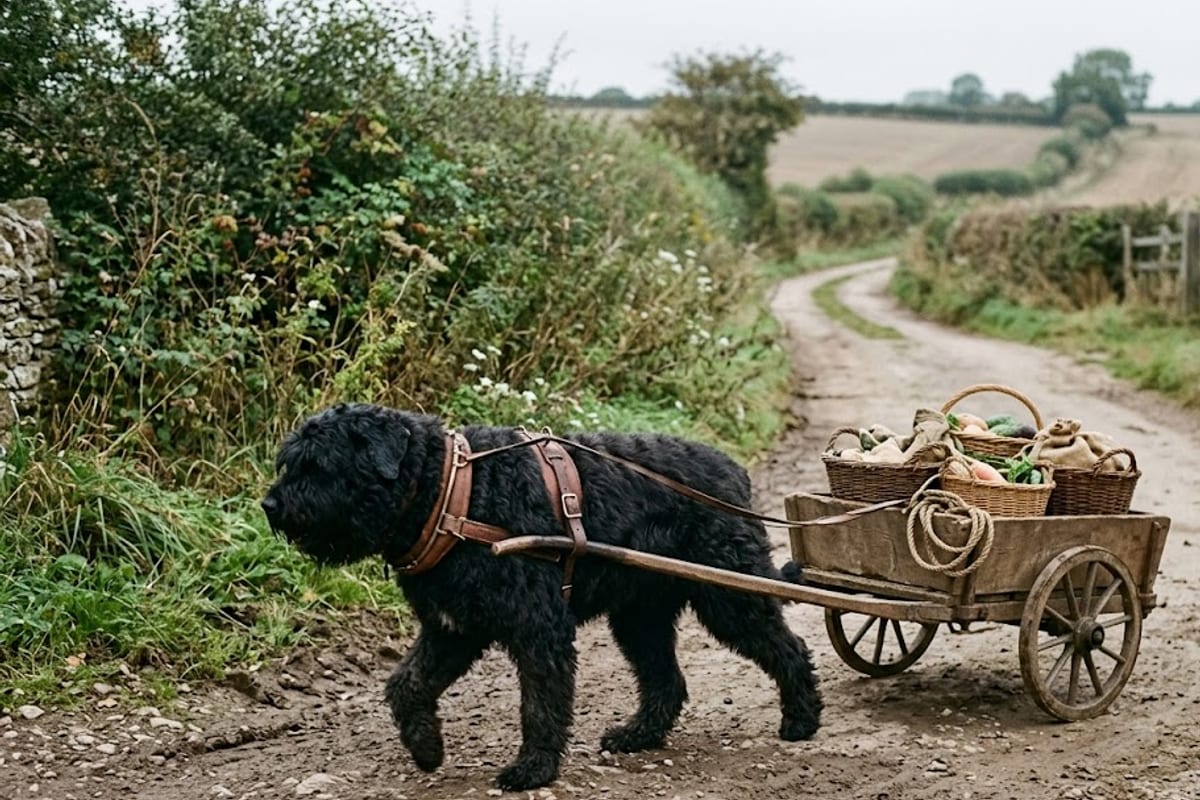
A pet Bouvier does not need to pull a cart, but it does need regular exercise to keep the muscle that gives the breed its shape. A Bouvier that loses muscle and gains fat can end up at the same weight on the scale while looking and moving very differently. That is another reason to judge condition by hand rather than by the number alone.
Growth and joints
Bouviers are a large breed and grow for about two years. Most reach adult height between 12 and 15 months, then fill out through the chest, neck and head. Males may not look finished until 2½ to 3 years.
Like other large breeds, Bouviers can be affected by hip and elbow dysplasia. Keeping a puppy lean during growth is one of the few things an owner controls. Feed a large-breed puppy food, avoid supplements unless your vet recommends them, and keep the puppy at a condition where the ribs are easy to feel.
The Bouvier des Flandres puppy weight chart at 6 months shows typical weight by age and the share of adult weight reached.
Keeping weight in check
- Weigh monthly. Many vet clinics let you use their walk-on scale. At home, weigh yourself holding a smaller dog, or use a large pet scale for a Bouvier.
- Feed by condition. Food bag guides assume an average dog. Adjust by about 10% at a time and recheck in three weeks.
- Count every treat. Large dogs get large treats, and they add up.
- Adjust for age. Older Bouviers often need fewer calories. A gradual gain between ages 6 and 9 is common and easy to miss under the coat.
Weight and gear
A Bouvier's thick neck and deep chest need gear sized by measurement. Coat length also changes the fit between trims. Starting sizes are on the Bouvier collar size, harness size and crate size pages.
How much food a Bouvier needs
Veterinary calorie estimates start from resting energy requirement: 70 × body weight in kilograms raised to the power 0.75. For a 95-pound (43 kg) male Bouvier, resting energy is about 1,180 kilocalories a day. A neutered adult pet is usually fed 1.4 to 1.6 times that, roughly 1,650 to 1,900 kilocalories. An 80-pound female works out to about 1,035 at rest and roughly 1,450 to 1,650 for a neutered pet.
Divide by the calories per cup on your dog's food to get a daily amount. Feed that for three weeks, then adjust by body condition. An active Bouvier doing herding, carting or dog sports will need more. A sedentary one will need less.
Senior Bouviers
Bouviers typically live 10 to 12 years. From about seven onward, many slow down, lose some muscle over the hindquarters and gain fat over the ribs and loin. Because the coat hides that shift, the dog can look the same while its body composition changes. Regular checks by hand and steady, moderate exercise help an older Bouvier keep the muscle that supports its joints. If an older Bouvier loses weight without a change in food, have it checked.
Exercise and muscle
Bouviers were bred for a full day's work on a farm, and most need at least an hour of activity a day to stay in good condition. Long walks, off-leash running in a safe area, herding, tracking and obedience work all suit the breed. A Bouvier that gets less exercise than it needs tends to lose muscle over the hindquarters and gain weight around the middle, which changes both how it looks and how well its joints are supported.
Frequently asked questions
How big does a Bouvier des Flandres get? Males stand 24½ to 27½ inches and females 23½ to 26½ inches at the shoulder. Most adults weigh 70 to 110 pounds.
Is 120 pounds too heavy for a Bouvier? Almost always. Even a tall male at the top of the height range is rarely lean above about 110 pounds.
Do male and female Bouviers weigh the same? The AKC gives one weight range, but males are taller and usually 10 to 20 pounds heavier.
When is a Bouvier full grown? Height by 12 to 15 months, weight and maturity by about 2 years or a little later. See when do dogs stop growing.
Adult weights for other breeds are in the average weight by dog breed chart.