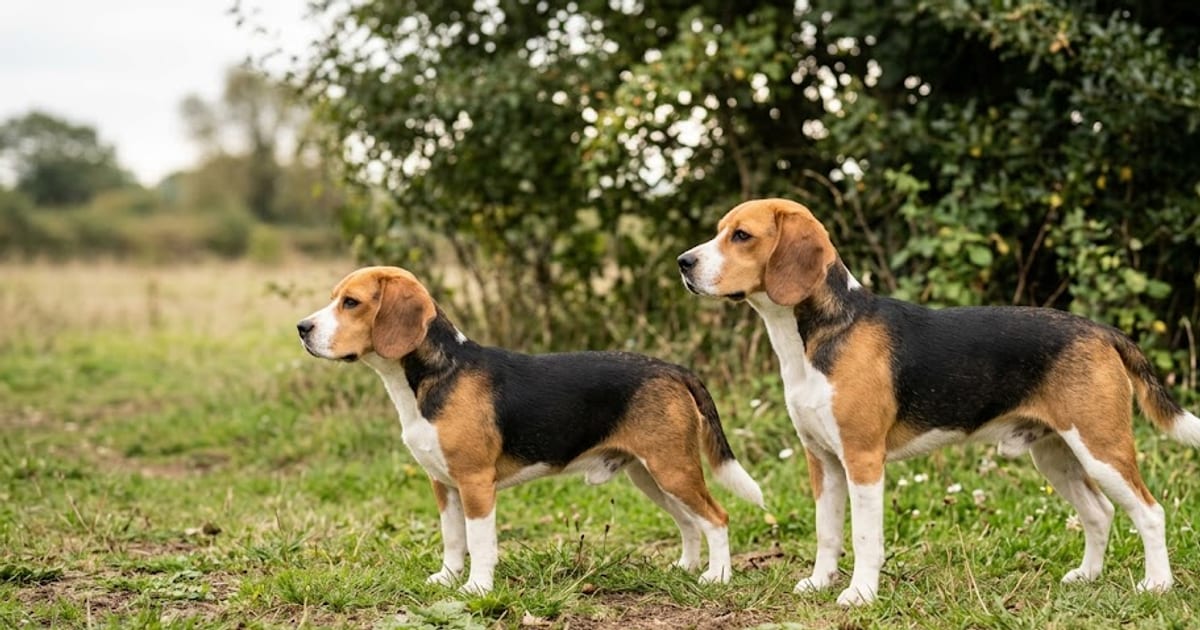
A Beagle's healthy weight depends on its height. The AKC recognizes two varieties: Beagles 13 inches and under at the shoulder, which should weigh under 20 pounds, and Beagles over 13 inches but not over 15 inches, which should weigh 20 to 30 pounds. Figures come from the AKC Beagle breed page, and the height split is written into the breed standard.
The two Beagle varieties
| Variety | Height at the shoulder | Adult weight |
|---|---|---|
| 13-inch | 13 in and under | under 20 lb |
| 15-inch | over 13 in, up to 15 in | 20–30 lb |
Both varieties are the same breed and come from the same pedigrees. Litters can contain puppies that end up in either class, so a Beagle's papers will not tell you which variety it is. A tape measure will.
"20 to 30 pounds" is the figure most people quote, but it only applies to the taller variety. If your Beagle is 12½ inches tall and weighs 26 pounds, that is not a heavy 15-inch Beagle. It is a 13-inch Beagle carrying 6 or more pounds of extra weight.
How to measure your Beagle's height
Height is measured at the withers, the highest point of the shoulder blades, with the dog standing square on a level floor.
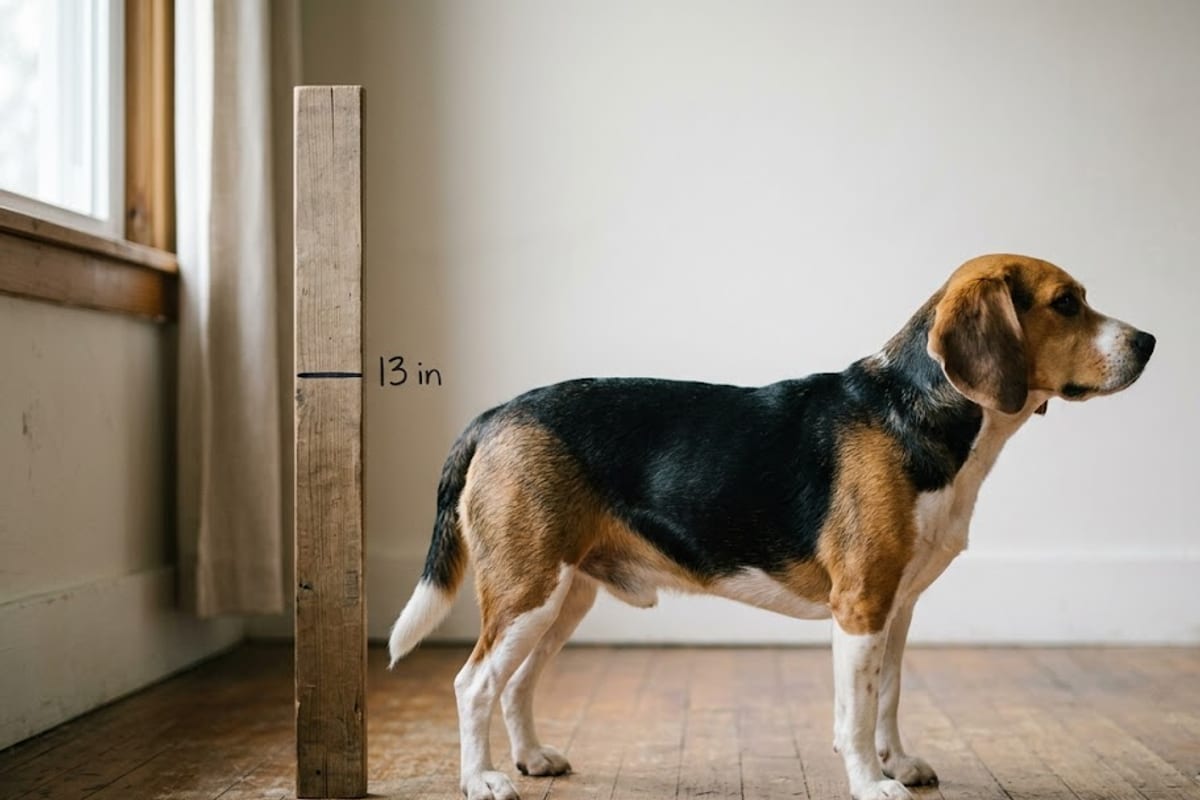
- Stand the dog on a hard floor with its front legs straight under the shoulders and its head in a natural position.
- Find the top of the shoulder blades with your fingers. They are the two bony points just behind the base of the neck.
- Lay a ruler or a flat book level across the top of the shoulder blades and measure from the floor to its underside.
Measure two or three times. Beagles rarely stand still, and a dog leaning forward will read half an inch short.
Why Beagles put on weight so easily
Beagles gain weight faster than almost any other breed. In a 2021 study of 22,333 dogs seen at UK veterinary practices, published by the Royal Veterinary College's VetCompass programme, Beagles had 2.67 times the odds of being overweight compared with crossbred dogs. Only Pugs were higher.
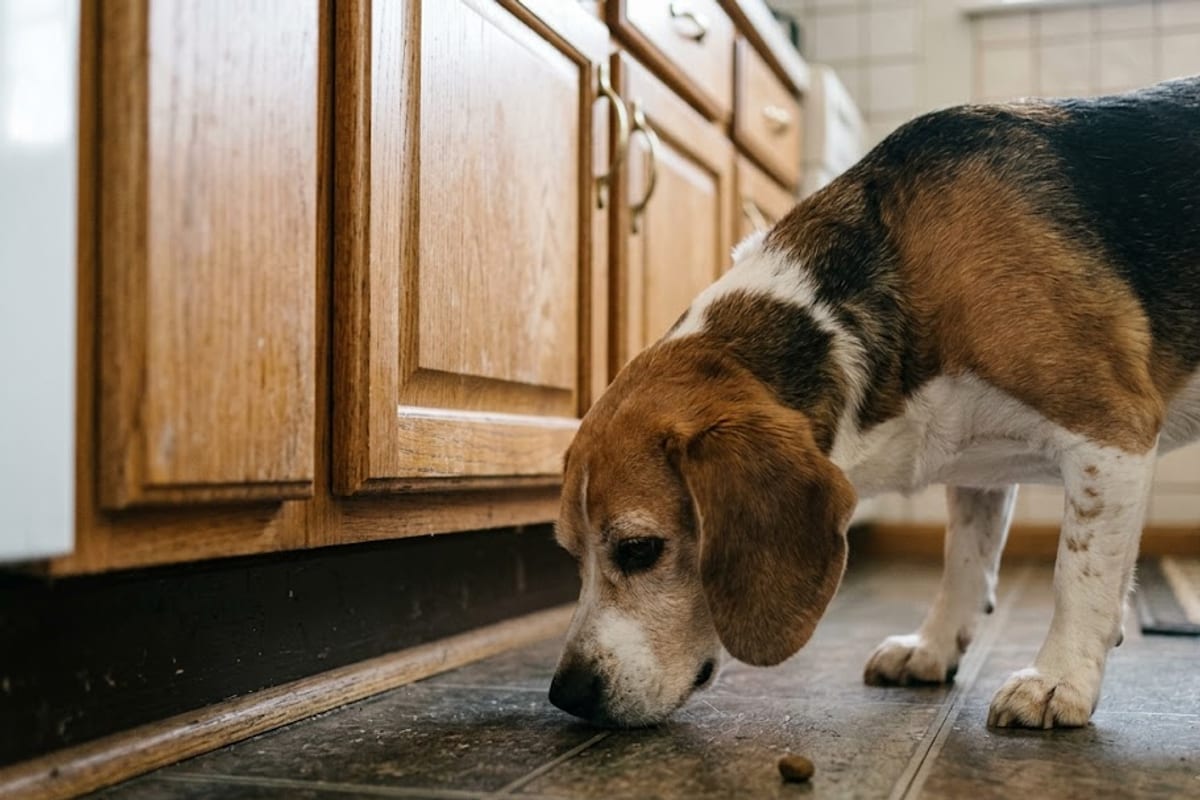
The reasons are practical rather than mysterious. Beagles were bred as pack hounds to follow scent all day, and they remain intensely food motivated. They find and eat food that other dogs ignore: dropped crumbs, the cat's bowl, the contents of a handbag. The same drive makes them easy to train with treats, and the treats add up.
For a small dog, a small excess matters. Two extra biscuits a day is not much for a 70-pound Labrador. For an 18-pound Beagle, the same two biscuits can be 10% of its daily calories.
Is your Beagle the right weight?
The scale gives you a number. Your hands and eyes tell you whether that number is right for your dog.
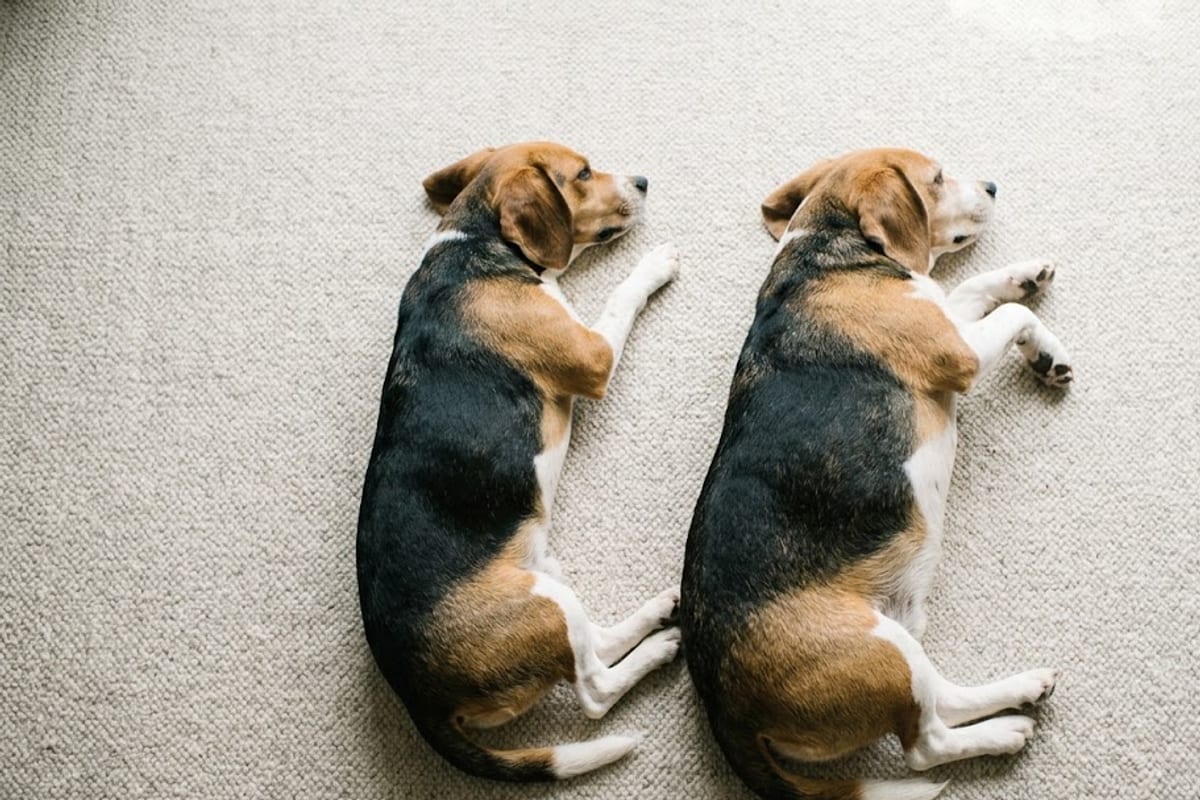
Ribs. Beagles have short coats, so this check is easy. Run your palms lightly along the chest. At a healthy weight you feel each rib with light pressure. If you have to press to find them, there is too much fat over them.
Waist. Look down from above. A fit Beagle narrows behind the ribs. An overweight Beagle is the same width from chest to hips, or wider in the middle.
Tuck. From the side, the belly should rise toward the hind legs.
Vets record this as a body condition score. On the 9-point scale in the WSAVA Global Nutrition Guidelines, 4 and 5 are ideal and each point above 5 means roughly 10% more body weight. A 15-inch Beagle at score 7 that should weigh 24 pounds will usually weigh around 29 to 30, which is still inside the breed range. That is exactly why the breed range alone cannot tell you if your dog is overweight.
Beagle puppy growth
Beagles are a small-to-medium breed and grow faster than large dogs. Most reach adult height by about 12 months and finish filling out between 12 and 18 months. A 15-inch Beagle puppy typically weighs half its adult weight at around 4 to 5 months.
For expected weight month by month, see the Beagle puppy weight chart at 6 months. Keep in mind that the chart assumes a 15-inch adult. A puppy tracking well below it may simply be heading for the 13-inch class.
Getting weight off a Beagle
Beagles lose weight the same way other dogs do, but their appetite makes it harder to stick to.
- Weigh the food. Scoops vary, and a heaped cup can be 20% over a level one.
- Count treats as food. Take the day's treats out of the daily ration rather than adding them on top.
- Use part of the meal for training and enrichment. A snuffle mat or scatter feed uses the Beagle's nose and slows eating down.
- Secure the kitchen. Bins with lids, cat food out of reach, bags off the floor. A Beagle's weight is often decided by what it finds rather than what it is given.
- Aim for slow loss. About 1 to 2% of body weight per week is safe. For a 28-pound Beagle that is roughly a quarter to half a pound a week.
If your Beagle gains weight while eating less, or seems sluggish and cold-intolerant, ask your vet to check thyroid function. Hypothyroidism is one of the conditions seen in the breed.
Beagle weight and gear
A Beagle that gains or loses several pounds changes shape through the chest and neck more than it changes in height. Harness and collar sizes should follow those measurements. Breed starting points are on the Beagle harness size and Beagle collar size pages, and the Beagle crate size page covers crates.
Senior Beagles
Beagles commonly live 10 to 15 years, and their weight pattern changes with age. Many gain between the ages of 6 and 10, when activity drops but appetite does not. Later, in their teens, some start to lose weight and muscle, particularly over the back and hindquarters.
Both changes are easier to catch with a monthly weigh-in than by eye. A senior Beagle that has lost a pound or two over a few months should see a vet, even if it seems well. Dental disease, kidney disease and other age-related problems often show up as slow weight loss first.
For an older Beagle that is gaining, the same rules apply as for a younger dog: measure food, count treats and keep walks regular. Short, frequent walks suit most seniors better than occasional long ones.
Frequently asked questions
How much should a female Beagle weigh? The AKC does not give separate figures for males and females. Height sets the range: under 20 pounds for a 13-inch Beagle and 20 to 30 pounds for a 15-inch Beagle. Females tend to sit a pound or two lighter than males of the same height.
Is 35 pounds too heavy for a Beagle? Yes, for almost every Beagle. It is 5 pounds over the top of the 15-inch range. Check the ribs and waist, and talk to your vet about a weight-loss plan.
How big do Beagles get? No taller than 15 inches at the shoulder under the AKC standard. Dogs taller than that are disqualified from the show ring, though some pet Beagles do exceed it.
At what age is a Beagle full grown? Most Beagles reach their adult height around 12 months and their adult weight by 18 months. The broader pattern is covered in when do dogs stop growing.
Adult weight ranges for other breeds are listed in the average weight by dog breed chart.