
In the United States, "Cocker Spaniel" usually means the American Cocker Spaniel, and adults weigh 25 to 30 pounds for males and 20 to 25 pounds for females. The English Cocker Spaniel is a separate breed, taller and heavier at 28 to 34 pounds for males and 26 to 32 pounds for females. Both sets of figures come from the AKC breed pages for the Cocker Spaniel and the English Cocker Spaniel.
Outside North America the naming reverses. In the UK and most of Europe, "Cocker Spaniel" means the English breed, and the American breed is called the American Cocker.
The two breeds compared
| American Cocker Spaniel | English Cocker Spaniel | |
|---|---|---|
| Male weight | 25–30 lb | 28–34 lb |
| Female weight | 20–25 lb | 26–32 lb |
| Male height | 14.5–15.5 in | 16–17 in |
| Female height | 13.5–14.5 in | 15–16 in |
| Head | rounded, short muzzle | flatter skull, longer muzzle |
| Coat | long, heavy feathering | moderate |
| Life expectancy (AKC) | 10–14 years | 12–14 years |
The American Cocker's standard puts the ideal height at 15 inches for males and 14 inches for females, and allows half an inch either way.
Which Cocker do you have?
Registration papers settle it. Without papers, look at the head and legs. The American Cocker has a rounded, domed skull, a short muzzle and a pronounced stop between the eyes. The English Cocker is longer in the leg and muzzle, with a flatter skull, and looks more like a small setter.
Height is the other clue. A Cocker over 16 inches at the shoulder is almost certainly an English Cocker. An English Cocker weighing 30 pounds may be perfectly lean, while an American Cocker at 30 pounds is at the top of the male range.
Why Cockers are hard to judge by eye
The American Cocker carries long, silky feathering on the chest, belly and legs. In full coat it hides the belly line completely, so the most useful visual check of weight, the tuck from chest to hind legs, is not available.
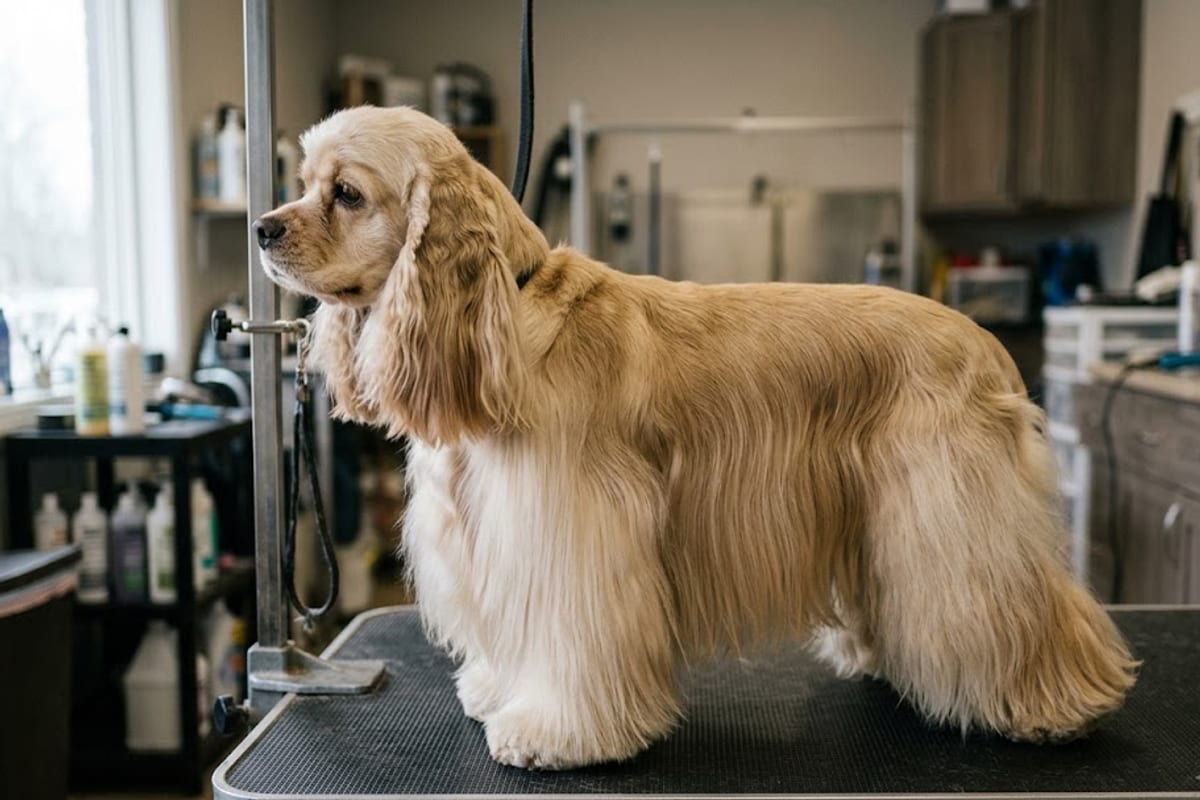
Use your hands:
Ribs. Lay your palms on the sides of the chest under the coat. You should feel each rib under a thin layer of fat without pressing.
Waist. From above, the body should narrow behind the ribs. On a heavily coated dog, feel for it with your hands on both sides.
Belly. Reach under the feathering and feel the belly line. It should rise from the chest toward the hind legs, not hang.
The 9-point body condition score in the WSAVA Global Nutrition Guidelines treats 4 and 5 as ideal. Each point above 5 is about 10% extra weight, around 2½ pounds for a 25-pound Cocker.
Show lines and working lines
English Cockers in particular come from two quite different populations.
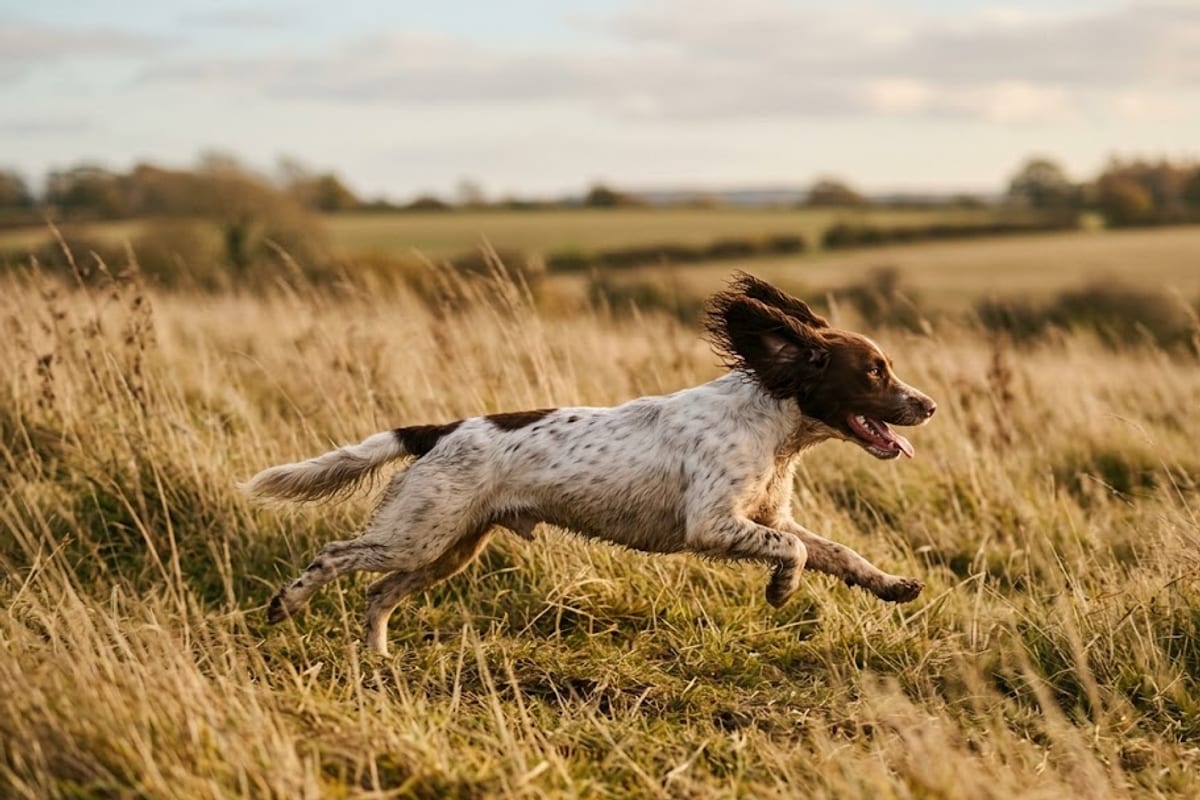
Working English Cockers are bred for flushing and retrieving game. They are often lighter, leaner and shorter-coated, and a fit working dog can sit below the standard range without being underweight.
Show English Cockers carry more coat and substance and tend to sit in the standard's range.
American Cockers are mostly show and companion dogs, with fewer working lines.
How likely is a Cocker to gain weight?
Cockers are among the breeds more prone to weight gain, though not at the top of the list. In a 2021 study of 22,333 dogs at UK vet practices, published by the Royal Veterinary College's VetCompass programme, Cocker Spaniels had 1.32 times the odds of being overweight compared with crossbred dogs. In the UK that name refers mainly to the English breed.
Cockers are sociable and food-motivated, and many live with families where extra snacks come from several people. A simple rule helps: one person decides the day's food, including treats.
Feeding habits that help
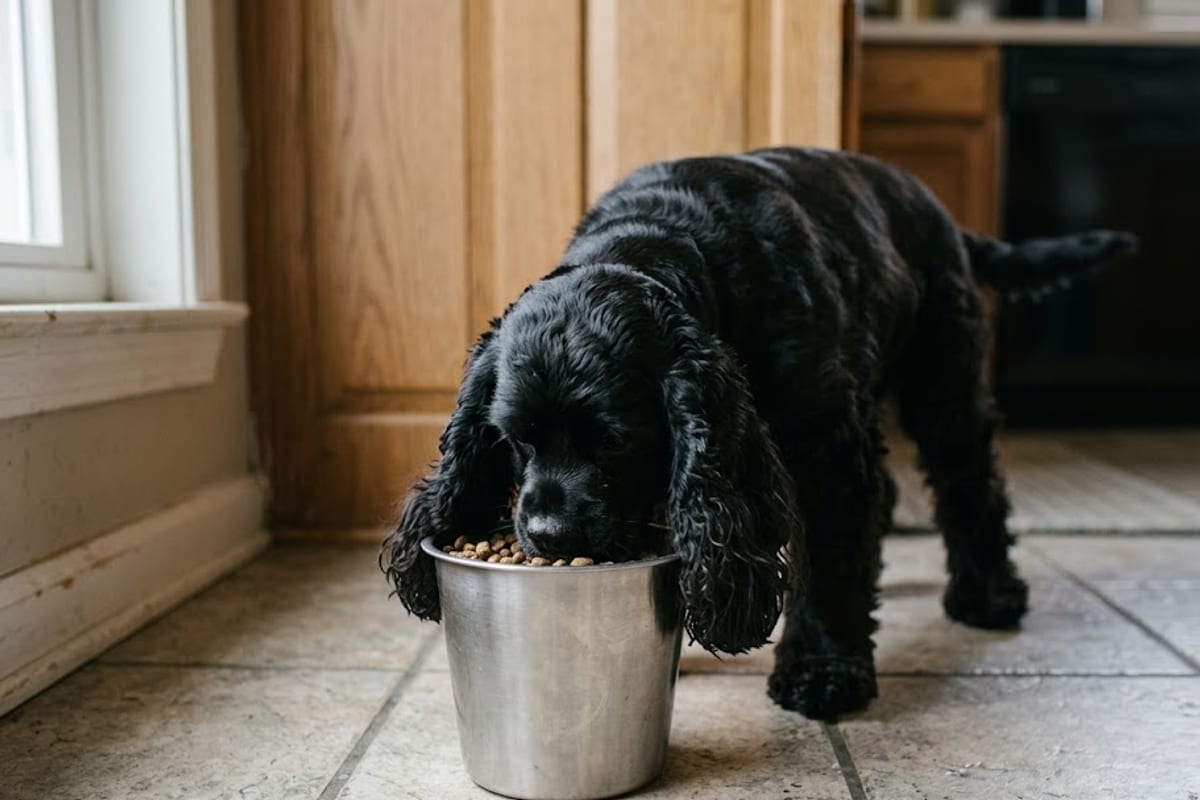
Use a spaniel bowl. Deep, narrow bowls keep long ears out of the food and slow a fast eater down.
Measure food by weight. A kitchen scale is more consistent than a scoop.
Adjust by condition, not by the bag. Feeding guides on dog food bags assume average activity. A neutered house Cocker usually needs less.
Watch for gradual gain in middle age. Cockers often put on a few pounds between 6 and 10 years. If the dog also seems slow, cold-intolerant or has thinning coat, ask your vet about hypothyroidism, which is seen in the breed.
Cocker puppies
Both Cocker breeds are medium-sized and reach adult height at about 12 months, then fill out until 14 to 18 months. The Cocker Spaniel puppy weight chart at 6 months shows expected weight by age for the American Cocker.
Weight and gear
Long ears and heavy neck coat make collar fit on a Cocker more fiddly than weight suggests. Measure the neck against the skin, then check the fit with the coat in place. Starting sizes are on the Cocker Spaniel collar size, harness size and crate size pages.
How much food a Cocker needs
Veterinary calorie estimates start from resting energy requirement: 70 × body weight in kilograms raised to the power 0.75. For a 25-pound (11.3 kg) Cocker, resting energy is about 430 kilocalories a day. A neutered adult pet is usually fed around 1.4 to 1.6 times that, roughly 600 to 700 kilocalories. An intact or very active dog may need closer to 780.
That is not a large allowance. A single rawhide chew, a few training treats and a bite of someone's sandwich can add 100 kilocalories or more, a sixth of the day's needs. Divide the daily target by the calories per cup on your dog's food, feed that amount, and adjust by body condition after three weeks.
Senior Cockers
American Cockers commonly live 10 to 14 years and English Cockers 12 to 14. In middle age, weight tends to rise as activity drops. In the senior years, some Cockers lose muscle over the back and hindquarters while keeping fat around the belly, so the scale stays the same while the body changes.
Checking by hand catches this better than the scale. If your older Cocker's spine feels more prominent but its belly is heavier, it is losing muscle and gaining fat. Regular walks, including some gentle hills, help maintain muscle. Unplanned weight loss in a senior should be checked by a vet.
Signs a Cocker is underweight
A Cocker is probably too thin if its ribs, spine and hip bones are easy to see on the short-coated parts of the body, if you feel no fat covering over the ribs, or if the dog has lost weight without a change in diet. Working English Cockers can be naturally lean. The concern is weight that falls, not weight that is low and stable in an active, healthy dog.
A safe rate of weight loss
If your Cocker needs to lose weight, aim for about 1 to 2% of body weight per week. For a 30-pound American Cocker with a target of 25 pounds, that is roughly 5 to 10 ounces a week, so the whole process takes two to four months. Faster loss tends to cost muscle and is harder to maintain.
Frequently asked questions
How much should a female Cocker Spaniel weigh? An American Cocker female should weigh 20 to 25 pounds. An English Cocker female weighs 26 to 32 pounds.
Is 35 pounds too heavy for a Cocker Spaniel? For an American Cocker, yes, clearly. For a large English Cocker male it is just over the range and may be acceptable if the ribs and waist are easy to feel.
At what age is a Cocker Spaniel full grown? Height at about a year, full weight and body at 14 to 18 months. See when do dogs stop growing.
Adult weights for other breeds are in the average weight by dog breed chart.