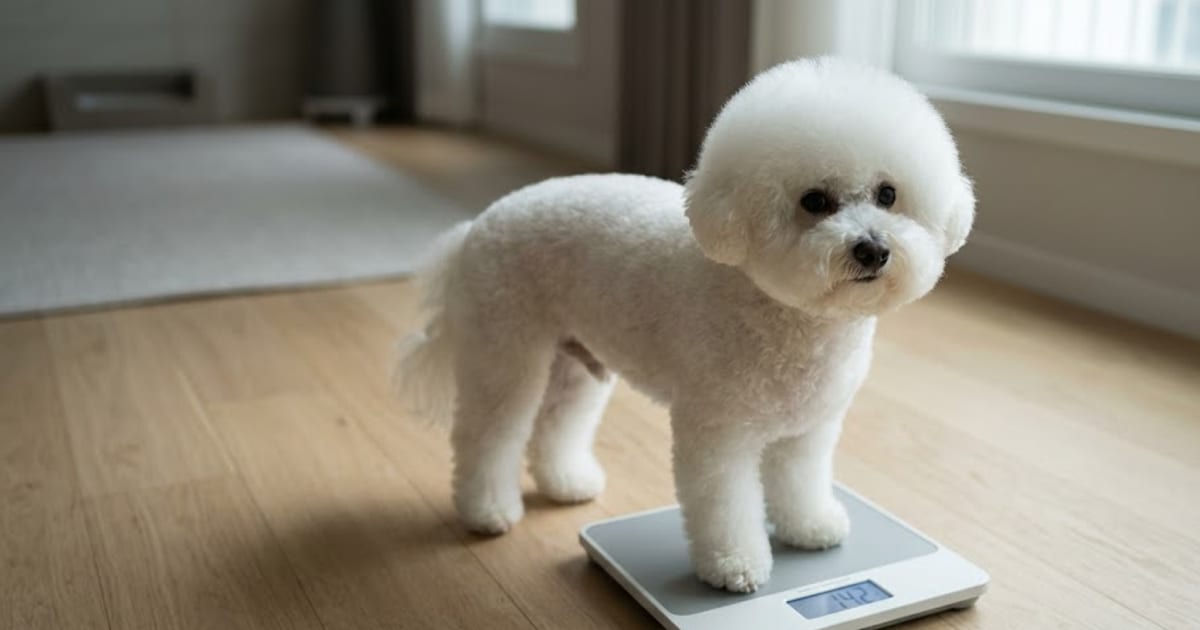
Most adult Bichon Frises weigh 12 to 18 pounds, the range given on the AKC's Bichon Frise breed page. The breed standard itself does not mention weight. It asks for dogs 9½ to 11½ inches at the shoulder, allows some latitude for an exceptional dog, and sets hard limits of 9 and 12 inches. A healthy Bichon's weight follows from its height and build.
Bichon size at a glance
| Male and female | |
|---|---|
| Weight (AKC guide) | 12–18 lb |
| Height at the shoulder (standard) | 9.5–11.5 in preferred, never under 9 or over 12 in |
| Adult height reached | about 8–10 months |
| Adult weight reached | about 12 months |
| Life expectancy (AKC) | 14–15 years |
Males and females are sized the same in the breed standard. In practice males often sit a pound or two heavier.
Where in the range should your Bichon be?
A 9½-inch Bichon and an 11½-inch Bichon are different sizes of dog, and a single range covers both. As a rough guide:
- Around 9½ to 10 inches: 12 to 14 pounds is typical.
- Around 10½ inches: 13 to 16 pounds.
- Around 11 to 11½ inches: 15 to 18 pounds.
These are guides, not rules. Bone and muscle vary between lines, and body condition, covered below, decides whether a particular dog is at a good weight.
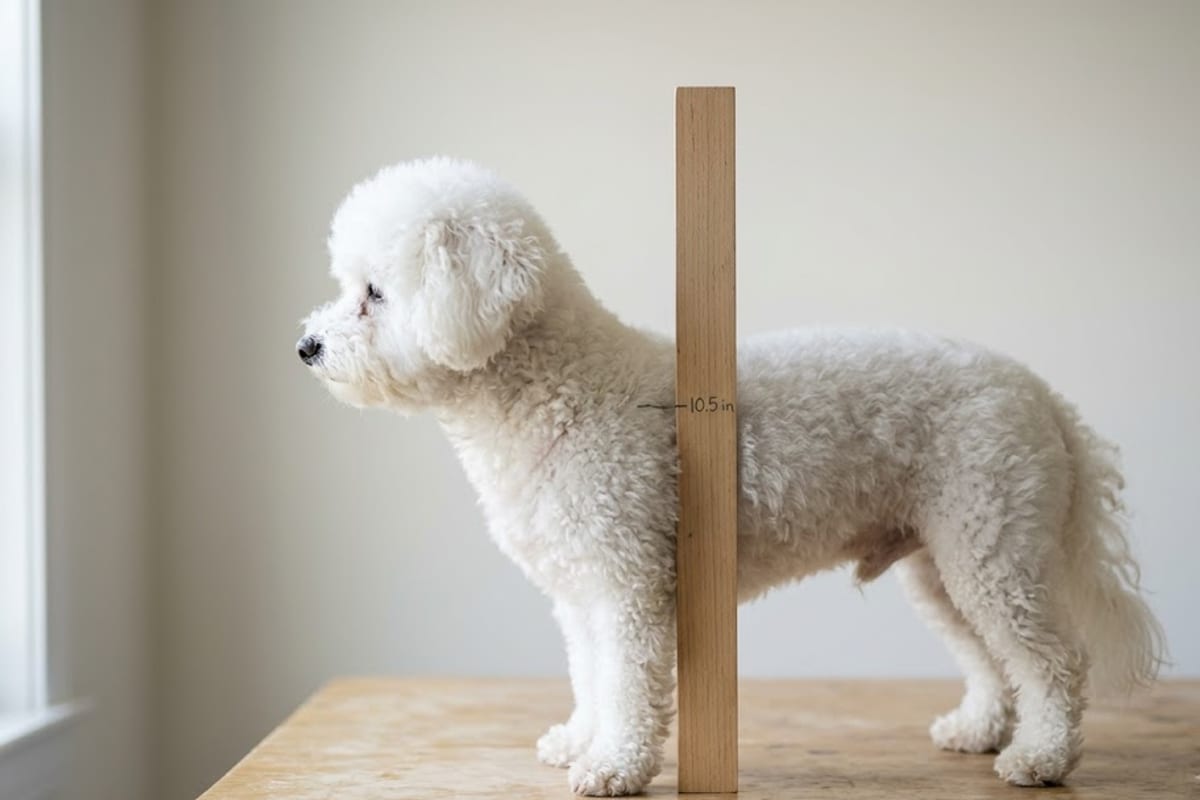
Measuring height is simple once you know the landmark. Stand the dog on a table or hard floor, find the highest point of the shoulder blades just behind the neck, and measure straight down to the surface.
The coat problem
The Bichon's coat is the biggest obstacle to judging its weight. A well-groomed Bichon is a white powder puff several inches wider on every side than the dog underneath. A lean Bichon can look plump, and an overweight one can look just like every other Bichon.

If you want to see your Bichon's real shape, look at it at bath time. Between baths, check with your hands:
Ribs. Slide your fingertips through the coat to the skin along the side of the chest. You should feel the ribs with light pressure. If you only find them by pressing firmly, there is too much fat over them.
Waist. Put your hands around the dog just behind the ribs. There should be a narrowing before the hips.
Base of the tail and spine. Feel along the back. The spine should be easy to trace. A soft pad of fat at the base of the tail is an early sign of weight gain in small dogs.
Your groomer handles your dog's body every few weeks and is often the first person to notice a change. It is worth asking.
Why small changes matter in a small dog
A Bichon that should weigh 14 pounds and weighs 17 is carrying more than 20% extra body weight. For comparison, that is like a 150-pound person weighing 182.
On the 9-point body condition scale used in the WSAVA Global Nutrition Guidelines, 4 and 5 are ideal, and each point above 5 is roughly 10% extra weight. For a 14-pound Bichon that is only about 1½ pounds per point, so a dog can move from ideal to clearly overweight with a change you would barely notice on a bathroom scale.
Weigh a Bichon on a pet scale or a kitchen scale that takes a small dog, or weigh yourself holding the dog and subtract. Do it monthly and write the numbers down.
Where the extra calories come from
Small dogs have small daily calorie needs. Using the standard veterinary energy formula (resting energy of 70 × body weight in kilograms to the power 0.75, multiplied by an activity factor), a 14-pound adult Bichon needs roughly 350 to 450 kilocalories a day, depending on activity and whether it is neutered. That is not much room for extras.
A few common sources of excess:
- Treats sized for bigger dogs. A medium biscuit can be 30 to 50 kilocalories, so three a day can be a third of a Bichon's needs.
- Table scraps. A slice of cheese or a piece of chicken skin is a meaningful meal for a 14-pound dog.
- Grooming rewards. Bichons are groomed often, and many owners reward every session.
- Free feeding. Leaving food out all day makes it impossible to know how much is eaten.
The simplest fix is to measure the day's food, set aside a portion of it for treats and training, and use very small treats.
Bichon puppies
Bichons are a small breed and grow quickly. Most reach adult height by 8 to 10 months and adult weight by about a year. A 6-month-old Bichon is usually already around three quarters of its adult weight. The Bichon Frise puppy weight chart at 6 months shows expected weights by age.
Weigh puppies every few weeks. Growth should be steady. A puppy that is gaining fast and feels round rather than firm is being fed more than it needs.
When low weight is a concern
Some Bichons are naturally small and fine-boned. A dog at 11 pounds with easily felt but not prominent ribs, good energy and a good appetite is probably just a small Bichon. Unplanned weight loss, visible hip bones or ribs, or a change in appetite should be checked by a vet. Dental disease is common in small breeds and can make eating painful, which often shows up first as slow weight loss.
Weight and gear
For a Bichon, the coat changes gear fit as much as body weight does. A harness that fits a dog fresh from the groomer can be tight a month later when the coat has grown. Measure against the body and allow for coat growth. Starting sizes are on the Bichon Frise harness size, collar size and coat size pages.
Senior Bichons
Bichons often live 14 to 15 years or more. Weight tends to rise in middle age, when activity drops, and fall in the later teens, when appetite, teeth and muscle decline. Under a full coat, both changes are easy to miss.
A good routine for an older Bichon is a monthly weigh-in, a body check by hand at each grooming session, and a note of any change in eating. Small breeds are prone to dental disease, and a sore mouth is one of the most common reasons an older small dog starts eating less. If your senior Bichon is losing weight, a dental check is usually the first step.
A safe rate of weight loss
For a Bichon that needs to lose weight, aim for about 1 to 2% of body weight per week. For a 17-pound dog with a target of 14 pounds, that is roughly 3 to 5 ounces a week, and the whole process takes a few months. Weigh every two weeks and adjust food by small amounts.
Frequently asked questions
How much should a full-grown Bichon Frise weigh? Usually 12 to 18 pounds, with taller Bichons toward the top of the range.
Is 20 pounds too heavy for a Bichon? For most Bichons, yes. A 12-inch dog with heavy bone can be close to 20 pounds and still lean, but that is unusual. Check the ribs through the coat.
What is a "teacup" Bichon? There is no teacup variety in the breed standard. Very small Bichons under 9 inches are outside the standard, and dogs bred to be tiny can have more health problems.
When does a Bichon stop growing? Height by about 8 to 10 months and weight by about 12 months. The pattern across dog sizes is covered in when do dogs stop growing.
Adult weights for other breeds are in the average weight by dog breed chart.