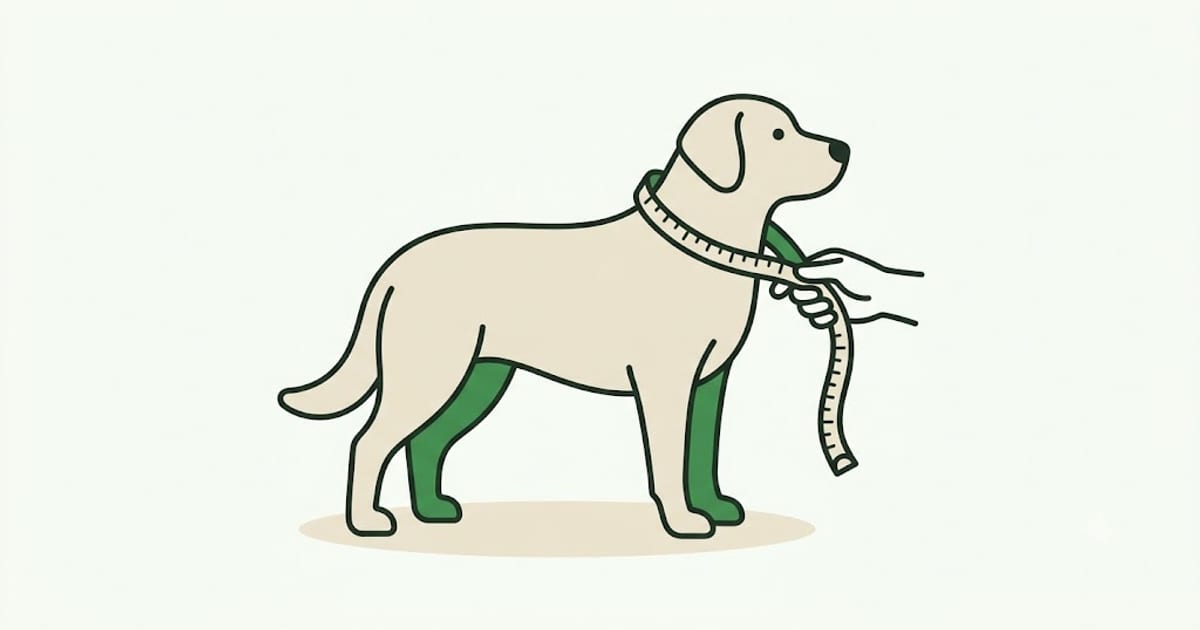
Every collar chart is organized by breed, and breed is not what a collar fits around. Two Labradors of the same weight can differ by two inches of neck, and the chart cannot see that.
What a breed chart is good for is narrowing the shortlist. What decides the size is a measurement that takes fifteen seconds.
Measure, then add two fingers
Run a soft tape around the neck where the collar will actually sit — low, near the base of the neck against the shoulders, not high under the jaw where it will ride up.
Then check it the way it will be worn: you should be able to slide two fingers flat between collar and neck. Not a fist, not one tight finger.
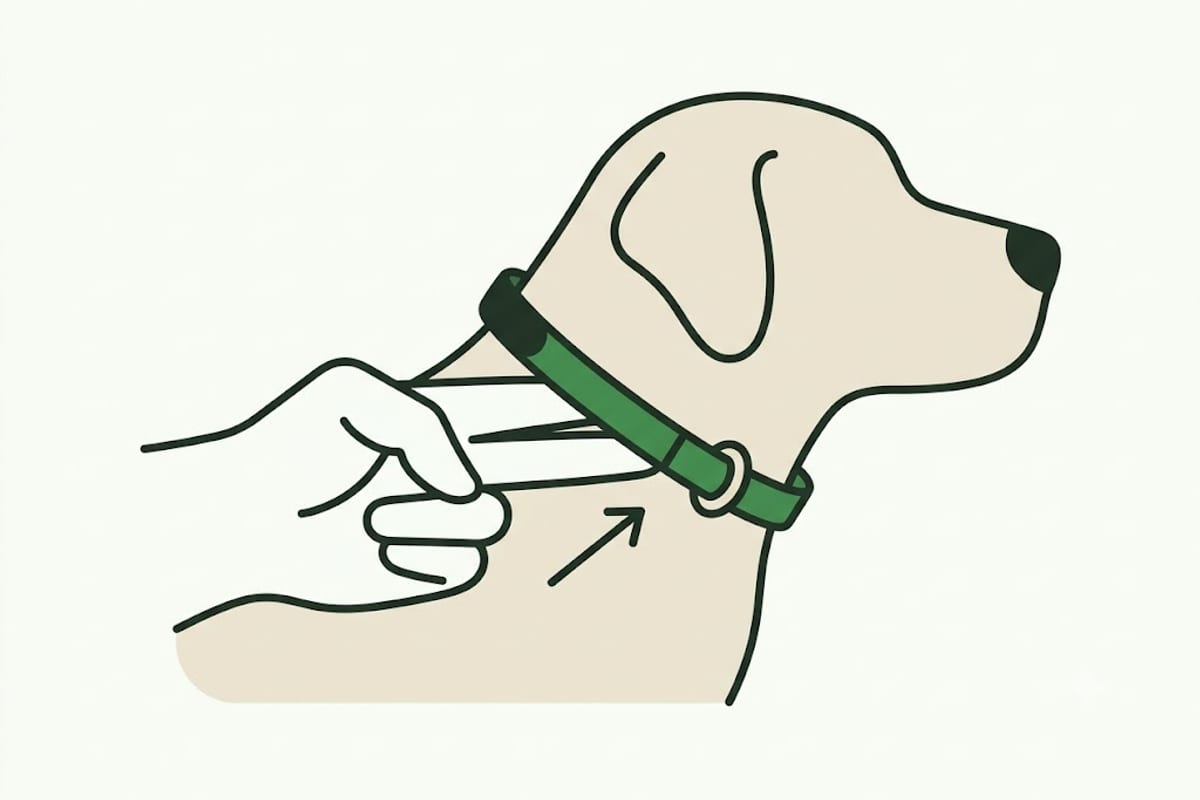
Tighter than that and it restricts. Looser and the dog backs out of it, which is how dogs get loose at exactly the moment it matters — startled, in a car park, pulling backwards.
The two-finger check works on any dog of any breed. It is the only sizing rule on this page with no exceptions.
Coat is not neck
The most common measuring error is measuring the coat.
A Pomeranian, a Samoyed, a Shetland Sheepdog and a Bichon all carry enough coat to add an inch or more of apparent girth. Measure over the fluff and you get a collar that is genuinely loose against the skin — and that gap is where a dog backs out.
Part the coat and measure against the neck. Then expect the fit to change after grooming, which is a real seasonal problem in double-coated breeds rather than a theoretical one.
The breeds where a plain collar is wrong
Three groups need a different tool rather than a different size.
Sighthounds. Whippets, Greyhounds and their relatives have necks wider than their heads. A collar loose enough to be comfortable will slide straight off over the head under load. This is what a martingale exists for: it tightens to a limited, preset amount when the dog pulls and hangs loose the rest of the time.
Flat-faced breeds. Pugs, French Bulldogs, Shih Tzus and Boston Terriers have compromised airways before anything is put around the neck. Pressure from a collar on lead makes it worse. Use a harness for walking and keep the collar for identification.
Breeds prone to tracheal collapse. Chihuahuas, Yorkshire Terriers and Pomeranians have fragile tracheas, and lead pressure on the throat is a known aggravating factor. Harness for walking, without exception.
For those three groups the right answer is a harness, sized by girth rather than neck.
Width, and why it is not decoration
Collar width scales with the dog, and for a reason: a narrow strap concentrates force over a smaller area. On a large or strongly pulling dog, a wide collar spreads the load.
Rough guidance:
| Dog | Width |
|---|---|
| Under 10 lb | 1/2 in |
| 10–25 lb | 5/8–3/4 in |
| 25–55 lb | 3/4–1 in |
| 55 lb and up | 1–1.5 in |
Going wider than the range on a small dog is not safer — it becomes stiff and rubs. This is one of the few places where the breed chart's instinct is right.
Puppies
Puppies outgrow collars fast enough that the useful advice is about checking rather than sizing: check the two-finger fit weekly during rapid growth.
Collars left on growing puppies can embed, and it happens gradually enough that nobody notices until it is a veterinary problem. Buy adjustable, buy cheap, expect to replace, and put a reminder somewhere.
FAQ
How tight should a dog collar be?
Two fingers should slide flat between the collar and the neck. Tighter restricts; looser lets the dog back out of it.
How do I measure my dog's neck for a collar?
With a soft tape at the base of the neck where the collar sits, against the skin rather than over the coat. Add the two-finger allowance.
Should I use a collar or a harness?
Harness for walking any flat-faced breed, any sighthound, and any breed prone to tracheal collapse. For other dogs either works, and a harness is generally kinder for dogs that pull.
What is a martingale collar for?
Dogs whose neck is wider than their head — sighthounds especially. It tightens a limited amount under pull so the dog cannot back out, without becoming a choke.
How often should I check a puppy's collar?
Weekly during rapid growth. Collars can embed as a puppy grows into them, and it happens gradually enough to be missed.