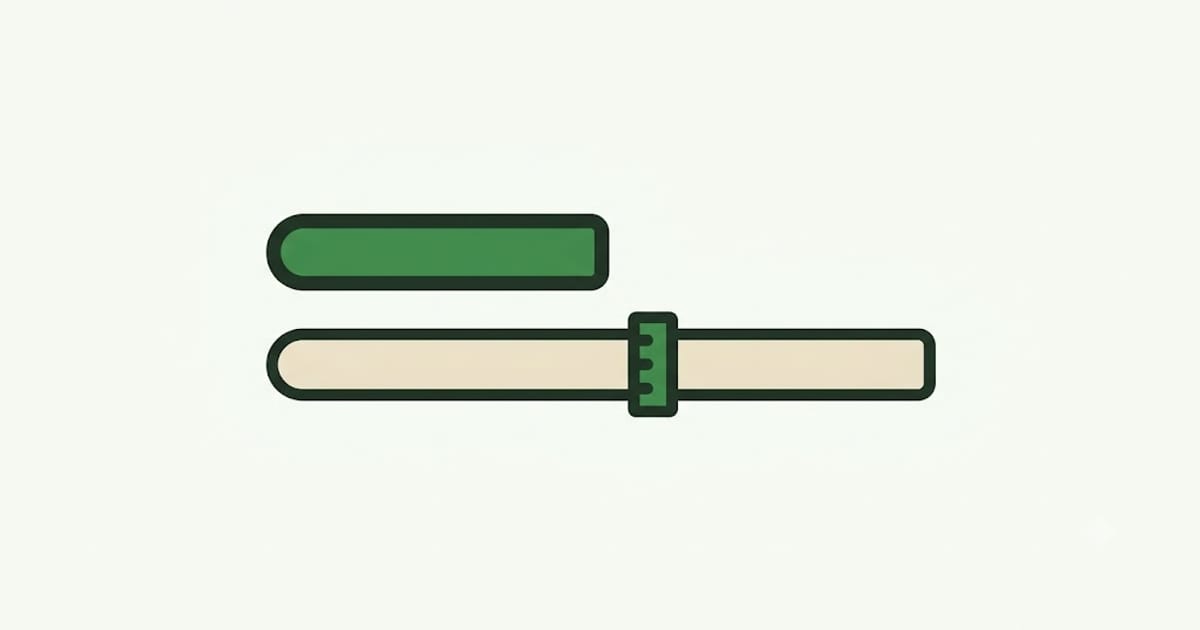
You measure your dog's neck at 16 inches. You buy a 16-inch collar. It arrives and it is either loose at every hole or it will not close at all.
The problem is that these are two different kinds of number.
What the number on a collar means
A collar's stated size is almost always the range of neck circumferences it can be adjusted to, not a single dimension of the product. A collar sold as "14–20 in" fits necks anywhere in that span.
When a collar is sold with a single number, that number is usually the maximum — the length of the strap when fully open — and the usable range runs several inches below it. Sometimes it is the mid-point. Occasionally it is the total strap length including the part that folds back through the buckle, which is longer than anything it will ever fit.
There is no standard. This is why the range printed on the label, not the headline size, is the number to read.
Where in the range to aim
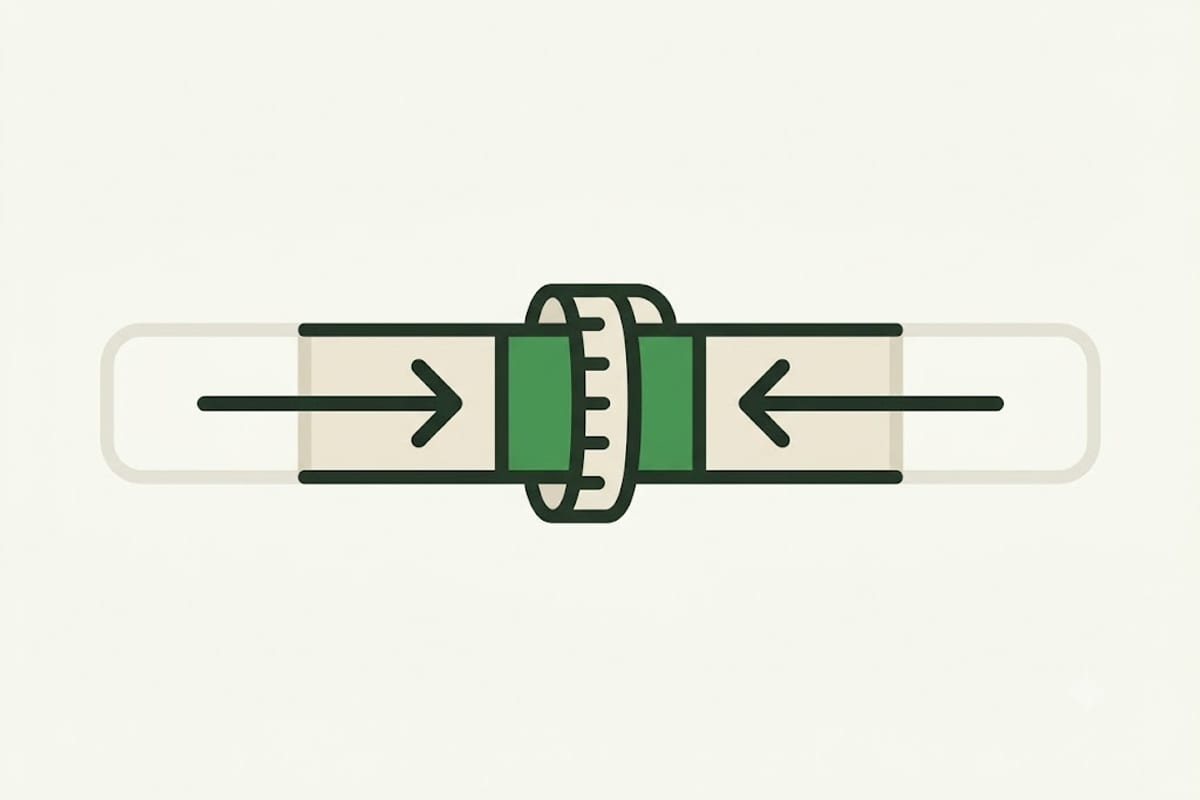
Aim to have your dog's measurement land near the middle of the collar's range.
At the middle you have adjustment room in both directions — for a coat blowing out, for winter weight, for a puppy still growing. At either extreme you have none.
A collar fastened at its very last hole is not adjustable any more, and it is also at the weakest point of the strap. A collar fastened at its first hole has a long tail of loose strap flapping, which catches on things.
If your dog measures at the top of one size and the bottom of the next, take the next size up and expect to run it near its low end for now. That is the more useful direction of error.
Why two "mediums" differ
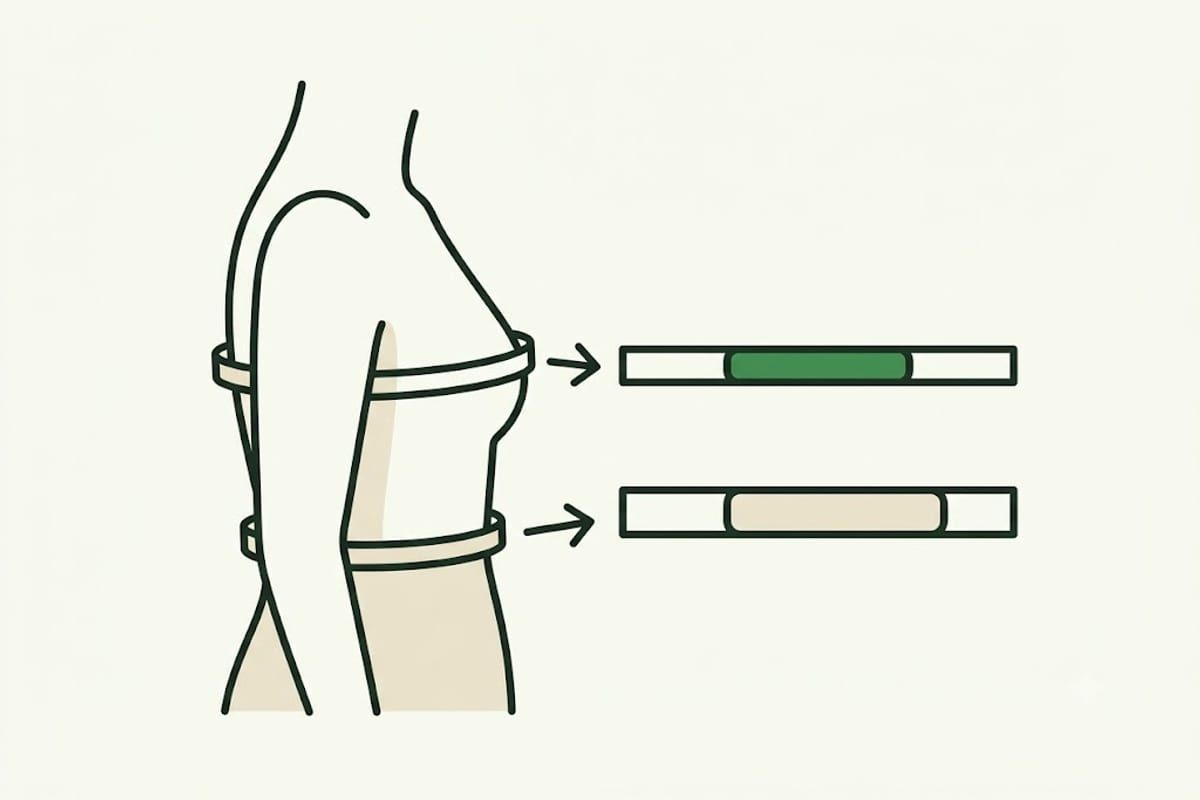
Size words — small, medium, large — are set by each maker for their own product line, and they are set around whatever dogs that maker expects to sell to. A brand that mostly sells to terrier owners and one that mostly sells to shepherd owners will draw the line in different places.
Two collars both labelled medium can easily differ by three inches of range, with only partial overlap. So a medium that fits your dog from one maker tells you almost nothing about a medium from another.
Always read the inch range. If the listing does not give one, that is a reason to look elsewhere.
Width changes the effective fit
A wide collar sits differently from a narrow one at the same circumference. On a dog with a sloping neck — most deep-chested and many thick-coated breeds — a wide collar covers more of the taper, which changes where it settles and how much slack you feel.
That means a 2-inch-wide collar and a 5/8-inch collar at the same setting can feel like different fits on the same dog. Re-check the two-finger test after any change in width, not just after a change in size.
Measuring so the number is usable
Measure with a soft tape at the base of the neck, where a collar naturally sits — low, just ahead of the shoulders. Keep the tape snug against the skin, not compressing the coat and not floating on top of it.
On a heavily coated dog, part the coat and measure the neck itself. A tape laid over a thick double coat can read two inches high, and a collar bought to that number will be loose the moment the coat compresses.
Write the number down. Necks change slowly enough that a measurement is useful for months, and it saves you re-measuring a squirming dog every time you shop.
The special case: neck wider than head
On sighthounds and some other narrow-headed breeds, the neck at its base is wider than the widest part of the skull. A flat collar fitted correctly at the neck will simply slide forward over the head when the dog backs up.
This is not a sizing error and it cannot be fixed by tightening — tightening enough to hold would be tight enough to hurt. It is a reason to use a martingale or a wide, shaped hound collar instead of a flat one.
Quick reference
- The label number is a range, not your dog's measurement
- Aim for the middle of the range
- Read the inches, ignore the size word
- Measure at the base of the neck, under the coat
- Last hole reached means replace, not adjust