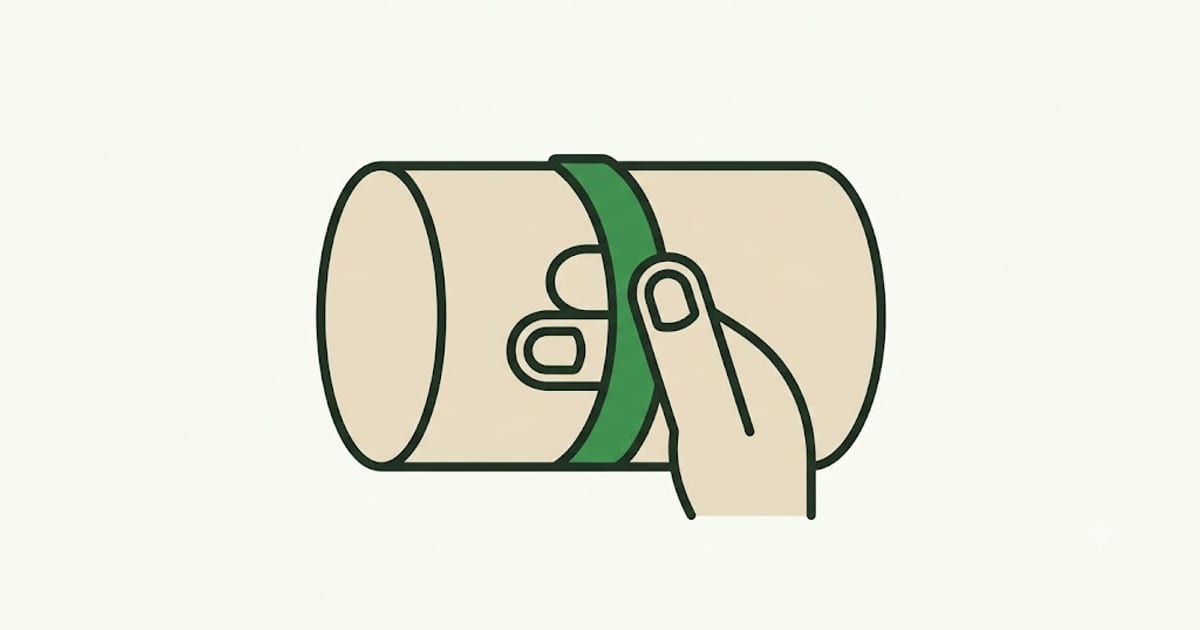
Every guide says two fingers. Almost none of them says where to put the two fingers, and that is where the advice fails — a collar that passes the test high on the neck can be dangerously loose at the base, and one that passes at the base can be choking under the jaw.
Where to check
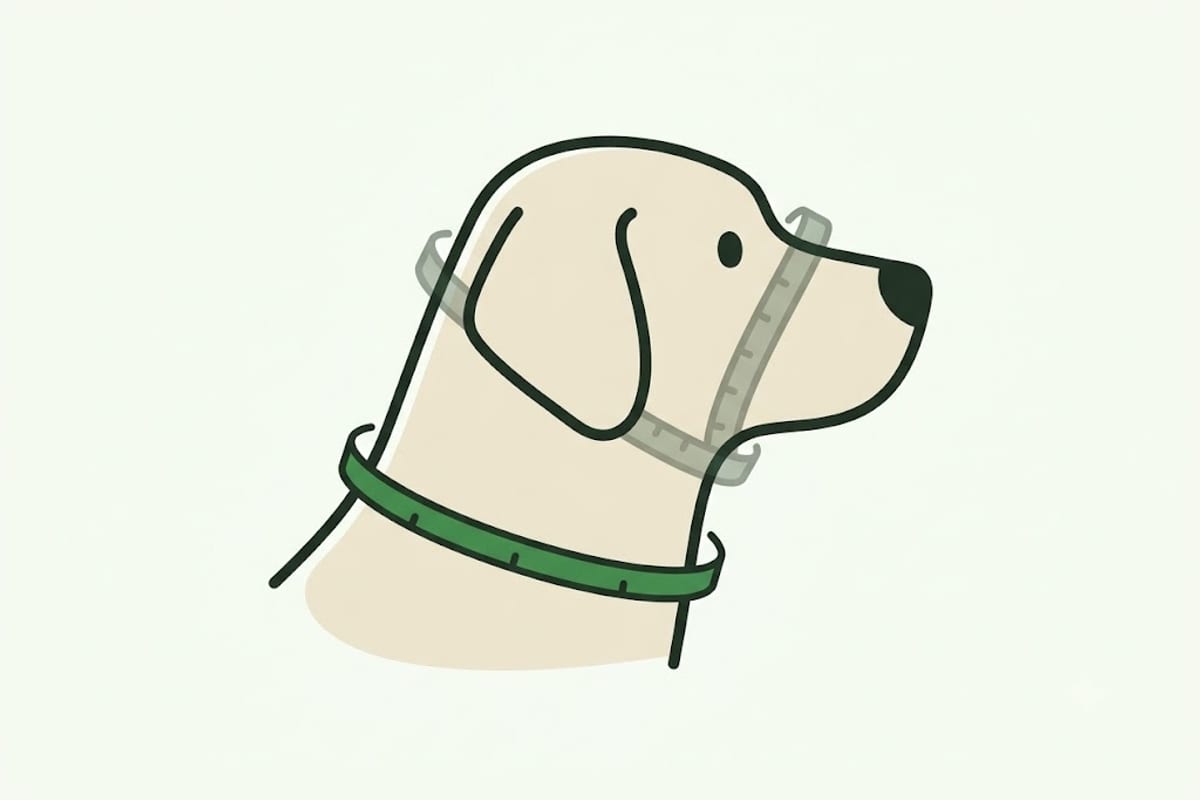
A collar naturally rides down to the widest, lowest part of the neck, just ahead of the shoulders. That is where it spends most of its life, and that is where it must be checked.
Slide two fingers flat — stacked side by side, not one on top of the other — between the collar and the neck at that low position. They should go in without forcing and without falling through.
If you test up under the jaw, where the neck is narrowest, you will always get a generous reading. Then the collar drops to the wide part in normal wear and there is no slack left at all.
For very small dogs, use one finger. Two adult fingers on a four-pound dog is a large fraction of the neck.
The other test that matters more
The two-finger rule tells you the collar is not too tight. It does not tell you the collar cannot come off.
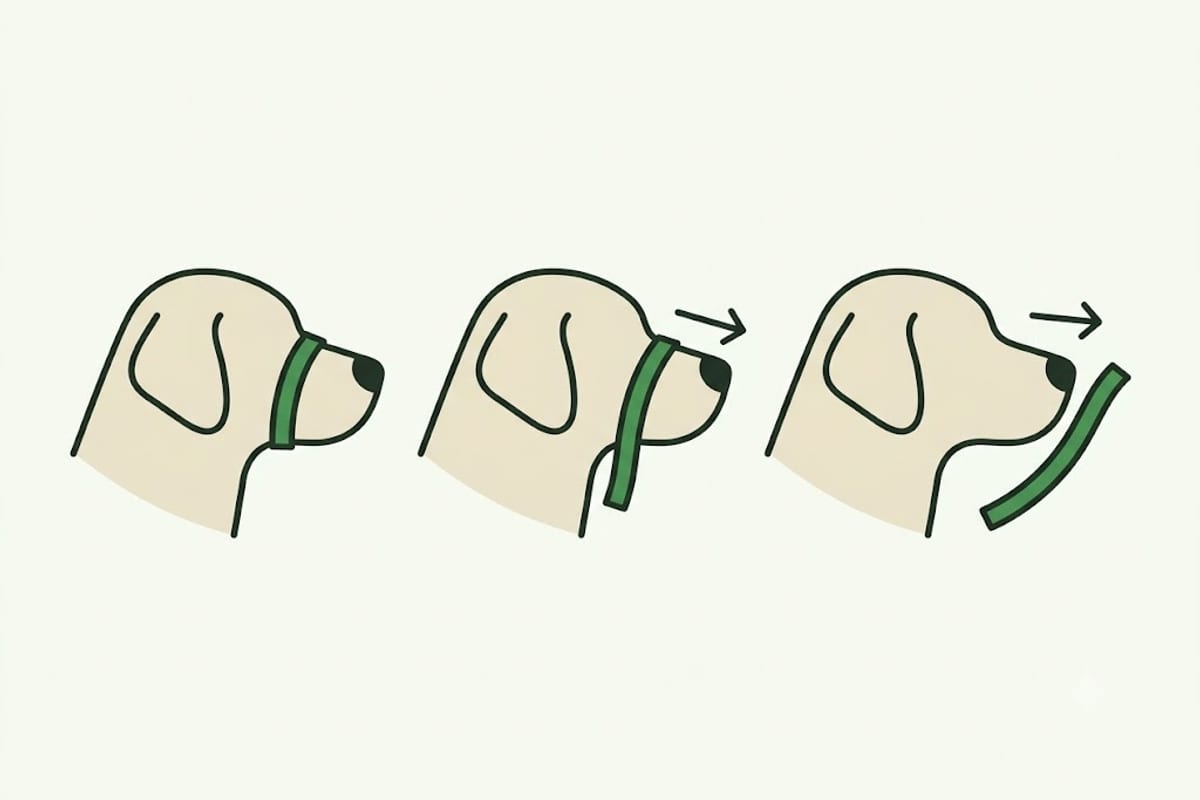
Undo the collar and hold it at its fastened size. Try to slide it forward over the dog's head, the way it would go if the dog backed up hard against a leash.
If it clears the widest part of the skull — usually just behind the ears, across the cheekbones — the dog can back out of it. This is normal on dogs whose neck is as wide as or wider than their head, which covers most sighthounds and a good number of thick-necked breeds.
A collar can pass the two-finger test and fail this one at the same time. Both have to pass.
Signs it is too tight
- A pressure line in the coat that does not brush out
- Hair loss in a ring, or broken hairs at the collar line
- Reddened or damp skin underneath, especially in a dog with folds
- The dog coughing when the leash goes taut, or gagging on gentle pressure
- You have to pull hard to get two fingers under
The last one is the most useful because you can check it any time. Fit is not a one-off measurement.
Signs it is too loose
- The collar spins freely all the way around the neck
- The tag hangs on the side or the top of the neck rather than under the chin
- You can get a whole hand under it
- It rides up under the jaw and stays there
- The dog has already backed out of it once
That last one is the only sign that matters. A dog that has learned it can reverse out of a collar will try again.
What changes the fit
Coat. A dog with a thick undercoat can lose a surprising amount of neck circumference after a blowout or a groom. The collar that fit in winter can slip off in spring. Re-check after any major coat change.
Weight. Neck circumference tracks body condition. A dog that gains or loses noticeably needs a re-check.
Age. Puppies need re-checking constantly — see the section below. Senior dogs lose muscle mass over the neck and shoulders, and a collar that fit at seven can be loose at twelve.
Position. Some collars sit high by design and are meant to. A standard flat collar is not one of them.
Puppies: how often to re-check
A growing puppy can outgrow a collar setting in under two weeks during a growth spurt. A useful habit is to check the fit every time you wash the food bowl — it puts the check on a schedule you already keep, rather than relying on noticing.
Buy a collar with a wide adjustment range and expect to replace it entirely at least once, often twice, before the dog is grown. A collar with the buckle at the very last hole is at the end of its life, not adjustable.
What we do not recommend judging by
Buying by the size on the label alone. Collar labels give a range, and two collars labelled "medium" from different makers can differ by several inches. Measure the neck, then read the range.
Assuming a breed number is your dog's number. Breed sizing charts, including ours, give you a starting range. A lean working-line dog and a heavy show-line dog of the same breed can be two collar sizes apart.
Leaving room "to grow into." A collar sized for a future dog is a collar the current dog can back out of.
When a collar should come off
Any collar can catch. The risk is highest when a dog is crated, playing with another dog, or unsupervised — a tag or the collar itself can hook on crate wire, a fence, or another dog's jaw.
Many owners take the collar off for crating and for rough play, and use a breakaway collar the rest of the time. That is a reasonable trade against the risk of losing an untagged dog, and it is worth making the decision deliberately rather than by default.