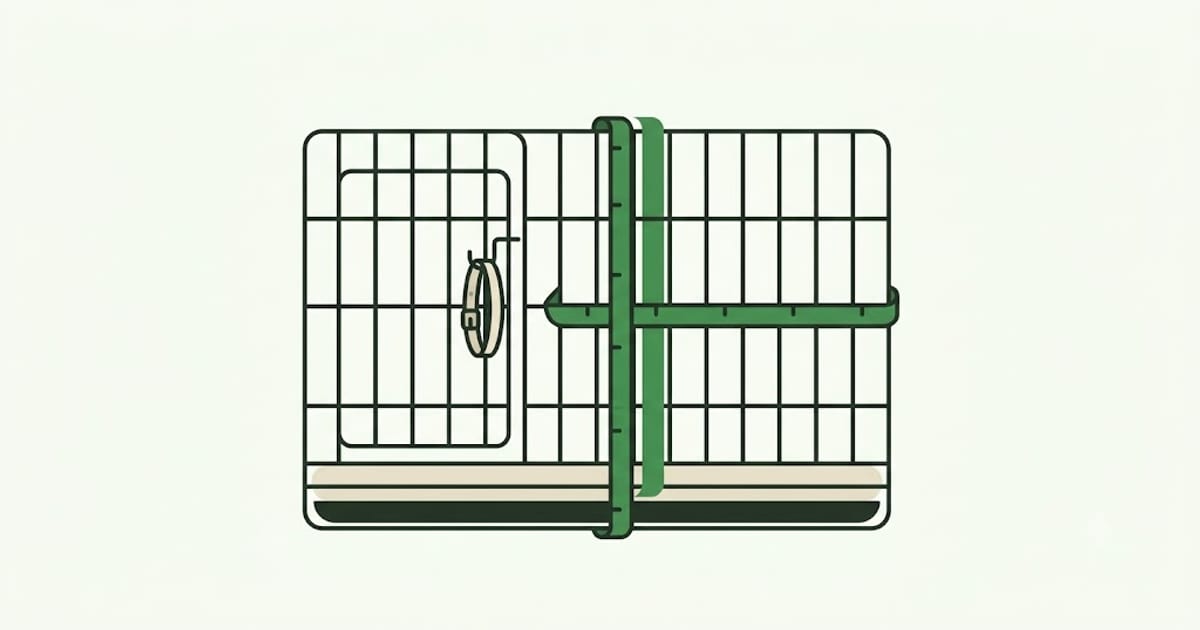
A collar is a loop of webbing on a moving animal. Most of the time that is fine. In a few specific situations it is the single most dangerous thing the dog is wearing, and those situations are ordinary enough that owners stop noticing them.
Where collars catch
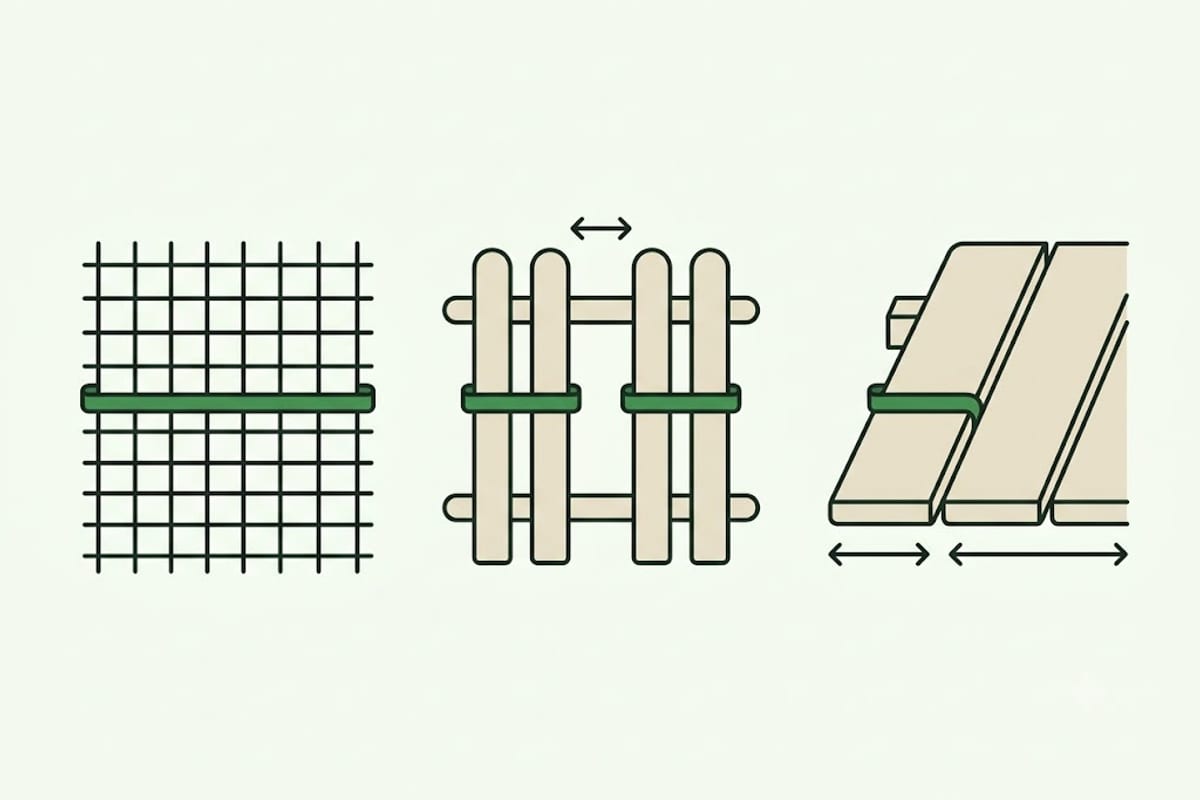
Crate wire. A tag or the collar itself slips between the bars, the dog turns, and the collar twists tight. This is the most commonly reported collar accident, and it happens while nobody is watching — which is the whole point of a crate.
Another dog's jaw. In rough play, one dog grabs at the other's neck and gets a lower jaw through the collar. Both dogs then panic and twist. This one injures both animals and is very difficult for a person to undo quickly.
Fencing, deck boards and furniture. Gaps in chain link, the space between deck planks, the underside of a bed frame. Anywhere there is a gap slightly wider than a tag.
Branches and undergrowth. Less common but real for dogs that work or run in cover.
The common thread is that a collar is designed not to come off under load. That is exactly the property you want on a lead and exactly the property that hurts a dog that is caught.
What a breakaway collar does
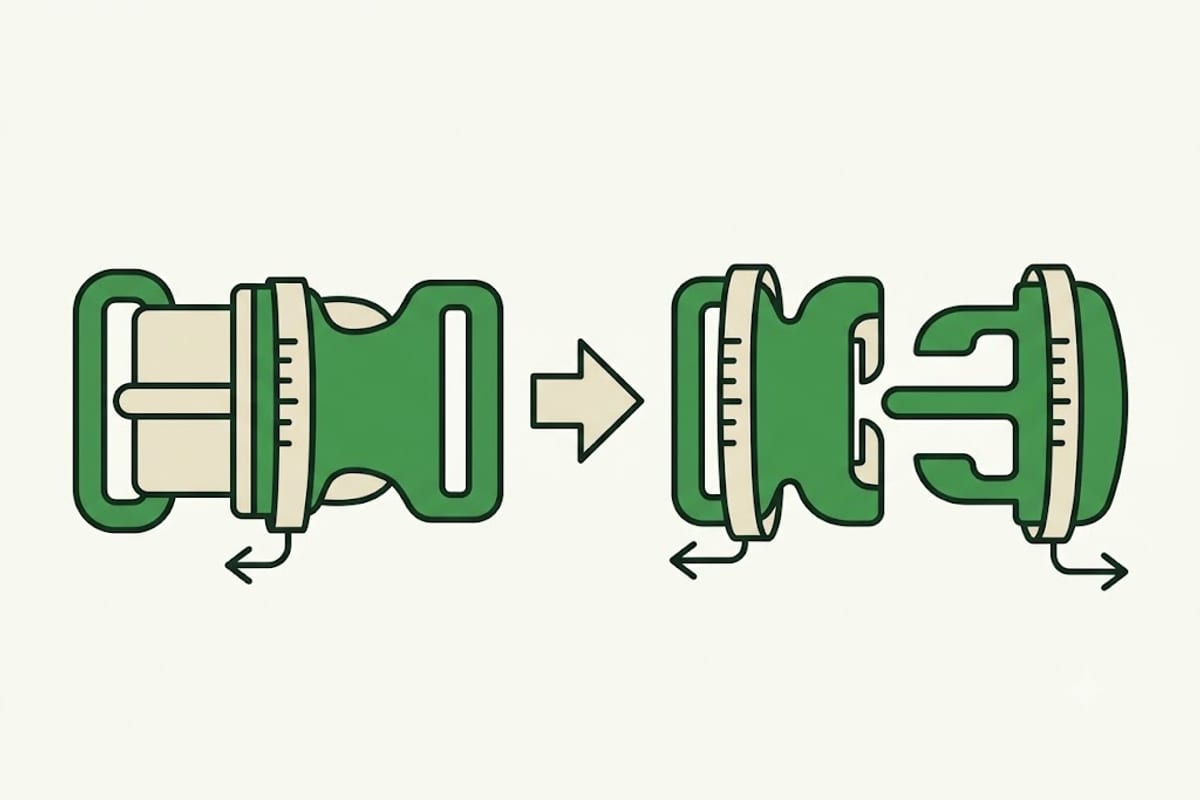
A breakaway collar has a buckle designed to separate under load — hard enough that normal wear does not open it, easy enough that a panicking dog can free itself.
Most designs also have two D-rings positioned so that clipping a lead to both rings bridges the breakaway mechanism. The collar then behaves like an ordinary collar for walking, and reverts to breakaway the moment you unclip.
That is a good compromise: it keeps ID tags on the dog at all times without keeping the strangulation risk.
The trade-off is that a breakaway collar will come off sometimes when you did not want it to — a dog that pulls hard against a collar clipped to one ring can pop it. That is the mechanism working as designed, but it means a breakaway collar is not the one to rely on if the dog is a bolter.
What owners actually do
There is no single right answer, and different households land in different places. The three common approaches:
Collar off for crating and rough play, on the rest of the time. Simple, free, and it removes the two biggest risks. The weakness is that it depends on remembering, and a dog that slips out of the front door with no collar has no ID.
Breakaway collar worn full time. Keeps ID on the dog permanently and removes most of the catch risk. Costs more, and needs the two-ring habit for walking.
Collar on always, tags on a separate quick-release. Reduces the tag-catching risk but not the collar-catching risk.
Whichever you pick, pick it deliberately. The failure mode is not choosing — leaving the standard collar on by default because taking it off never came up.
Tags
Tags are the part that catches most often, and there are ways to reduce that without losing ID.
- Flat or slide-on tags that sit against the collar rather than dangling
- Embroidered or stitched collars with a phone number worked into the webbing
- A tag silencer or pouch, which also stops the jingling
A microchip is the backup that cannot catch on anything, but it only works if the registration details are current. It is worth checking yours — a chip registered to an old phone number is a chip that does nothing.
Two situations that need a real collar
Walking. A breakaway clipped to a single ring is not a walking collar. Use both rings, or use a separate walking collar or harness.
Anywhere escape means traffic. If your dog is a flight risk in an unfenced area, the collar that must not come off is the right choice, and the answer to the catch risk is supervision rather than a weaker buckle.
Checking the collar itself
Whatever you use, the hardware fails long before the webbing does. Check monthly:
- The buckle for cracks, especially around the prongs on a side-release
- The D-ring for wear at the point the clip rides
- Stitching where the ring is attached — this is the usual failure point
- The webbing at the buckle, where it folds back and abrades
A collar that has held a hard-pulling dog for two years has been through more load cycles than most owners realise. Replacing one is cheap.