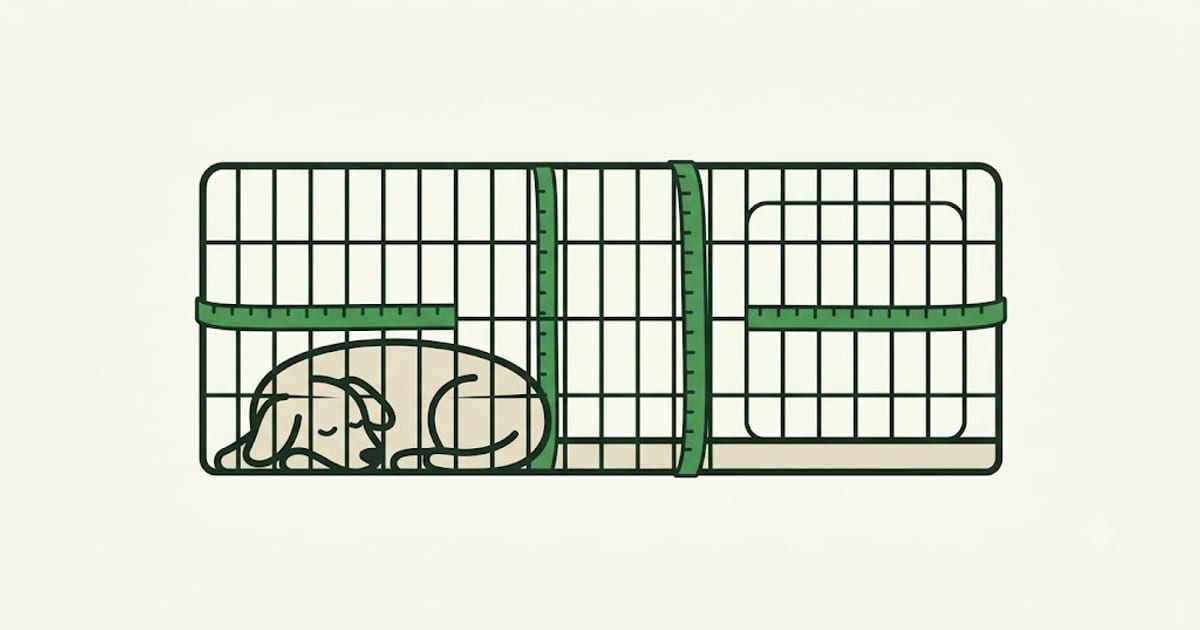
Most crate problems that owners describe as training failures are space problems. A crate with room to spare teaches the dog something you did not intend, and it teaches it quickly.
What goes wrong
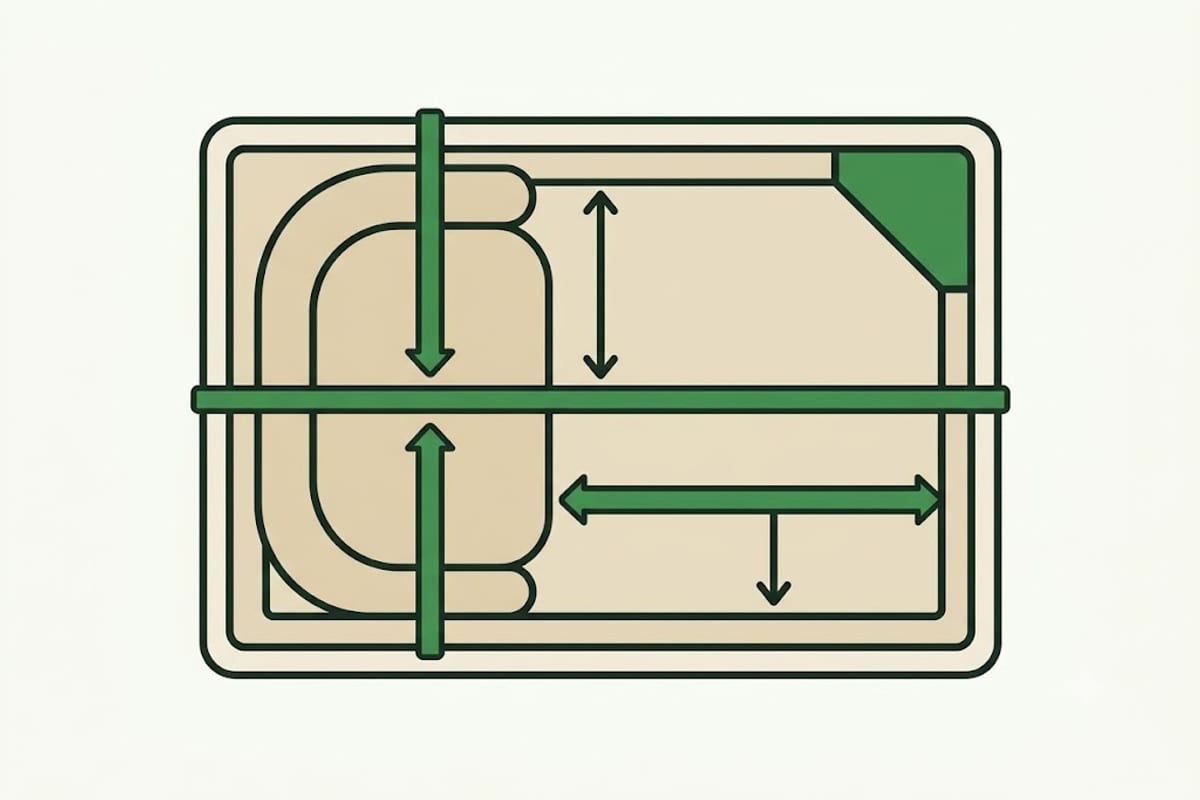
House training stops working. This is the big one. The whole mechanism relies on the dog not wanting to soil its bed. Give it a spare end and it does not have to — it has a bed and a toilet, cleanly separated. The dog is behaving sensibly. The crate is the problem.
Worse, this habit persists. A dog that has spent two months learning that one corner is acceptable does not unlearn it when the crate shrinks.
It stops feeling like a den. Dogs settle in enclosed spaces that contact them on more than one side. A crate the dog can stand in the middle of and touch nothing gives none of that. Anxious dogs in particular often settle better in a smaller crate, which is the opposite of what worried owners assume.
It is unsafe in a car. A crate is only crash-protective if the dog cannot build up speed inside it. In an oversized crate, a hard stop throws the dog the length of the crate.
It is harder to keep clean and harder to move.
The signs
- Soiling at one consistent end, with a clean sleeping end
- The dog always lies against one wall or in one corner, never in the middle
- The dog paces or circles rather than settling
- In the car, the dog slides or braces on corners
- A puppy that was clean starts soiling after a growth spurt and a divider move
That last one is the clearest signal there is, and it means move the divider back.
Three ways to fix it
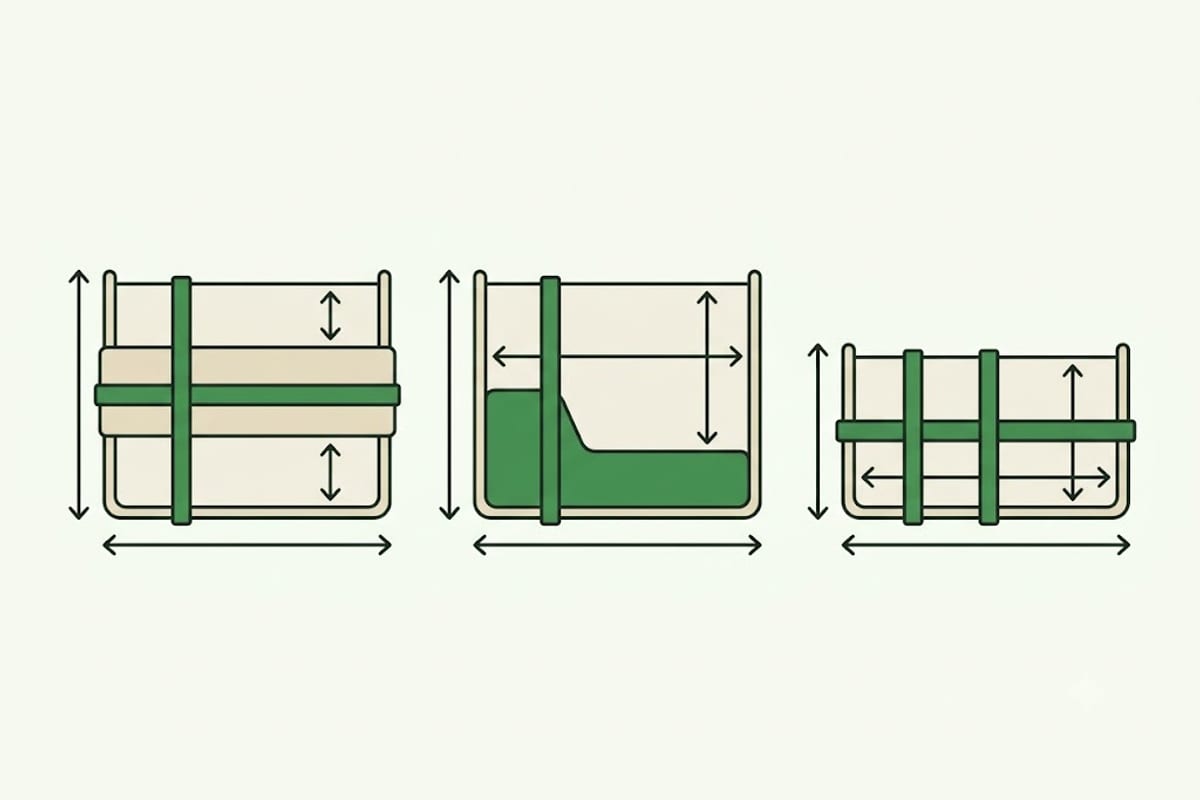
1 — A divider panel. The proper fix for a growing puppy. Buy the adult-size crate and move the panel back in small steps. Check every time that no gap opens at the sides that a head can go through.
2 — Fill the space. For an adult dog in a crate that is slightly too large, a raised bed or a firm bolster that occupies the surplus works. It has to be something the dog will not simply push aside or shred — a folded blanket does not count, because it becomes the toilet spot with padding.
3 — A smaller crate. If the crate is much too large and the dog is grown, this is the honest answer. Crates hold their value; a second-hand swap is usually cheap.
What the right size is
The dog should be able to:
- Stand without ducking its head
- Turn around without contorting
- Lie down fully stretched on its side
And not much more. To measure:
- Length — nose to base of tail, plus a few centimetres
- Height — floor to top of head or ears standing, plus a few centimetres
If your dog is between crate sizes, take the smaller one as long as it still passes those three tests. This is the case where "size up" is the wrong instinct.
When bigger is right
Long periods inside. A dog crated for extended stretches needs more room, though the better answer is usually a pen rather than a larger crate.
Flat-faced breeds. More airflow matters, and these dogs often need more space than their body length suggests.
Two dogs sharing. Only for dogs that genuinely settle together, and it needs enough room for both to lie stretched out at the same time.
Hot climates. Some extra room helps a dog move away from a warm side.
Fixing a dog that already soils the crate
Reducing the space is necessary but not sufficient, because there is now a habit.
- Clean with an enzymatic cleaner, not a household one. Ordinary detergents leave scent markers the dog can still detect, and the dog returns to them.
- Reduce the space so there is no separate area.
- Shorten the intervals below what the dog can hold, then extend again gradually.
- Take the dog out immediately before crating and immediately after release, every time.
- Remove absorbent bedding temporarily if the dog is using it as a pad. Most dogs dislike lying on a wet hard floor and will hold on. Restore bedding once the habit breaks.
If a previously clean adult dog starts soiling its crate, that is worth a vet check before it is treated as a training issue — urinary infections and several other conditions present exactly this way.