Where the crate goes shapes what the dog learns it means, and the decision is usually made on the basis of where it is least in the way.
In a room the family uses
A crate in a spare room or a garage teaches a straightforward lesson: going in the crate means everyone leaves. That is the opposite of what crate training is trying to establish.
The living room, a home office, or the kitchen — wherever people actually are — lets the dog rest in the crate while life goes on around it. Being in the crate stops being an event.
Against a wall, in a corner, out of the traffic
Two solid sides make a den. A crate in the middle of a room with visibility on four sides is exposed, and dogs settle less readily in it.
Out of the main walkway matters too. A crate that everyone steps past all evening gives the dog no opportunity to switch off.
Where not to put it
Direct sunlight. A crate in a sunny spot becomes an oven by afternoon, and the sun moves during the day, so a spot that is shaded at 9am may not be at 3pm.
Beside a radiator or a heating vent, for the same reason.
In a draught, particularly on a hard floor near an exterior door.
In an isolated basement or utility room, which is the placement that most reliably produces a dog that hates the crate.
Directly beside a busy doorway, where every arrival startles a resting dog.
Covers
A cover reduces visual stimulation and helps many dogs settle, particularly ones that react to movement outside a window.
Leave one side open for airflow and so the dog can see out. A fully enclosed crate reduces ventilation and, for some dogs, increases anxiety rather than reducing it.
Use a breathable fabric. A blanket over a wire crate works; a plastic sheet does not.
Watch for chewing. A cover within reach through the bars is a cover that will be pulled in and eaten, and fabric is a genuine obstruction risk.
Some dogs settle better uncovered. Try both and let the dog's behaviour decide rather than assuming the cover helps.
Night placement
Many dogs settle faster with the crate in the bedroom for the first weeks, particularly puppies who have just left a litter. Proximity reduces distress at night and makes overnight toilet trips practical.
Moving the crate gradually — bedroom, then hallway, then living room over several weeks — works better than starting where you eventually want it. The end position is a decision to make later, not on the first night.
Two dogs
Separate crates, both accessible, ideally not directly facing each other. Sharing a crate is common advice and it removes the crate's function as a place each dog can be alone.
Where space is tight, side by side against a wall works better than face to face, which invites staring.
The thing that matters more than any of this
A crate should never be used as punishment. A dog sent to the crate after doing something wrong learns exactly what the crate means, and undoing that takes considerably longer than establishing it did.
The crate is a bed. Everything about placement, covering and routine should support that and nothing should contradict it.
Size, briefly, because placement cannot fix it
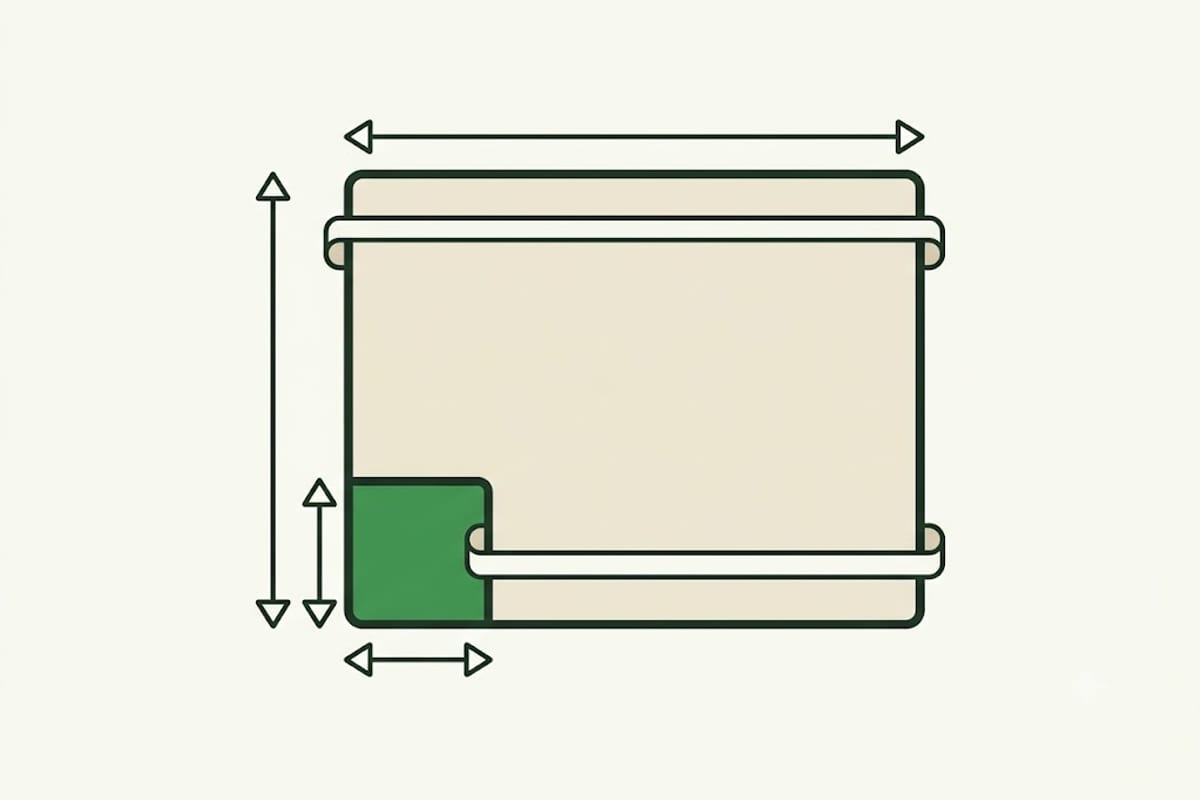
A crate should let the dog stand without ducking, turn around, and lie fully stretched out. Much larger than that and a puppy will use one end as a toilet, which is the whole reason divider panels exist.
Buy the adult size with a divider and move the divider as the dog grows. Buying three crates is unnecessary and buying one too small is worse than either.
Two ordinary mistakes
Feeding every meal in the crate with the door shut builds a positive association and, on an anxious dog, can build the opposite if the door closing is the salient event. Start with the door open.
Rushing the duration. A dog that is comfortable for ten minutes is not comfortable for four hours, and discovering the gap by leaving the house is how a dog learns to panic in the crate. Build up in small increments while you are still in the room.