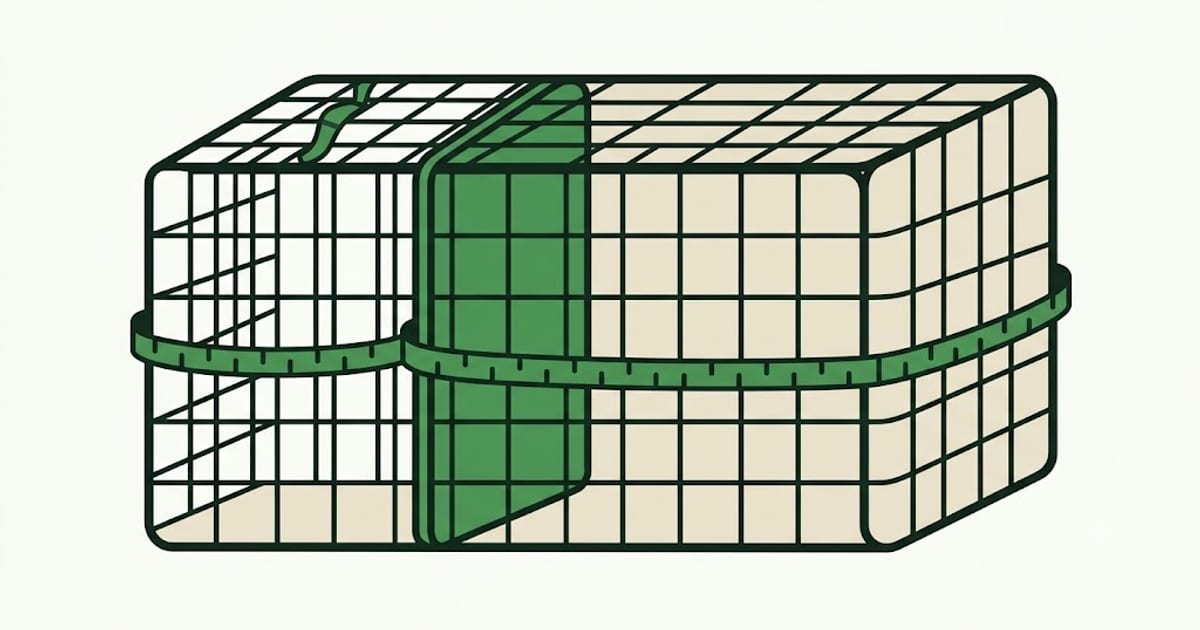
A crate that fits a labrador puppy at ten weeks will not fit it at ten months. Buying a new crate at each stage is expensive; buying the adult-size crate and dividing it costs one panel.
The divider only works if you use it properly, and the usual mistake is moving it too fast.
Why a puppy needs less space, not more
Crate training relies on a simple instinct: a dog will avoid soiling where it sleeps. That instinct works when the crate is a bed, and stops working when the crate is a room.
Give a puppy a crate with a spare half, and it will sleep at one end and toilet at the other. It has not failed to learn — it has learned exactly what the space taught it. And that habit takes far longer to undo than it took to form.
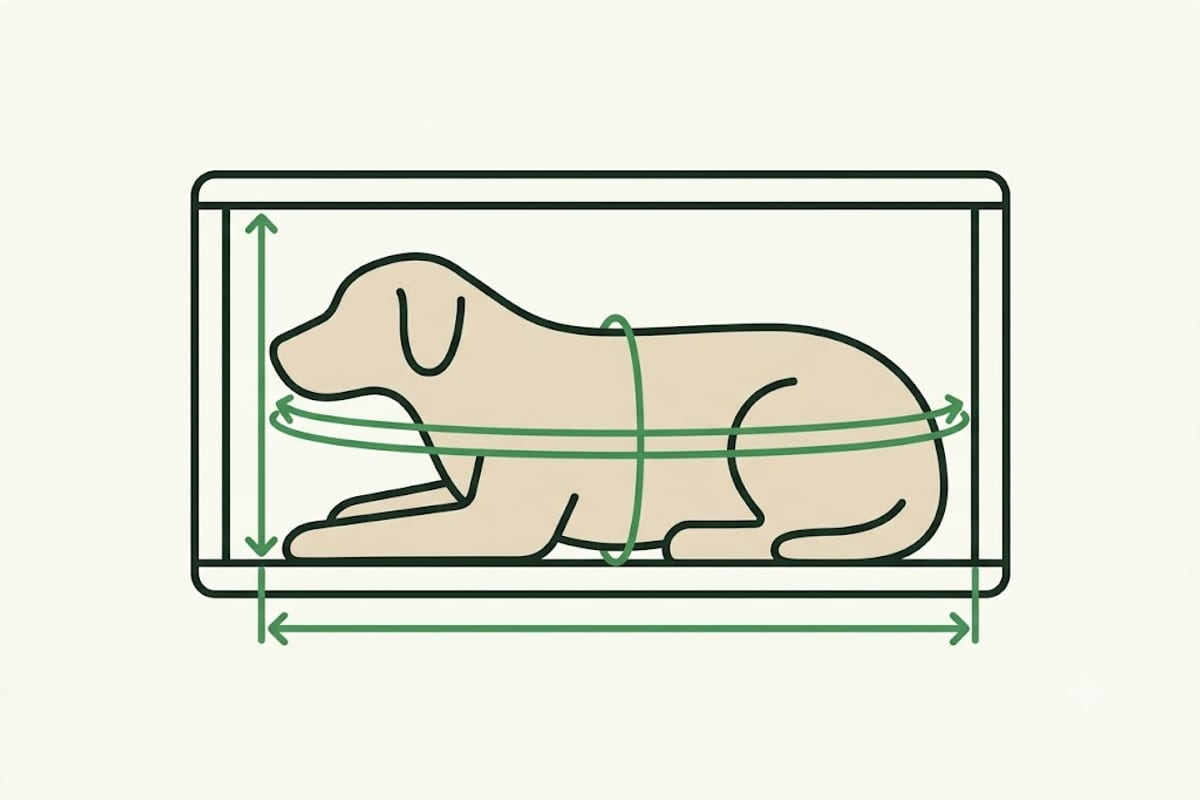
So the space should be: stand up without ducking, turn around comfortably, lie down fully stretched out. And essentially nothing beyond that.
Setting the panel
Measure the puppy:
Length — nose to base of tail (not the tip). Add roughly 5 cm / 2 in. Height — floor to the top of the head or ears when standing, whichever is taller. Add roughly 5 cm / 2 in.
Set the divider so the usable section matches the length figure. Height is fixed by the crate, which is why you buy for the adult size.
If in doubt, err small. A puppy that is slightly cramped will tell you by struggling to turn; a puppy with too much room will tell you by soiling, and that is the more expensive message.
How often to move it
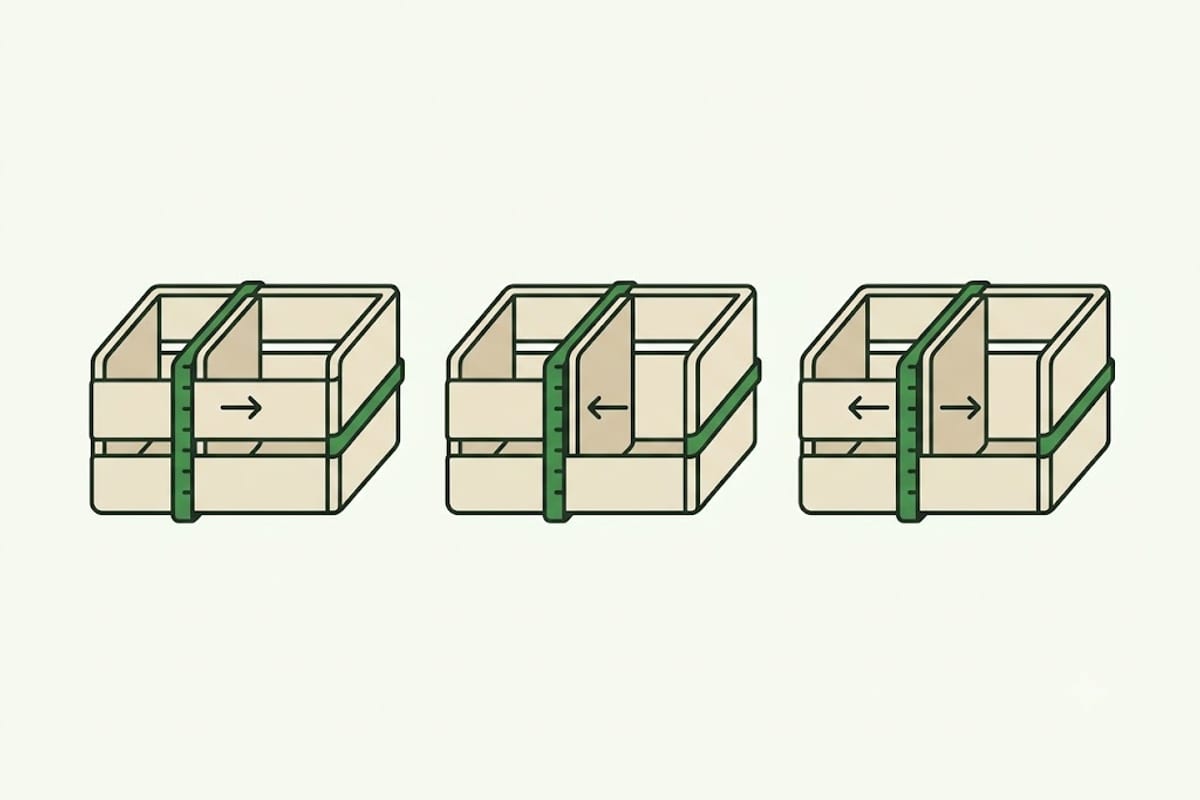
Re-measure every two weeks during the fast growth phase, and move the panel only when the measurement says to — not on a schedule and not because the puppy "looks bigger."
Move it in small steps. A few centimetres at a time. Large jumps recreate the spare-corner problem.
And here is the part people miss: if a puppy that was clean starts soiling the crate, move the panel back. That is not a setback, it is information. Give it a week at the smaller size and try again.
Making sure the divider is safe
Wire dividers have gaps. Check two things whenever you move it:
No gap the puppy can get its head through, particularly at the sides where the panel meets the crate wall. A puppy that gets its head through and cannot get it back is a serious emergency.
No sharp ends. Cut wire ends on cheap dividers are a real hazard. Run your hand over the whole panel edge.
If the panel does not sit flush against the crate walls, a cable tie at each corner closes the gap. Check it every time you move the panel, because a divider that was flush at one position may not be at another.
What the crate should contain
Bedding that the puppy does not chew. A puppy that eats bedding is at risk of a blockage, and a soiled bed defeats the purpose. Many people start with a folded towel and upgrade once chewing has passed.
Water, if the puppy is in for more than a short period. A clip-on bowl rather than a free-standing one.
No collar. This is the situation where collars catch on crate wire. Take it off.
A safe chew. Something the puppy can settle with and cannot swallow.
How long a puppy can be crated
The common guideline is roughly the puppy's age in months plus one, in hours, up to a maximum of about four hours in the day — a three-month-old for around four hours, and so on. Overnight is usually longer because the puppy is asleep.
That is a guideline, not a rule, and it is a maximum rather than a target. A puppy that is crated for the maximum every day is being asked a lot.
If a puppy cannot hold on for the interval you need, the answer is a pen with a toileting area rather than a bigger crate — a pen keeps the crate as a clean sleeping space while giving somewhere legitimate to go.
When to stop using the divider
Take it out when the puppy has reached full length and has been reliably clean for several weeks. For most breeds that is somewhere between nine and eighteen months, later for giant breeds.
Some dogs prefer the smaller space and keep using one end even with the panel gone. That is fine. Others start stretching out immediately.
The crate is not a punishment
Worth stating because it undoes everything else: a crate used to shut a dog away after it has done something wrong stops being a safe place and becomes somewhere the dog resists entering. The training works because the dog chooses the crate, and it only chooses it if going in has always been fine.