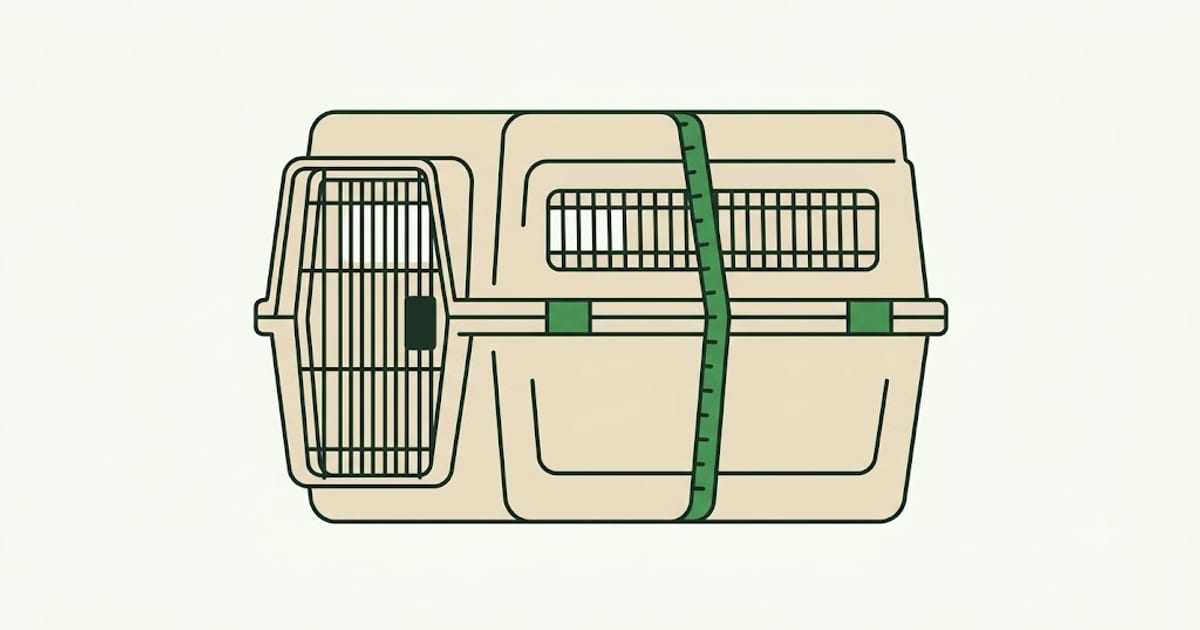
Airline crate rules are more specific than most owners expect, and they are checked at the counter. A crate that is refused at check-in is a cancelled journey, so it is worth getting right well before travel.
The rules below describe the widely used industry standard. Individual airlines add their own requirements on top, and those vary — always confirm with the specific carrier, on the specific route, before buying.
The four measurements
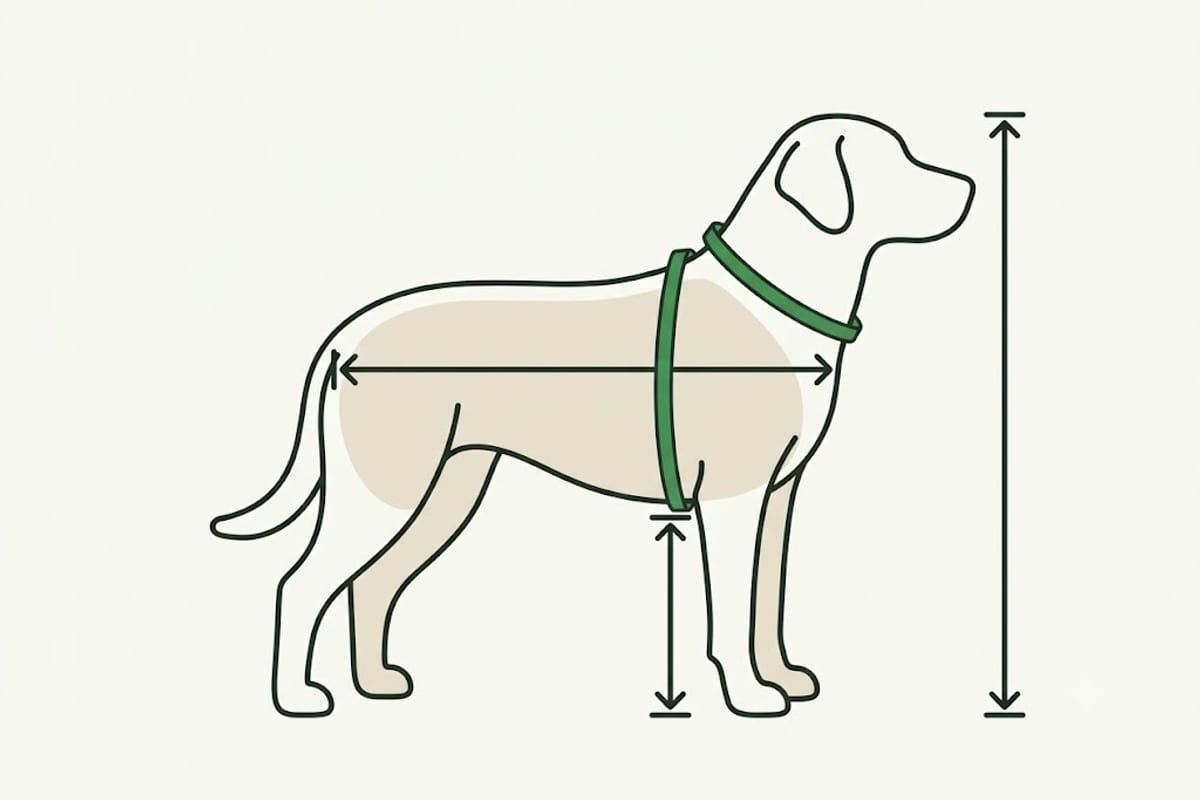
Travel crates are not sized by breed or weight. They are sized from four measurements of the dog, taken standing:
A — length, nose tip to the base of the tail B — height at the elbow, floor to the elbow joint C — height standing, floor to the top of the head or the ear tips, whichever is taller D — width, across the widest point of the shoulders
Then:
- Crate length must be at least A + ½B
- Crate height must be at least C, with clearance above
- Crate width must be at least 2 × D
The half-elbow allowance in the length formula exists so the dog can lie down with its legs extended forward.
The behaviour test
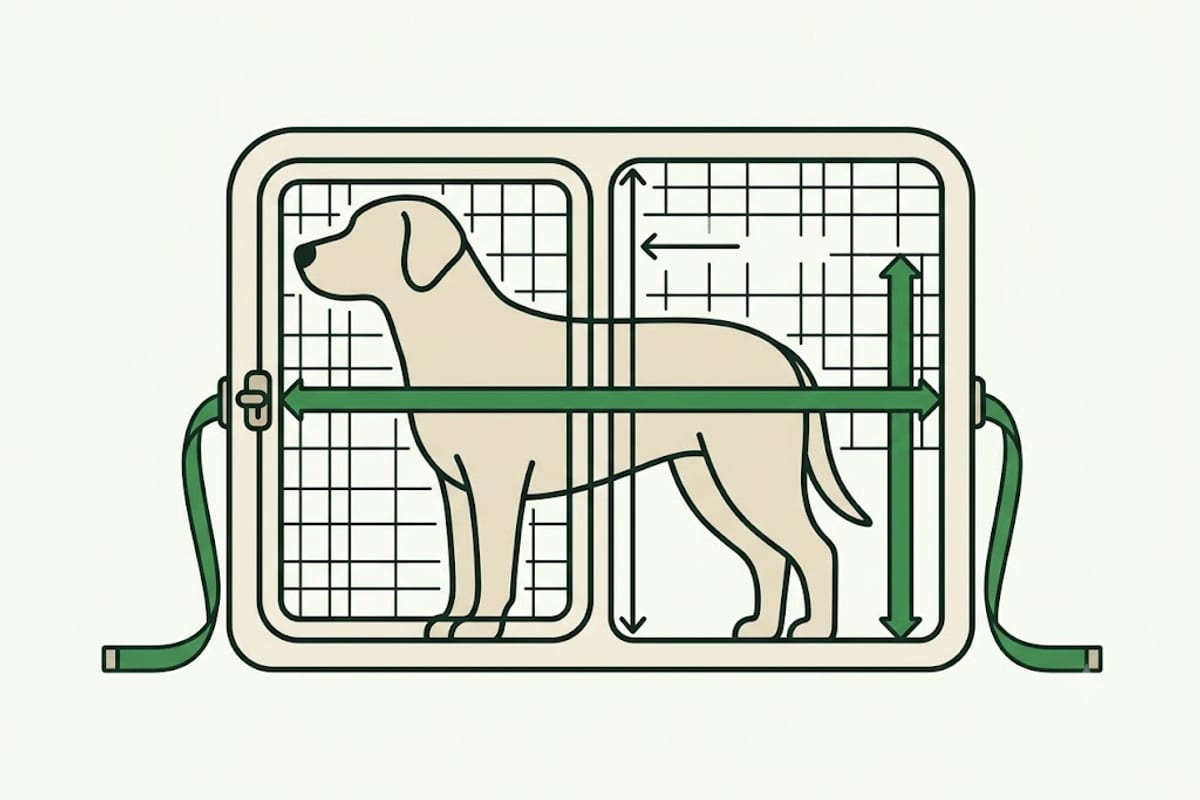
Whatever the numbers say, the crate must allow the dog to:
- Stand fully upright without the head or ears touching the roof
- Turn around without contorting
- Lie down in a natural position
Staff at the counter check this by looking at the dog in the crate. A dog that has to lower its head to stand will be refused even if the arithmetic worked, so measure the ear tips on an alert dog rather than a relaxed one.
Construction requirements
The common requirements across carriers:
Rigid plastic or wood. Collapsible fabric crates and wire crates are not accepted for hold travel.
A metal door. Plastic doors are usually refused. The door must close and latch securely, and many airlines require the latch to extend beyond the door frame at top and bottom.
Ventilation on at least three sides, and often all four for longer or warmer routes.
Bolted, not clipped. Many crates ship with plastic clips holding the halves together. Most airlines require metal nuts and bolts at every hole. This is one of the most common reasons a crate is refused, and it is easy to fix in advance with a bolt kit.
No wheels, or wheels that are removable and removed.
A solid floor, leak-proof, with absorbent bedding.
Food and water bowls attached inside and accessible from outside without opening the door.
Labelling
Requirements vary but usually include live animal markings with upright arrows, the owner's name and contact details, and the destination address. Many carriers also want feeding and watering instructions attached.
Sizing up is not free
A larger crate is not automatically safer. In turbulence, a dog in an oversized crate slides. There is also a practical limit: crate dimensions affect which aircraft can carry it, and an oversized crate can make a route unavailable or push the dog into cargo rather than the pet hold.
Aim to meet the formula with a modest margin, not a large one.
Snub-nosed breeds
Many airlines restrict or refuse hold travel for brachycephalic breeds — bulldogs, pugs, French bulldogs, boxers and others — because of the respiratory risk. Some refuse them entirely, some allow them only in cool months, some require a larger crate than the formula gives.
If your dog is one of these breeds, check the policy before anything else. The crate question is secondary.
Get the dog used to it first
A crate bought the week before travel is a strange box the dog is shut into on the most stressful day of its life.
Start weeks ahead: feed the dog in it, leave it open in the house, build up time inside. A dog that already treats the crate as its own space travels far better.
What to confirm with the airline
Ask specifically about:
- Accepted crate types and models for your route
- Bolt and latch requirements
- Ventilation requirements
- Maximum dimensions for the aircraft on your route
- Breed restrictions and seasonal embargoes
- Documentation and how far in advance to book
Get it in writing. Counter staff apply the airline's current rules, and those change.