A collar that fits correctly today does not stay correct, and the rate of change is fastest exactly when nobody is thinking about it.
How often to check
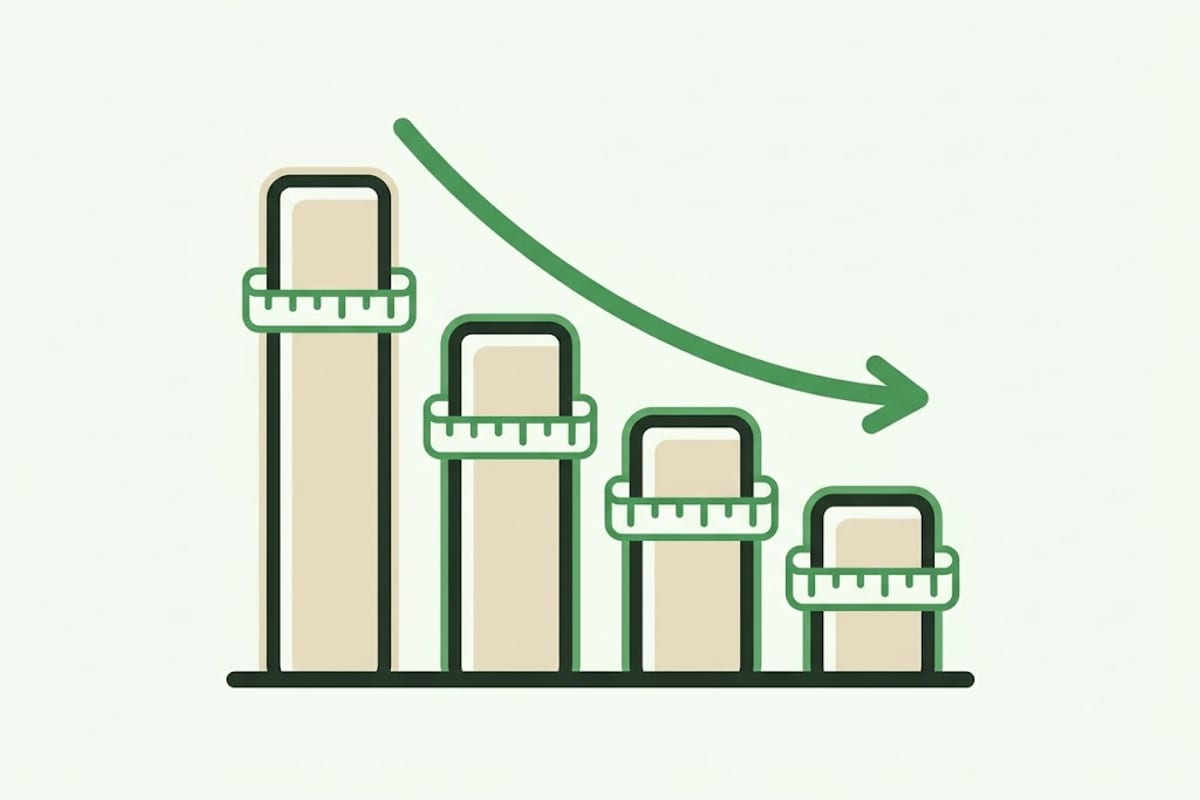
| Age or situation | Check |
|---|---|
| Puppy, 8–16 weeks | Weekly |
| Puppy, 4–8 months | Every two weeks |
| Young dog, 8–18 months | Monthly |
| Adult | Every 2–3 months, and after any coat change |
| After weight loss or gain | Immediately |
A small-breed puppy can outgrow a collar in ten days. A large-breed puppy grows through several sizes in its first year, and the neck is one of the fastest-changing measurements on it.
The two-finger check, done properly
Slide two fingers flat — not stacked — between the collar and the neck, at the underside of the throat.
Flat against the neck and it is right. Tight to insert and it is too small. Room for a third finger and the dog can back out of it.
Do it against the skin, not over the coat. On a long or double-coated dog the collar can feel correct against fur and be tight against the neck underneath, which is precisely the case that gets missed.
Coat changes count as size changes
A dog that blows its undercoat in spring effectively loses a collar size in a week, and the collar becomes loose enough to slip. In autumn the reverse happens and a correctly fitted collar becomes tight.
Check at each seasonal coat change as a matter of routine. It is the most common reason an adult dog's collar needs adjusting when nothing about the dog has changed.
Weight changes count too
Several pounds either way on a medium dog moves the neck measurement noticeably. After any deliberate weight change, a course of medication that affects appetite, or an illness, re-check.
What a too-tight collar does
Chafing and hair loss in a band around the neck are the early signs. Coughing when the dog pulls, or a change in the sound of breathing on a walk, are further along.
The end point is an embedded collar, where skin grows over the webbing. It happens most often to dogs that live outdoors, to puppies rehomed with a collar nobody adjusted, and to long-coated dogs where nothing was visible. It requires surgery.
This is why the interval matters more than the technique. The check takes five seconds; not doing it for a year is what causes harm.
Buying with growth in mind
For a puppy, buy an inexpensive adjustable collar and expect to replace it two or three times. Buying an expensive collar for a growing dog wastes money, and buying one deliberately oversized so it "lasts" creates an escape risk now in exchange for savings later.
Choose a collar whose adjustment range has the current size near the tight end, so there is room to let out.
Harnesses and coats need the same treatment
A harness has more adjustment points and therefore more places to be wrong. Check girth and chest straps on the same schedule.
Coats change fit with the coat underneath more than anything else does, and a coat that fitted in November can be tight by January on a dog that has grown its winter undercoat.
Collars on a dog that is home alone
A flat collar with a tag can catch — on a crate bar, a heating vent, a fence, or another dog's teeth during play. Where a dog is crated or left unsupervised, a breakaway collar that releases under load, or no collar at all, removes a real hazard.
The trade is identification. A microchip covers that permanently and does not depend on anything being worn, which is the argument for having one regardless of what the dog wears day to day.
Writing the check into a routine
The reason collars go unchecked is that nothing prompts it. Attaching the check to something that already happens — the monthly parasite treatment, the weekly brush, the seasonal coat change — is what makes it actually occur.
For a puppy, a recurring weekly reminder for the first four months costs nothing and covers the period where the risk is highest and the change is fastest.