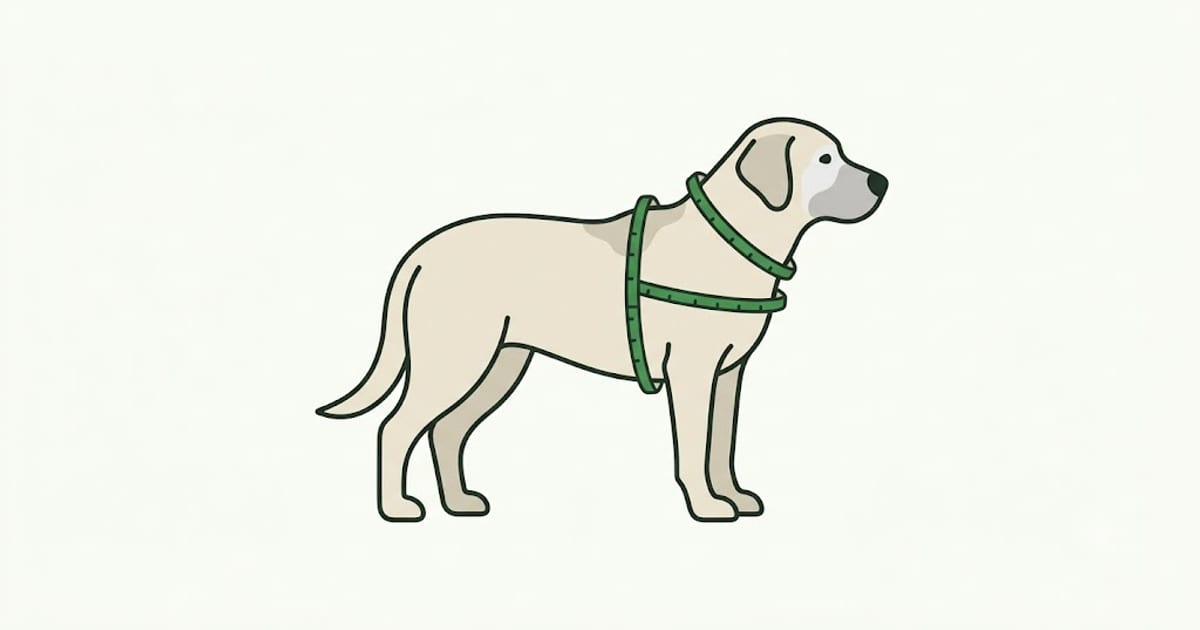
Owners re-measure puppies constantly and then stop. But a dog's measurements move again at the other end of life, and the direction is the dangerous one: a collar that fitted for years gets loose without ever looking different.
What changes
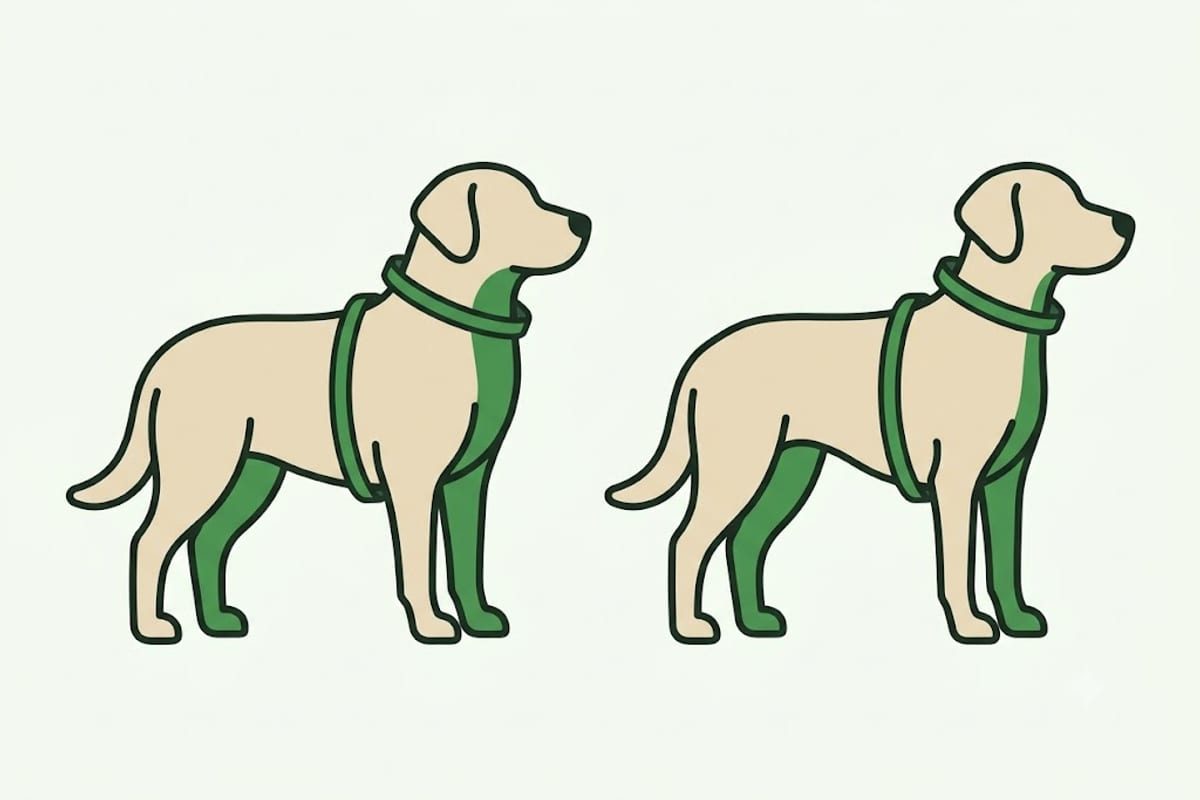
Muscle loss over the neck and shoulders. This is the big one. Ageing dogs lose lean mass, and the neck and shoulder region is where it shows first on the tape. A dog that measured 44 cm at seven can measure 40 at twelve without any visible change to an owner who sees it every day.
The result is a collar with slack that was not there before, on a dog that is now more likely to be startled and to back up.
Coat changes. Many older dogs' coats thin, which reduces the padding under a collar and lets it sit closer to the skin.
Weight changes in either direction. Some seniors gain as activity drops; others lose. Both move girth.
Posture. Stiffness in the hindquarters shifts weight forward, which changes where a harness sits and how a coat hangs.
Re-check on a schedule
Every three months from around the point your vet starts calling the dog a senior — earlier for large breeds, later for small ones.
Take neck, chest girth and back length, write them down with the date, and compare to the previous set. Slow drift is easy to miss without the record.
Between times, do the two-finger check at the base of the neck, and check that a harness's girth strap still sits behind the elbow rather than against it.
Skin gets more fragile
Older skin is thinner and heals more slowly, so the same rub that a young dog shrugged off becomes a sore.
That means:
- Check under every strap after walks, not just when something looks wrong
- Wider is better — spreading load over a wider collar or harness strap reduces pressure
- Softer edges matter more than they did; a stiff webbing edge that was fine for years may not be
- Watch for damp trapped under straps, which older skin tolerates poorly
Gear that suits stiff dogs
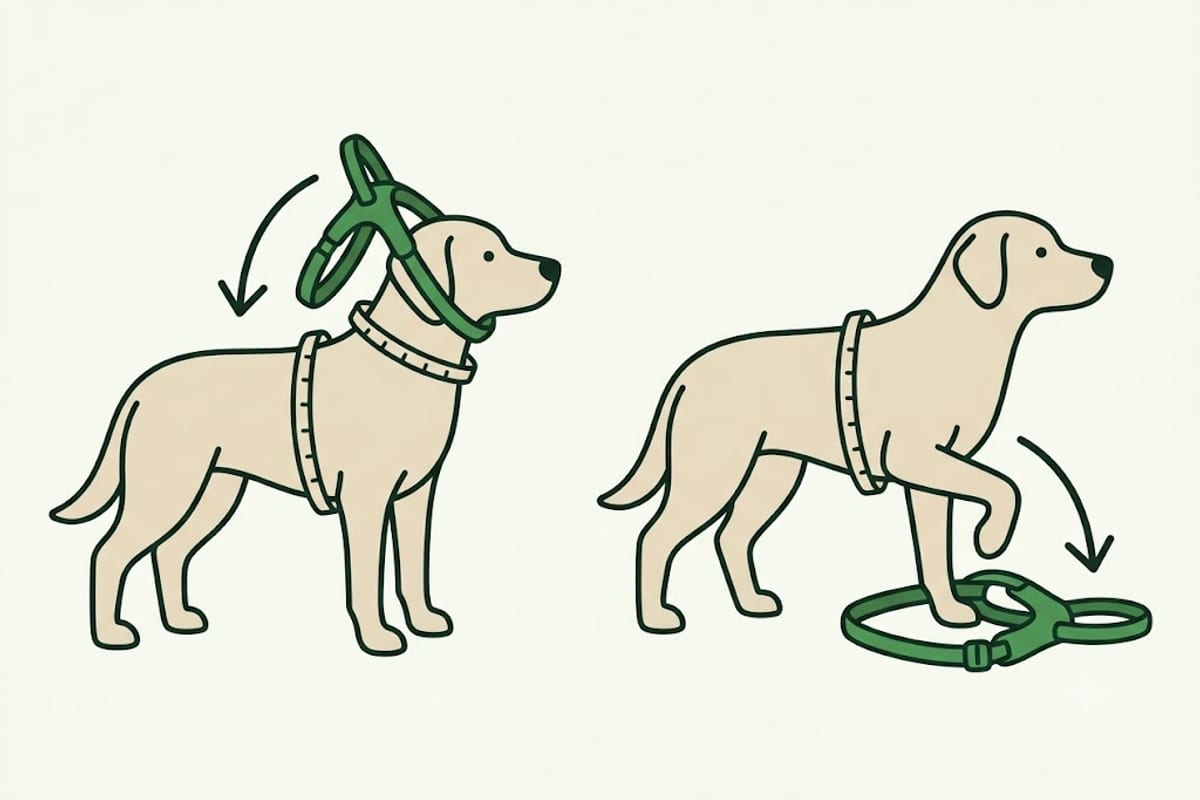
Step-in harnesses are easier on a dog with sore shoulders or a stiff neck than an overhead one, because the dog does not have to duck its head or have a leg lifted high.
Front-clip harnesses become less relevant — most seniors are not pulling — and a simple back-clip is often kinder because it does not turn the dog.
A harness rather than a collar for the lead. Load on the neck is worse on a dog with cervical arthritis, which is common and often undiagnosed.
Support harnesses with a handle are worth knowing about for dogs that need help on stairs or into a car. Some designs have both a walking attachment and a lifting handle, so the dog does not need two pieces of kit.
Signs the current gear no longer suits
- The collar spins freely or rides up under the jaw
- The dog flinches or resists when a harness goes over the head
- Rub marks appear where none did before
- The dog is reluctant on stairs or getting into the car — a support handle may help
- The harness rotates, which often means weight change rather than a fitting error
The thing worth doing first
If your older dog is on a collar for walks and has any stiffness in the neck or front end, move it to a harness. It is the single change that most reduces load on an area that is likely already sore, and it costs one purchase.
Keep the collar for ID. It just stops being the thing the lead attaches to.
When a size change is not about age
Sudden weight loss, sudden gain, or a rapid change in muscle over a few weeks is not normal ageing. Several common conditions in older dogs present that way.
If your three-monthly measurement drops sharply rather than drifting, that is worth mentioning to your vet rather than just buying a smaller collar.