If you have a purebred puppy, the breed range gives you a usable estimate. If you have a mix — and a large share of dogs are — you have to work from the dog in front of you.
None of the methods below is precise. The useful thing is knowing which are worth anything and how wrong to expect to be.
Paw size: mostly folklore
The most repeated method and one of the weakest. Puppies of every size class go through leggy, big-pawed phases, and plenty of small adults had comically large feet at four months.
Very large paws on a very young puppy are weak evidence of a larger adult, and that is about as far as it goes. Do not buy a crate on it.
Current weight at a known age: the most useful
The methods vets and breeders actually use start from weight at a specific age. Widely quoted rules of thumb:
Small breeds — adult weight is roughly the weight at 6 weeks multiplied by 4, or weight at 12 weeks multiplied by about 2. Medium breeds — roughly the weight at 14 weeks doubled. Large and giant breeds — roughly the weight at 6 months doubled, though giant breeds often exceed that because they keep growing longer.
These are approximations with real error bars — expect them to be out by a fair margin in individual dogs. They are far better than paw size.
The obvious catch: you need to know which size class you are in, which is what you were trying to work out. In practice you make a first guess from the parents or the shelter's estimate, use the matching rule, then correct as you go.
Growth rate beats a single weight
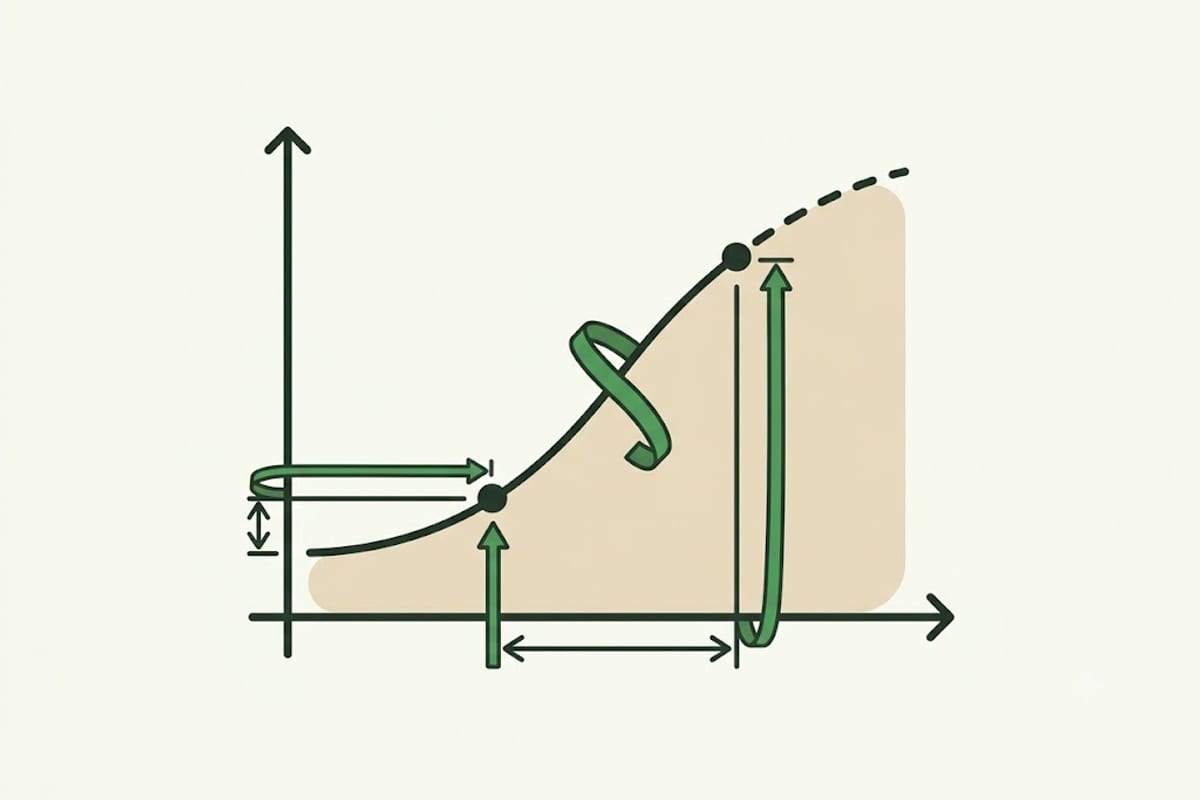
One weight is a point. Two weights a month apart is a trajectory, and the trajectory is far more informative.
Weigh the puppy every two weeks and write it down. What you are watching for:
- Rate still climbing — the dog is in its fast phase and there is a lot of growth left
- Rate steady — mid-growth
- Rate flattening — approaching adult size
A puppy still gaining rapidly at seven months is going to be a big dog regardless of what any formula says. A puppy whose curve flattened at five months is not.
Home weighing is easy: weigh yourself, then yourself holding the puppy, and subtract.
Parent size, if you know it
The best single predictor, when available. Adult offspring usually land between the two parents, with males tending toward the larger and females the smaller.
For a shelter dog this is rarely available, and reported breed mixes are often guesses. DNA tests give ancestry with size predictions of variable accuracy — treat the size estimate as another input, not an answer.
Practical consequences for buying
You do not need to know the adult size precisely. You need to buy in a way that tolerates being wrong.
Collar — buy for adjustment range and expect to replace it. Cheap, and replacing is normal for any puppy.
Harness — buy the current size, not a future one. A harness sized for a hoped-for adult dog fits nothing now and the puppy can reverse straight out of it.
Crate — this is the one to make a decision about, because it is the expensive item. If the estimate is uncertain, buy for the upper end of the likely range and use a divider. An oversized crate with a divider works; an undersized crate is scrap.
Coat — wait. Coats are cheap enough to buy when needed and back length changes fast.
How wrong to expect to be
For a mixed-breed puppy of unknown parentage, an honest estimate at three months is a range rather than a number, and the range is wide — often spanning a whole size class. It narrows quickly: by six months most dogs have declared themselves.
The practical answer is to buy adjustable things now, delay the expensive ones where you can, and re-measure every two weeks. That handles uncertainty better than any prediction does.