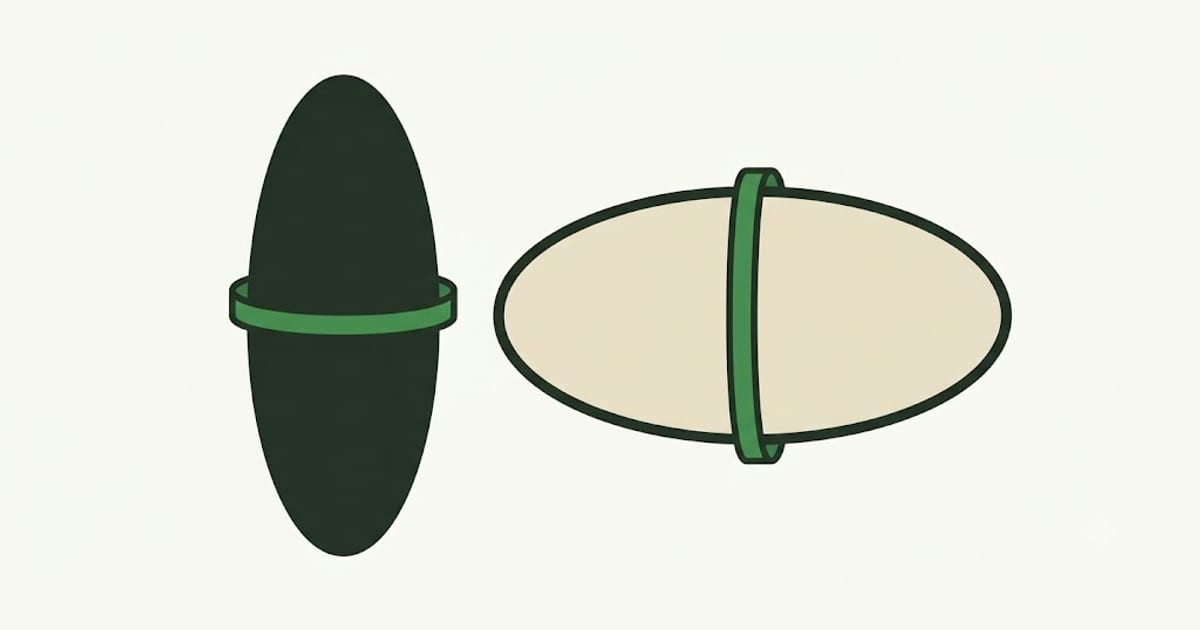
Almost every harness and coat size chart is keyed on weight, and weight is a poor predictor of the two measurements that decide fit: girth and chest depth.
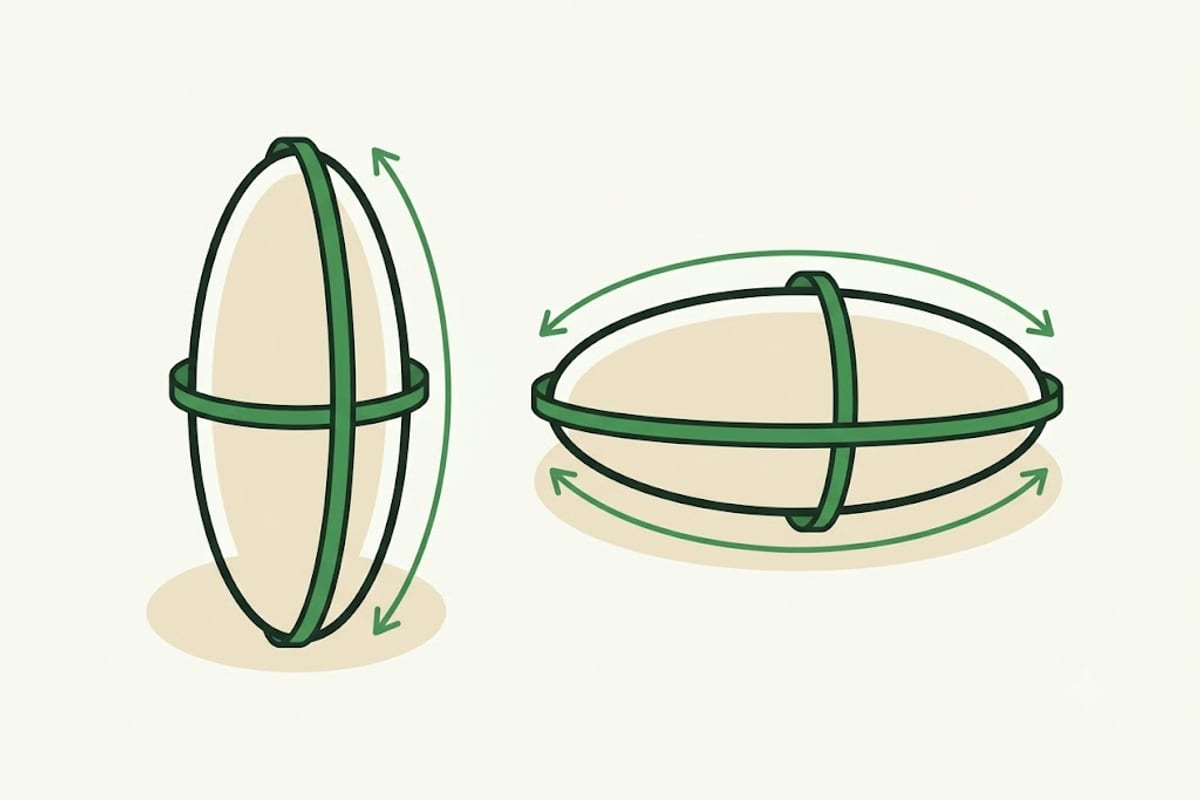
Deep-chested
The rib cage is tall and narrow, extending well down toward the elbow. Girth measured behind the front legs is large, but the dog is narrow across the body.
Greyhounds, whippets, dobermans, boxers, setters, standard poodles, weimaraners, great danes.
What goes wrong. A harness sized by weight is too wide and too short. The chest strap sits too high, above the deepest part of the sternum, and rides up into the armpit. The dog can often back out of it.
What to look for. Adjustable girth with a long range, a chest piece shaped to sit low on the sternum, and Y-front geometry rather than a straight bar across the chest.
Barrel-chested
Wide, rounded ribs and a shallower chest. Girth is large because of width rather than depth, and the neck is often as thick as the head.
Bulldogs, French bulldogs, pugs, staffordshire bull terriers, boston terriers, corgis, beagles.
What goes wrong. A harness sized by girth is too long from front to back and gaps at the sides. Straps intended to sit behind the elbow sit on it instead and chafe. On the flat-faced breeds, anything crossing the throat is a breathing concern rather than a comfort one.
What to look for. Short body length relative to girth, wide adjustable chest panel, and nothing that puts pressure on the throat.
The measurements that actually matter
Girth — around the deepest part of the chest, just behind the front legs, with the tape snug.
Neck — where a collar naturally sits.
Chest depth — from the top of the withers straight down to the lowest point of the sternum.
Body length — withers to the base of the tail, for coats.
The ratio of girth to neck is the number that tells you which shape you have. A ratio near 1.4 or above suggests a deep chest; near 1.1 suggests a barrel or a thick-necked dog.
Two dogs at the same weight
A 50 lb greyhound has a small girth, a very deep chest and a neck nearly as wide as its head. A 50 lb bulldog has a similar or larger girth, a shallow chest and a neck wider than its head.
A weight chart puts both in the same size. Neither will fit it.
What to do with a chart
Use the manufacturer's measurement ranges, not the weight column, and where the dog falls into two sizes on different measurements, choose by girth and rely on adjustment for the rest.
Where a harness offers only one adjustment point, it will not fit either of these shapes well. Multiple independent adjustments are what make one design work across body types, and they are the feature worth paying for.
The fit check that catches most problems
With the harness on, you should be able to slide two fingers under every strap. Then lift the harness gently upward at the back — it should not slide forward over the shoulders.
Walk the dog. Watch the front legs: straps should not touch the elbow through the full stride. Then check the skin under the straps after twenty minutes; redness anywhere is the harness telling you where it is wrong.
The one non-fit reason chest shape matters
Deep-chested breeds carry a substantially higher risk of gastric dilatation and volvulus — bloat — in which the stomach distends and can rotate. It is a life-threatening emergency and it is strongly associated with chest depth relative to width, which is why the same list of breeds appears in both contexts.
That is a veterinary matter rather than an equipment one, and it is worth knowing if you own one of these dogs: a distended abdomen, unproductive retching and restlessness together are an immediate emergency rather than a wait-and-see.
Coats have the same problem, worse
A coat has to match girth, body length and chest depth simultaneously, and it cannot adjust its way out of a mismatch the way a harness can. Deep-chested dogs end up with coats that gape at the belly; barrel-chested dogs end up with coats that are correct around the ribs and hang past the tail.
Breed-specific coat sizing exists for exactly this reason, and for the extremes — sighthounds, dachshunds, bulldogs — it is worth seeking out rather than adjusting a generic size.