Look up the adult weight of almost any breed and you will find three or four different figures. A kennel club says one thing, a breeder site says another, your vet says a third, and none of them matches your dog.
They are not contradicting each other. They are describing different groups of dogs.
Three sources, three populations
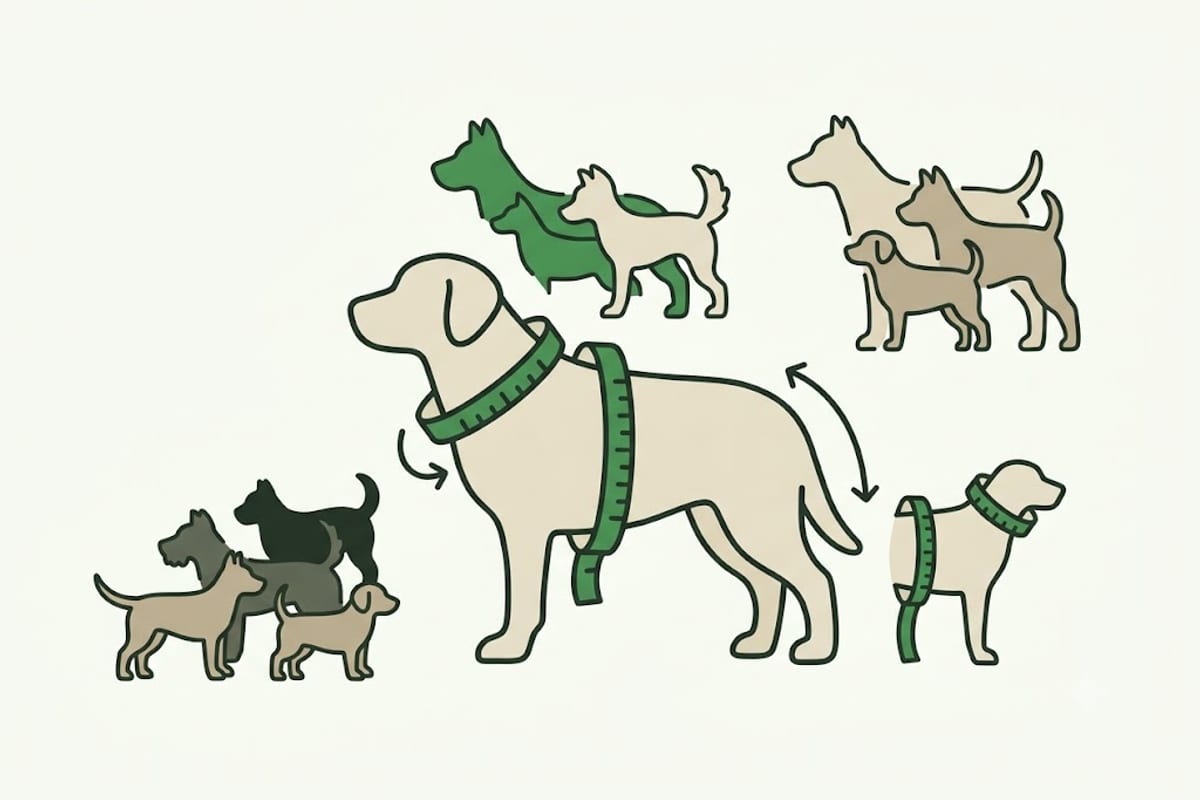
Kennel club breed standards describe the ideal show dog. They are written to guide breeding toward a type, and many standards give height rather than weight, or give weight only as a rough guide. A standard is a target, not an average.
Breeder and enthusiast figures describe the dogs that breeder produces. A working line and a show line of the same breed can differ by a third in weight. A german shepherd from a working kennel and one from a show kennel are both correct german shepherds and are not the same size.
Veterinary and insurance data describe the pet population as it actually is — including dogs that are overweight, undersized, mixed somewhere back, or simply at the edges of normal. These averages tend to run higher than the standards, partly because a lot of pet dogs carry extra weight.
So a chart's number depends entirely on which population it drew from, and most charts do not say.
Which to use for what
Buying gear — use none of them as a substitute for measuring. A weight figure tells you almost nothing about neck circumference or chest girth, which is what collars and harnesses are sized on. Two dogs at the same weight can be two collar sizes apart.
Estimating an adult size for a puppy — the breed range is genuinely useful here, because you cannot measure a dog that does not exist yet. Use the range, not the midpoint, and expect the answer to be a range too.
Judging whether your dog is the right weight — do not use a chart at all. Use body condition.
Body condition beats the chart
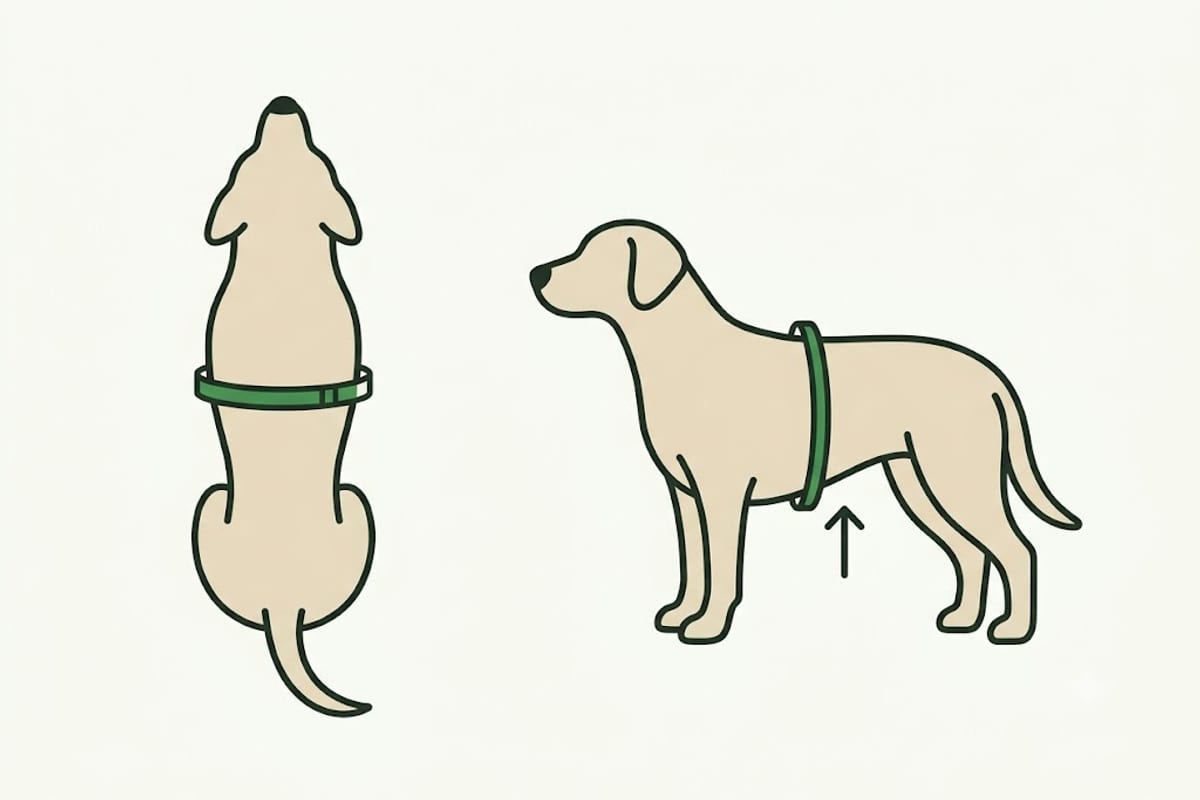
The check every vet uses, and it takes ten seconds:
Ribs. Run your hands along the ribcage with light pressure. You should feel the ribs easily, with a thin covering — similar to the back of your hand. If you have to press to find them, the dog is carrying extra. If they are sharp and visible from across the room, the dog is thin.
Waist from above. Look down at the standing dog. There should be a visible narrowing behind the ribcage.
Tuck from the side. The belly should rise from the ribcage toward the hind legs, not run level.
A dog that passes all three is the right weight for that dog, whatever the chart says. A dog that fails them is the wrong weight even if the number matches the breed average exactly.
This matters because breed averages include a lot of overweight dogs. Matching the average is not the same as being healthy.
Legitimate reasons your dog is off the chart
Sex. Most breeds have a substantial difference between males and females — often 15–25%. Many charts give a single figure.
Line. Working, show, field and pet lines diverge considerably in several breeds.
Country. Standards differ between kennel clubs, so the same breed has different official figures in different places.
Neutering. Changes metabolism and often body shape. Neutered dogs commonly need less food than the chart-derived guideline.
Age. Dogs continue filling out well after they stop growing in height, and lose muscle in old age.
Mixed ancestry. Very common, including in dogs sold as purebred.
How we present our own numbers
Our breed pages give a range rather than a single figure, and we separate males and females where the difference is material. A range is less satisfying to read than one number and it is more honest — the single number was never the truth about any individual dog.
Where a breed has clearly divergent lines, the range widens to cover both, which is why some of our ranges look broad.
For gear, measure
The practical conclusion. A collar is sized on neck circumference. A harness is sized on chest girth. A coat is sized on back length. None of those is weight, and no weight chart will give them to you.
Take the three measurements once, write them down with the date, and you will not need a weight chart to buy anything.