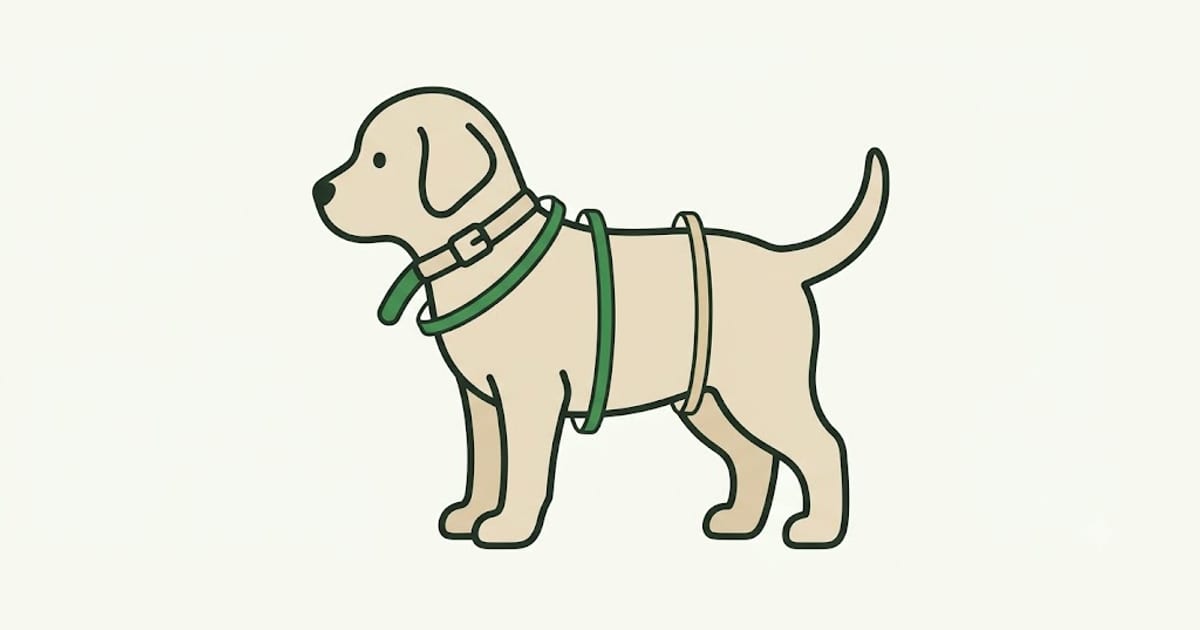
Puppies do not grow evenly. They go through spurts, and during one a collar setting can go from comfortable to tight in under two weeks. Neck circumference is the measurement that changes fastest and the one people check least.
A schedule that works
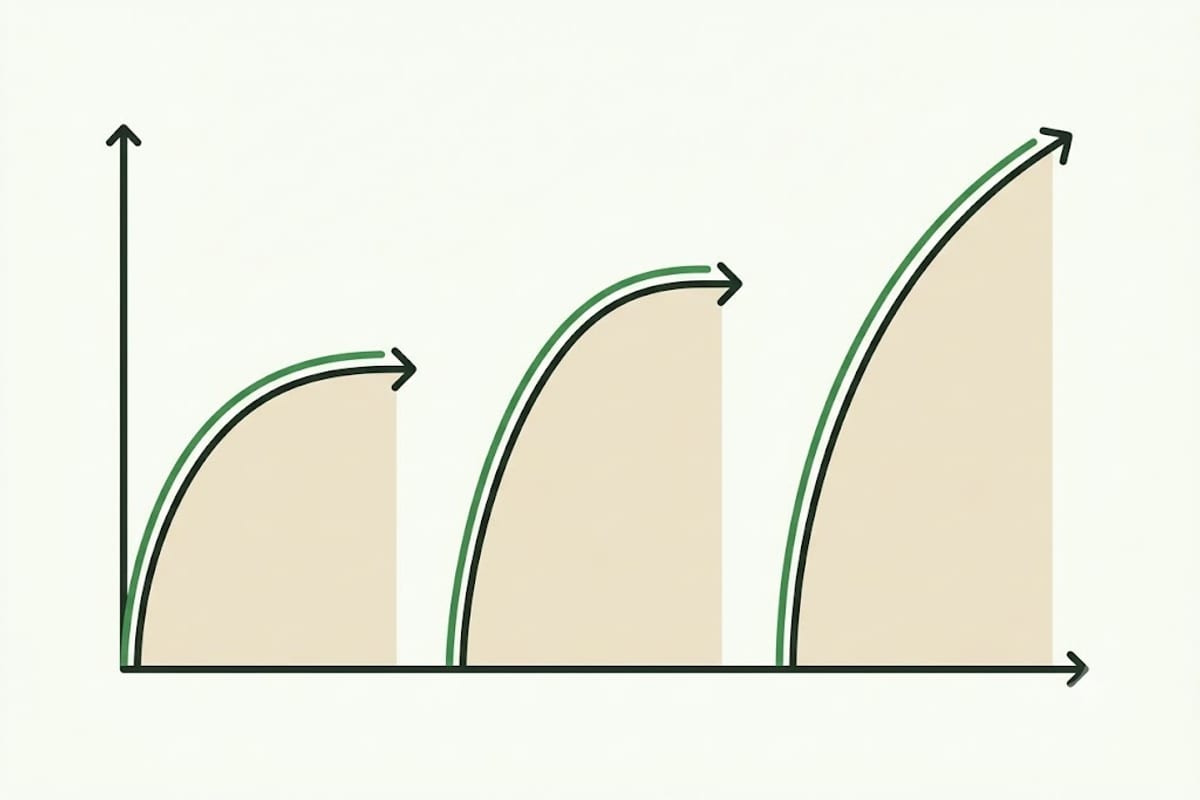
Growth rate depends heavily on adult size. A small breed does most of its growing in the first six months; a giant breed is still filling out at eighteen.
A practical measuring schedule:
Under 4 months, any breed — measure every 2 weeks 4 to 8 months, small and medium breeds — every 3 weeks 4 to 12 months, large and giant breeds — every 2 weeks, because this is their fastest phase 8 to 12 months, small and medium — monthly 12 to 18 months, large and giant — monthly
Then stop measuring on a schedule and go back to checking after coat changes and weight changes.
These are starting points. If a measurement has not moved in two consecutive checks, stretch the interval. If it jumps, shorten it.
The daily check that matters more
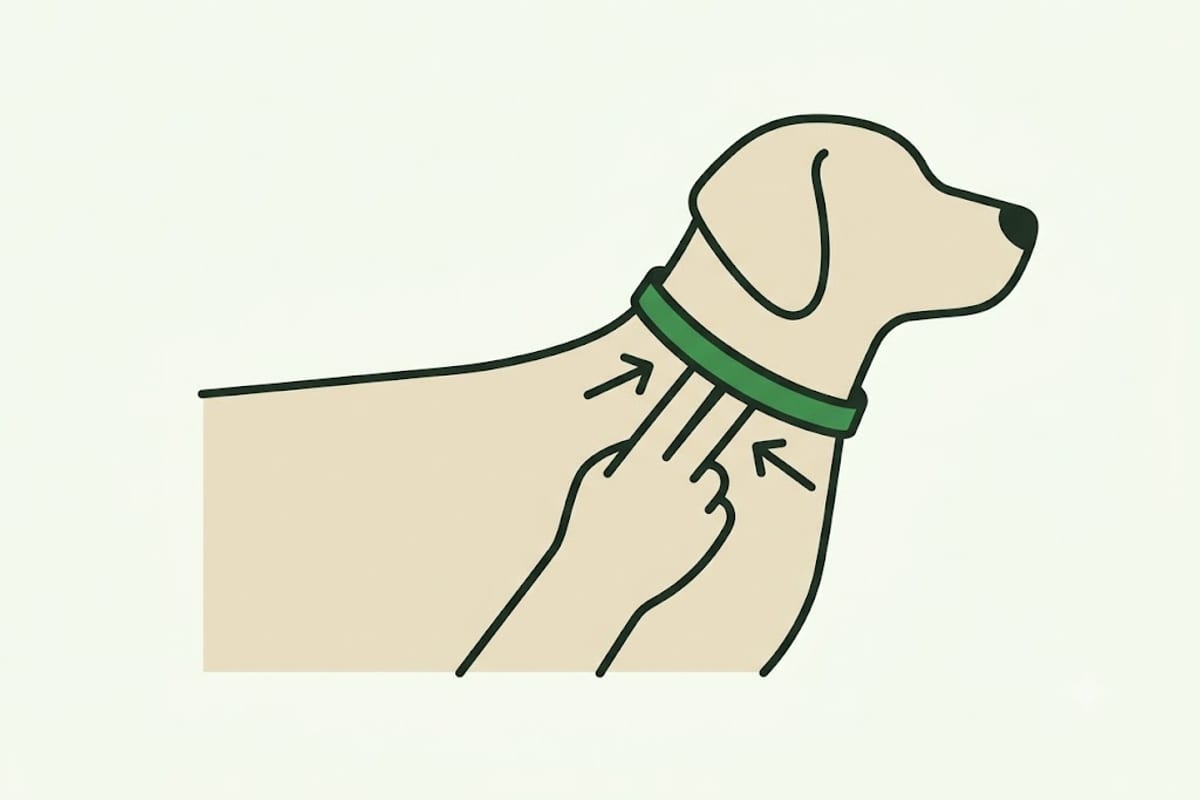
Measuring every two weeks still leaves thirteen days where you are not looking. The habit that closes that gap is the two-finger check, done daily.
Slide two flat fingers under the collar at the base of the neck, where it naturally sits. They should go in without forcing.
The trick is to attach it to something you already do every day — feeding, or clipping on the lead. A check that depends on remembering to check does not happen.
What to measure
Neck — at the base, where a collar sits, tape snug against the skin. On a fluffy puppy, part the coat.
Chest girth — around the deepest part, just behind the front legs.
Back length — base of neck to base of tail, for coats.
Write all three down with the date. The sequence is more useful than any single reading: it tells you whether growth is accelerating or slowing, and that tells you when to buy the next size rather than adjusting.
Signs you left it too long
- A pressure line in the coat at the collar that does not brush out
- Broken or thinning hair in a ring at the collar line
- The dog coughing on gentle lead pressure
- Having to pull hard to get two fingers under
- The buckle at the last hole — that collar is finished, not adjustable
- A harness where the girth strap now sits against the elbow rather than behind it
The last one is easy to miss because the strap does not get tighter — the puppy gets longer, and the strap ends up in the wrong place.
Buying to reduce the churn
Buy for adjustment range, not for the current measurement. A collar whose range comfortably brackets the current neck lasts through a spurt. One that already sits near an end does not.
Expect two or three collars before adulthood on a large breed, one or two on a small one. A collar with the buckle at its last hole should be replaced rather than stretched.
Do not buy the adult size to grow into. A collar sized for a future dog is one the current puppy can back out of, and that is the failure that matters.
Crates are the exception — buy the adult size and use a divider.
When growth stops
Height finishes before weight does. A dog can stop getting taller at ten months and continue filling out through the chest and neck until two years, particularly males of large breeds.
That means the harness that fits at twelve months may need replacing at eighteen even though the dog looks fully grown. Chest girth is the last measurement to settle.
Once two consecutive monthly measurements are unchanged, the dog is done. Keep the numbers — they are what you will use for every purchase from then on.